lecture and concert
Nusakh Vilne Memorial: Songs of Eliakum Zunser – In-person Program and Live on Zoom
Join us in commemorating the Jewish community of Vilna through poetry, music, and presentation.
This year, Alyssa Quint will discuss the work of folk bard and songwriter Eliakum Zunser (Elyokem Tsunzer). A performance of Zunser’s music by tenor Maximillian Jansen and pianist Dan Schlosberg will follow Quint’s presentation.
About the Participants
Alyssa Quint is the Leo Charney Visiting Fellow at Yeshiva University’s Israel Studies Center and a co-editor of the Yiddish Voices translations series (YIVO/Bloomsbury). She is the author of The Rise of the Modern Yiddish Theater (2019), which was a finalist for the National Jewish Book Award and the Jordan Schnitzer Award. She is also the editor of three volumes on the Yiddish theater: Women on the Yiddish Stage (2023), Three Yiddish Plays by Women: Female Jewish Perspectives, 1880-1920 (2023), and Mississippi: a Yiddish Play About the Scottsboro Affair (2026). She is a contributing editor of the online Digital Yiddish Theater Project and an editor and writer for Tablet Magazine.
Tenor Maximillian Jansen is a versatile performer acclaimed for his work in opera, concert, and musical theater, praised for his “warm, but penetrating voice” (The Times Union). Recent highlights include his Lincoln Center debut with the New York Choral Society in Honegger’s King David, appearances with the Metropolitan Opera, Berkshire Opera Festival, and Opera Saratoga, and performances at the Bard Music Festival. In 2022, he presented a live premiere of a new work by David Ludwig Serkin for the YIVO Institute for Jewish Research. This premiere was given as part of YIVO’s Continuing Evolution: Yiddish Folksong Today, a music festival celebrating Yiddish folksong.
Brooklyn-based composer, pianist, arranger, and music director Dan Schlosberg creates acclaimed work across opera, theater, and concert music. Recent projects include arrangements and music direction of the original cast recording of Heartbeat Opera’s Manon! (2026); the new opera Complications In Sue (2026) with Michael R. Jackson’s libretto at Opera Philadelphia; the new musical The Counterfeit Opera (2025), which premiered at Little Island; and new orchestration for Poul Ruders’ The Handmaid’s Tale (2025) at Banff Centre for Arts and Creativity. In 2021, Schlosberg was the audition, rehearsal, and soundtrack pianist for Steven Spielberg’s West Side Story.
Ticket Info: Free; registration required
Presented by:

lecture and concert
book talk
Modern Jewish Identity in the Age of Empire – Live on Zoom
Join YIVO for a conversation with Ofer Dynes and Svetlana Natkovich exploring two new books that examine the emergence of modern Jewish identity through literature, politics, and self-expression. Dynes’ The Fiction of the State: The Partitions of Poland and the Beginning of Modern Jewish Literature locates the origins of modern Jewish literature within the Partitions of Poland during the late eighteenth century and argues that literature became a central venue for reflecting on the new political order during a time when most forms of political expression were banned. Rather than as an internal Jewish struggle between tradition and modernity, he presents Hebrew and Yiddish literature as a field of negotiation among multiple local and imperial belongings.
Natkovich’s Questionable People: Inventing Modern Jewish Selves in the Russian Empire, 1860–1890 explores how the maskilim used self-expression, fashion, dress, and their artistic work to define themselves. Differentiating themselves from what came before, maskilim crafted Jewish identities within a modernizing Russia. Natkovich analyzes the maskilim as a group existing between social and economic classes in a time of change, a generation of thinkers forced to radically assert their selfhoods.
Moderated by Jeremy Dauber, this discussion will explore how Jewish writers and thinkers navigated shifting political and social landscapes.
Buy Questionable People: Inventing Modern Jewish Selves in the Russian Empire, 1860–1890.
Ticket Info: Free; registration is required
Presented by:
book talk
family history today
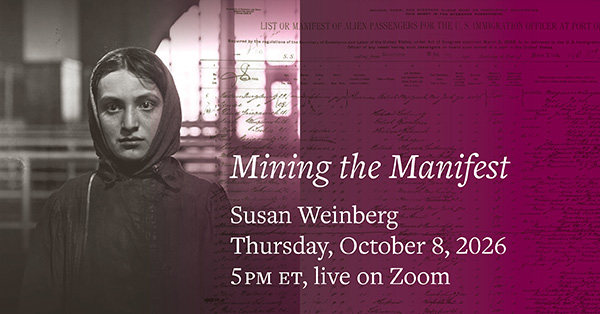
Family History Today: Mining the Manifest - Live on Zoom
After 1906, immigration manifests offer a wealth of information, but what do you do if your family came over prior to that time? And how did they get from New York to the central United States? This presentation explores the immigration period from the early 1890s through 1906, a period which begins to offer useful information for a genealogical search. Using a case approach, we will look at derivative naturalization documents, trace contacts they were going to through the NY vital records and follow immigrants who found their route through Canada. Using paired surnames we will locate a birth record, join cousins on an ocean voyage to NY, find parents, their siblings and children and follow along on a journey to the Midwest. We will explore cases with name changes and variable spellings, work back from other documents, and resolve conflicting data.
About the Speaker
Susan Weinberg is an artist, author, professional genealogist and frequent speaker on genealogy topics. Her background bridges both creative and analytic work, both skills she draws on in genealogy. . Her creative work often involves storytelling and frequently explores family history themes. Having come out of a long career in finance, she often uses spreadsheets as an analytic tool in her genealogy research.
Susan is active in organizations within the world of Jewish genealogy, as president of the International Association of Jewish Genealogical Societies (IAJGS), immediate past president of the Minnesota Jewish Genealogical Society (MNJGS), vice president of the Jewish Historical Society of the Upper Midwest(JHSUM) and a member of the Association of Professional Genealogists (APG).
Susan developed the Jewish Identity and Legacy Project, an oral history project with elders, then authored the book We Spoke Jewish: A Legacy in Stories that includes oral history, artwork, and history on three groups of Jewish immigrants who spanned the 1900s. Susan has created and manages websites for JewishGen on the former Jewish communities of several of her ancestral towns. She writes frequently for publications on genealogy topics and does genealogy research for clients around the world.
Ticket Info: Pay what you wish
Presented by:

family history today
cabaret performance
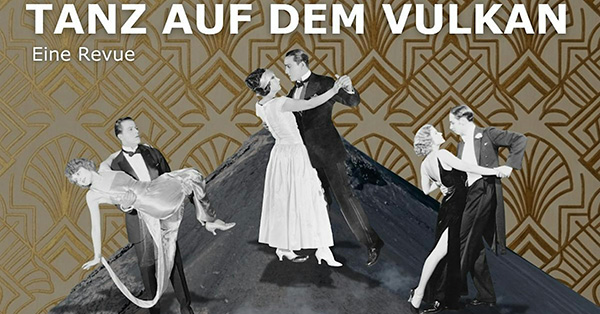
Dance on the Volcano: A Revue - In-person Program
A cabaret of the vibrant and contradictory Berlin of the 1920s.
We cordially invite you to a special series of events in cooperation with Elysium, which will transport you to the vibrant and contradictory Berlin of the 1920s. The production is so captivating that it will be performed three times on both sides of the Atlantic.Amid hyperinflation, social misery, and political street battles, a fascinating cultural flowering emerged: Dada, Bauhaus, jazz, cabaret – and an escape into the dazzling world of film and operetta. At its heart was Erwin Piscator, founder of political theater, who, shaped by his experiences at the front in the First World War, understood the stage as a site of social change.This eventful era comes alive in an impressive revue – with texts by Erich Mühsam, Erwin Piscator, Alfred Polgar, Kurt Tucholsky and others, accompanied by music by Paul Abraham, Hanns Eisler, Mischa Spolianski and others.
Ticket Info: General Admission: $33.85, Members/Students/Seniors: §17.85
Presented by:

cabaret performance
film screening and discussion
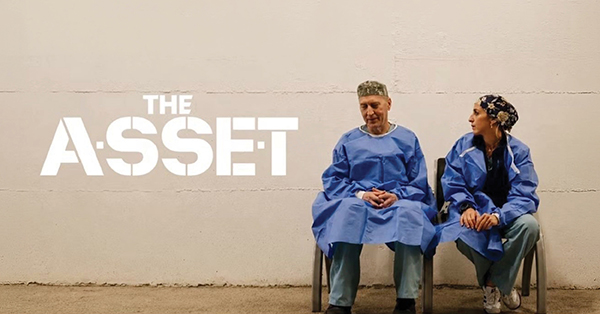
Asset: 12 Minutes to Save a Life - In-person Program
Join us for an exclusive preview of The ASSET, a powerful new documentary by award-winning filmmaker Ravit Markus about medicine, mentorship, loss, and the impact an individuals can make.
In the aftermath of October 7, American trauma surgeon Dr. Anna Goldenberg takes on a deeply personal mission: to fulfill the dying wish of her former trainee and dear friend, Israeli trauma surgeon Dr. Shachar Shimonovich, by bringing one of the world's most advanced trauma surgery training programs to Israel.
ASSET: Advanced Surgical Skills for Exposure in Trauma, an intensive, hands-on course that prepares surgeons to rapidly control life-threatening injuries when every minute matters. Against enormous bureaucratic, financial, and personal obstacles, Dr. Goldenberg brings the program to Israel, where Jewish, Muslim, Christian, and Druze surgeons train side by side with one shared purpose: to save lives.
At its heart, The ASSET is not simply a film about trauma surgery or war. It is a story about friendship, legacy, responsibility, identity and service.
Following the screening, join us for a panel featuring Dr. Anna Goldenberg, Ravit Markus, Dr. Eyal Levit and Evi Shekhman, who will share their experiences working, teaching, training, and supporting Jewish medical professionals in the United States and Israel in the wake of October 7.
The conversation will be moderated by Margarita Lyadova, host of People Jew Wanna Know. Together, they will take us beyond the film to explore what medicine looks like in moments of crisis, how physicians prepare for the unimaginable, the relationships that transcend religion and politics inside an operating room, and what it means to use one's skills in service of others.
Ticket Info: $36; to register
Presented by:
film screening and discussion
book talk
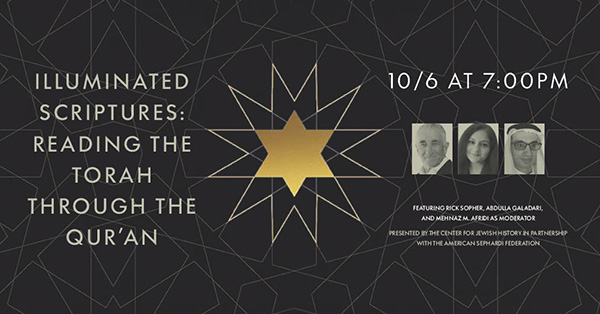
Illuminated Scriptures: Reading the Torah Through the Qur'an - In-person Program
How can reading sacred texts side by side deepen our understanding of both traditions?
Join the Center for Jewish History and the American Sephardi Federation for a timely conversation marking the publication of Illuminating Scriptural Connections: A Qur'anic Commentary on the Torah, an ambitious new work by interfaith leaders and scholars Rick Sopher and Abdulla Galadari. Drawing on all fifty-four weekly Torah portions, the book places the Torah and the Qur'an in dialogue, illuminating shared narratives, prophetic traditions, ethical teachings, and theological questions while thoughtfully exploring where the two texts converge and diverge.
Sopher, a leading figure in Jewish-Muslim dialogue, and Galadari, a scholar of Qur'anic hermeneutics, invite readers to encounter these foundational scriptures not as isolated traditions but as texts that have long spoken to many of the same questions about faith, justice, prophecy, and human responsibility. Their collaboration demonstrates how close reading and rigorous scholarship can open new pathways for understanding across religious communities.
Moderated by Mehnaz M. Afridi, Professor of Religious Studies and Director of the Holocaust, Genocide, and Interfaith Education Center at Manhattan University, this conversation will explore the origins of the project, the interpretive methods behind the book, and the enduring significance of scriptural study in fostering meaningful interfaith dialogue. Together, the panelists will consider how sacred texts can serve not only as objects of scholarship but also as bridges between communities in an increasingly interconnected world.
Whether you are interested in Jewish studies, Islamic studies, comparative religion, or the power of shared intellectual inquiry, this program offers a rare opportunity to hear from scholars working at the intersection of two of the world's great scriptural traditions.
A reception and book sales will follow the program. The book can be preordered at a discount; information will be sent to all registrants when the book is available.
About the Speakers
Rick Sopher is an interfaith leader, educator, and author dedicated to advancing Jewish-Muslim understanding through scriptural dialogue and collaborative learning. Based in London, he has spent decades building relationships across faith communities and is a Fellow of the Woolf Institute at the University of Cambridge, where his work focuses on interreligious engagement among Jews, Christians, and Muslims. He is the co-author of Illuminating Scriptural Connections: A Qur'anic Commentary on the Torah, an innovative study that explores the Torah through the interpretive lens of the Qur'an.
Abdulla Galadari is Associate Professor of Islamic Studies at Khalifa University in Abu Dhabi and an internationally recognized scholar of Qur'anic hermeneutics. His research examines the Qur'an through literary, historical, and comparative approaches, with particular attention to its relationship to biblical and rabbinic traditions. He is the author of several books on Qur'anic interpretation and co-author of Illuminating Scriptural Connections: A Qur'anic Commentary on the Torah. Dr. Galadari will join the program virtually.
Mehnaz M. Afridi (Moderator) is Professor of Religious Studies and Director of the Holocaust, Genocide, and Interfaith Education Center at Manhattan University. An internationally respected scholar of Islam, Holocaust studies, and interfaith relations, her work explores the intersections of religion, memory, ethics, and genocide. Through her scholarship and public engagement, she has worked extensively to foster dialogue and understanding among Jewish, Muslim, and Christian communities.
Ticket Info: Pay what you wish; registration required.
Presented by:

book talk
book talk
Bennett Cerf and the Publishing House He Built – Live on Zoom
At midcentury, everyone knew Bennett Cerf: witty, beloved, middle-aged panelist on What’s My Line? whom TV brought into America’s homes each week. But they didn’t know that the handsome, driven, paradoxical young man of the 1920s had vowed to become a great publisher and, a decade later, was. With his best friend and lifelong business partner Donald Klopfer, and other young Jewish entrepreneurs like the Knopfs and Simon & Schuster, Cerf remade the book business: what was published, and how. In 1925, he and Klopfer bought the Modern Library and turned it into an institution, then founded Random House, which eventually became a home to Truman Capote, Ralph Ellison, Ayn Rand, Dr. Seuss, Toni Morrison, James Michener, and many more.
Join YIVO for a discussion with Gayle Feldman about her book Nothing Random: Bennett Cerf and the Publishing House He Built, in a discussion moderated by Jonathan Brent.
About the Speakers
Gayle Feldman has written for Publishers Weekly for forty years, including as a senior staff editor; since 1999, as U.S. correspondent for The Bookseller, she has analyzed the American book business for U.K. readers; and she has contributed features and reviews on books and culture to The New York Times, The Nation, The Daily Beast, and other publications. She is the author of You Don’t Have to Be Your Mother and Best and Worst of Times. She received a Public Scholars award from the National Endowment for the Humanities.
Jonathan Brent is the Executive Director of the YIVO Institute for Jewish Research in New York City. From 1991 to 2009 he was Editorial Director and Associate Director of Yale Press. He is the founder of the world acclaimed Annals of Communism series, which he established at Yale Press in 1991. Brent is the co-author of Stalin’s Last Crime: The Plot Against the Jewish Doctors, 1948-1953 (Harper-Collins, 2003) and Inside the Stalin Archives (Atlas Books, 2008). He is now working on a biography of the Soviet-Jewish writer Isaac Babel. Brent teaches history and literature at Bard College.
Ticket Info: Free; registration is required
Presented by:
book talk
members only event
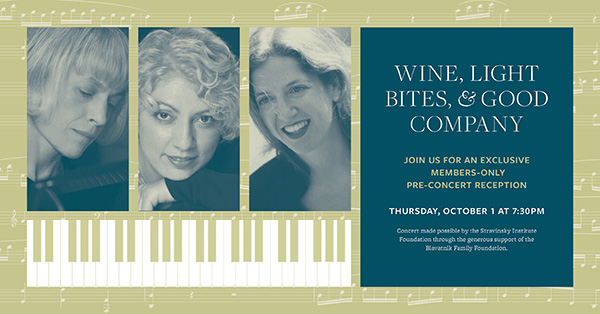
Keyboard Kaleidoscope Pre-Event Member Reception
Raise a glass and strike up the fun! Please join us for an exclusive members-only pre-concert reception with wine, light bites, and good company before an exceptional evening of music.
Mingle with fellow members over a glass of wine and light bites before taking your seat for the 7:30 p.m. concert. Then let the music take center stage as the Phoenix Chamber Ensemble performs works by Mozart, Rachmaninoff, Schnittke, and Bizet, in a program filled with musical conversation, virtuosity, and unexpected harmonies.
Ticket Info: This is an exclusive event for CJH members. To register, please email membership@cjh.org.
Presented by:
members only event
the blavatnik chamber music series at cjh
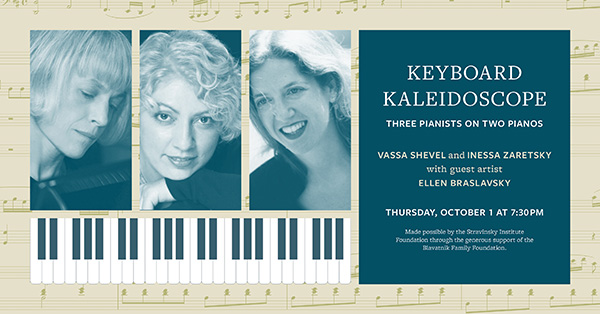
Keyboard Kaleidoscope - In-Person Concert & Live on YouTube
Join Phoenix Chamber Ensemble pianists Vassa Shevel and Inessa Zaretsky with guest artist Ellen Braslavsky (piano) for a memorable evening of Mozart, Rachmaninoff, Schnittke, and Bizet.
Program:
Wolfgang Amadeus Mozart, Sonata in D Major, K. 448, for Two Pianos, Four Hands
Sergei Rachmaninoff, Suite No. 1, Op.5 for Two Pianos, Four Hands
Alfred Schnittke, Gogol Suite, arranged for two pianos by Valery Borovikov
Georges Bizet, Carmen Suite for Piano Six Hands, arranged by J. Kowalewski
Founded in 2005 by pianists Vassa Shevel and Inessa Zaretsky, the Phoenix Chamber Ensemble has become a vital part of the New York classical community, presenting more than 70 public concerts at the Center for Jewish History. The ensemble has garnered a devoted following with its innovative programming and sensitive interpretations, earned an international reputation presenting concerts in Russia, Poland, Italy, and other European venues, and collaborated with numerous acclaimed guest artists, including clarinetist David Krakauer, the Grammy-nominated Enso Quartet, the Tesla Quartet, members of the Jasper String Quartet, the New York Little Opera Company, the Metropolitan Opera, and New York City Ballet.
Made possible by the Stravinsky Institute Foundation through the generous support of the Blavatnik Family Foundation.
Ticket Info:
In-person: $18 general, $10 seniors, $8 members click here to register
YouTube: Pay what you wish; click here to register
Presented by:
the blavatnik chamber music series at cjh
concert
Jewish Songs and Dances for Piano: Joseph Achron’s ‘Children’s Suite’ – Live on YouTube
Join YIVO for a YouTube premiere performance by Ryan MacEvoy McCullough of Joseph Achron’s Children's Suite (1923): a collection of 20 character pieces for piano depicting the world of children. Achron was a composer and virtuoso violinist as well as one of the founding members of the Society for Jewish Folk Music in St. Petersburg. Born in the Russian Empire in 1886, he ultimately settled in Los Angeles. Upon Achron's death in 1943, Arnold Schoenberg called him "one of the most underestimated of modern composers." The music of this Children's Suite provides an example of a style Achron pioneered, which incorporates motifs from biblical cantillation.
The Sidney Krum Young Artists Concert Series is made possible by a generous gift from the Estate of Sidney Krum.
About the Performer
Pianist Ryan MacEvoy McCullough has developed a rich musical life as soloist, vocal and instrumental collaborator, composer, recording artist, and pedagogue. His growing discography features many world premiere recordings, including solo piano works of Milosz Magin (Acte Prealable), Andrew McPherson (Secrets of Antikythera, Innova), John Liberatore (Line Drawings, Albany), Nicholas Vines (Hipster Zombies from Mars, Navona), art song and solo piano music of John Harbison and James Primosch (Descent/Return, Albany), and art song by Sheila Silver (Beauty Intolerable, Albany). He has also appeared on PBS’s Great Performances (Now Hear This, “The Schubert Generation”) and NPR’s From the Top. He has appeared as a concerto soloist with major orchestras including with the Los Angeles Philharmonic and Toronto Symphony Orchestra and has collaborated with such conductors as Gisele Ben-Dur, George Benjamin, Fabien Gabel, Leonid Grin, Anthony Parnther, Larry Rachleff, Mischa Santora, and Joshua Weilerstein. He lives in Kingston, NY, with his wife, soprano Lucy Fitz Gibbon.
Ticket Info: Free; register for an email reminder
Presented by:
concert
book talk
Yiddish Scholarship Comes to America: The YIVO Institute at 100 – Live on Zoom
The book Yiddish Scholarship Comes to America: The YIVO Institute at 100 provides a comprehensive history of the YIVO Institute for Jewish Research, detailing its longstanding efforts to preserve Eastern European Jewish culture during a century of genocide and mass emigration. Founded in 1925, YIVO was a global organization with headquarters in Vilna until World War II. It represented the symbolic pinnacle of building a modern, secular Yiddish culture.
Yet post-war, YIVO struggled to establish itself on a new continent, to reclaim what had survived of its Vilna collections, to document a lost world, and to impart the value of Eastern European Jewish history and culture to new generations. Through the Institute's steady commitment to establishing itself in New York and beyond, Yiddish language learning and scholarship became a crucial part of post-Holocaust Jewish life in a time when Hebrew was increasingly promoted in Jewish communities. Drawing on extensive archival research and oral histories, Kalman Weiser focuses on the transitional period of the YIVO Institute from 1940 to 1970 and showcases how the Institute carved its own path toward scholarship and public engagement that remained true to its founding ethos—"from the folk, for the folk, and with the folk"—while acclimating to American society and mainstream Jewish culture.
Join YIVO for a discussion with Weiser about this new book, moderated by Andrew Silow-Carroll.
About the Speakers
Kalman Weiser is the Silber Family Professor of Modern Jewish Studies and the Director of the Israel and Golda Koschitzky Centre for Jewish Studies at York University. A native of NYC (BA, Yale; MA and PhD, Columbia), he is the author of several studies about Jewish nationalism and Jews’ relationship to language, especially in Eastern Europe. His study Jewish People, Yiddish Nation: Noah Prylucki and the Folkists in Poland won the 2012 Canadian Jewish Book Award for scholarship. He is also a contributor to and co-editor of Czernowitz at 100: the First Yiddish Language Conference in Historical Perspective (2010); a revised and expanded edition of Solomon Birnbaum's seminal work Yiddish: a Survey and a Grammar (2016); and Key Concepts in the Study of Antisemitism (2021). In 2018, he was the co-organizer of Teaching about Antisemitism in the 21st Century, an intensive summer institute for advanced graduate students and junior faculty that is scheduled to be renewed in 2023. He has recently completed the manuscript for a book about Nazi scholars of Yiddish and their relationships with Jewish colleagues before, during, and after World War II. Weiser regularly teaches courses about modern Jewish and general Eastern European history, antisemitism, Yiddish, and Jewish languages. He has lectured widely in the US, Europe, Japan, and Israel.
Andrew Silow-Carroll is New York Jewish Week's Editor at Large and Managing Editor for Ideas of the Jewish Telegraphic Agency. Previously he served as editor in chief of the Jewish Telegraphic Agency, editor-in-chief and CEO of the New Jersey Jewish News and wrote an award-winning weekly column in the Times of Israel. He was also the managing editor of the Forward newspaper, editor of the Washington Jewish Week, senior editor of Moment magazine, and a reporter for the Jewish Telegraphic Agency.
Ticket Info: Free; registration is required
Presented by:
book talk
book club
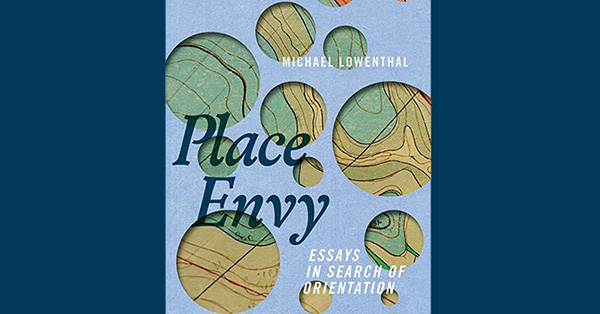
LBI Book Club: Place Envy - Live on Zoom
Michael Lowenthal will join the LBI Book Club to discuss his book Place Envy: Essays in Search of Orientation.
Growing up in places where his family had no past, and met mostly by silence from his Holocaust-refugee grandparents, Michael Lowenthal longed to be from somewhere. Then he realized he was gay and felt displaced from his own displaced family.
Place Envy—his first book of essays after five acclaimed books of fiction—chronicles his quest for orientation in the world: as an agnostic Jew, as a queer traveler and lover, and as a writer who can tell or twist the truth.
Yearning for a queer lineage, he obsesses about an uncle who perished at Bergen-Belsen but then finds, in his grandmother’s German hometown, a more surprising legacy. He lives with a Pennsylvania Amish family; accompanies blind gay men on a Mexican cruise; plays jazz with Sun Ra, the Afrofuturist who claimed to hail from Saturn; and pursues a clarifying love affair in Brazil. Collectively, these essays recount Lowenthal’s many journeys of dislocation and relocation: to foreign countries and subcultures and to the riskiest shores of family and self.
(Description from www.michaellowenthal.com)
About the Author
Michael Lowenthal is the author of a story collection, Sex With Strangers, and four novels: The Same Embrace; Avoidance; Charity Girl, which was a New York Times Book Review “Editors’ Choice” and a Washington Post "Top Fiction of 2007" pick; and The Paternity Test, an Indie Next selection and a Lambda Literary Award finalist. His short stories and essays have appeared in Tin House, Ploughshares, the Southern Review, Guernica, True Story, and the Kenyon Review, and have been widely anthologized, in such volumes as Lost Tribe: Jewish Fiction from the Edge, Bestial Noise: The Tin House Fiction Reader, and Best New American Voices 2005. He has also written for the New York Times Magazine, Boston Magazine, the Washington Post, the Boston Globe, Out, and many other publications. His memoir-in-essays, Place Envy, was published in 2026.
The recipient of fellowships from the Bread Loaf and Wesleyan writers’ conferences, the MacDowell Colony, the Massachusetts Cultural Council, the New Hampshire State Council on the Arts, and the Instituto Sacatar, Lowenthal has also been awarded Lynchburg College's Thornton Residency and the James Duggins Outstanding Mid-Career Novelists' Prize. He has taught creative writing at Boston College and Hampshire College, and as the Picador Guest Professor for Literature at Leipzig University in Germany. For more than twenty years he was a faculty member in the low-residency MFA program at Lesley University.
Before publishing his own work, Lowenthal was an editor at University Press of New England, where he founded the Hardscrabble Books imprint, publishing such authors as Chris Bohjalian, W.D. Wetherell, and Ernest Hebert. He graduated from Dartmouth College with a degree in English and comparative religion.
A former board member of the literary human rights organization PEN New England, Lowenthal lives in Boston and Pittsburgh.
Where to Get the Book
The book can be found or ordered at many bookstores and at libraries. Here are some links:
Ticket Info: Free; registration required
Presented by:
book club
lecture
From Weimar to New York: Alfred Kerr’s Passion for America - In-person Program
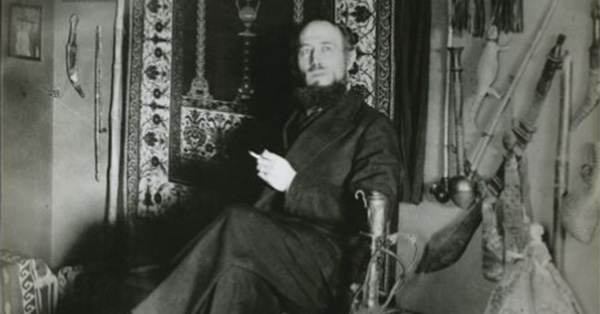
Alfred Kerr was an influential writer and journalist before the Nazis seized power and subsequently declared him a target for his criticism against the party. In celebration of the publication of New York and London: A Journey After the Great War by Alfred Kerr, Ralph Blumenthal will join the Leo Baeck Institute and Berlinica Press to discuss Kerr's work as a Weimar author in exile.
Ticket Info: Free; registration required
Presented by:
lecture
conversation
At Lunch with Daniel Okrent – Live on Zoom
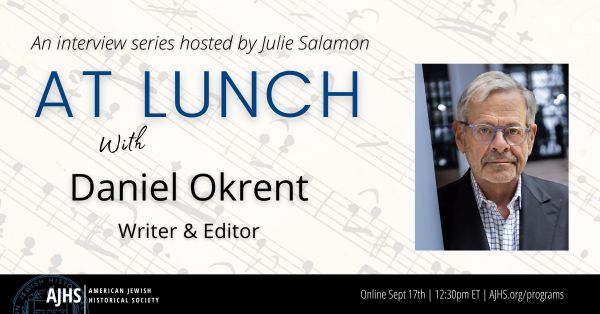
Julie Salamon, New York Times best-selling author, sits down with author and editor Daniel Okrent to discuss his latest book Stephen Sondheim: Art Isn’t East. Daniel had careers as a book and magazine editor and was the first public editor of the New York Times. He is the prize-winning author of six books, including The Guarded Gate: Bigotry, Eugenics, and the Law That Kept Two Generations of Jews, Italians, and Other European Immigrants Out of America, and Last Call: The Rise and Fall of Prohibition. He lives in New York City and on Cape Cod.
Ticket Info: Free; register online for a Zoom link
Presented by:
conversation
lecture
Eli Gross: Rediscovering a Forgotten Israeli Designer - In-person Program
You might not know of Eli Gross, but you may know his work. Across banks, hospitals, and public institutions, Gross quietly helped construct the visual language of Israeli society. Then, after his death in 1996, much of his archive disappeared. Designer and researcher Liad Shadmi joins Havurah at the Center for Jewish History to discuss the ongoing effort to find it—and to recover the story of a designer hiding in plain sight.
Eli Gross (1939–1996) was an Israeli graphic designer and longtime Bezalel lecturer. Trained in the Netherlands at the Royal Academy of Art and Total Design, his modernist identities and visual systems helped shape Israel’s everyday visual landscape.
Liad Shadmi is an independent graphic designer, art director, and visual researcher. He is leading the international effort to recover Gross’s archive and is the principal researcher of an upcoming bilingual monograph on his work.
Drinks will be served.
Ticket Info: Free; click here to register
Presented by:
lecture
discussion
Ruth Rubin and the Study of Yiddish Folksong Today – Live on Zoom
Ruth Rubin was a renowned folklorist and singer, who spent decades preserving the rich musical tradition of Ashkenazi Jews. Gathering over 2,000 folksongs between 1946 and 1970, she captured the voice and memory of generations who had grown up in a flourishing Yiddish-speaking environment that they had seen annihilated by Nazi destruction and Stalinist repression. Her archive lives on through YIVO's digitized Ruth Rubin Legacy project and remains an invaluable resource for scholars and musicians.
Join us for a discussion featuring new scholarship drawing on Rubin's work by Isabel Frey and Miriam Borden, moderated by Mark Slobin, in honor of what would have been Rubin's 120th birthday.
Ticket Info: Free; registration is required
Presented by:
discussion
family history today
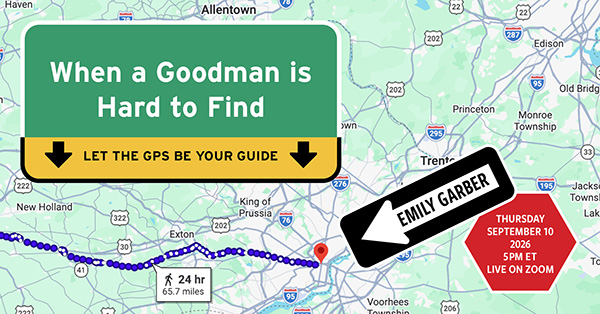
Family History Today: When a Goodman is Hard to Find, Let the GPS be Your Guide - Live on Zoom
When answers to our genealogical research questions do not come easily, the elements of Genealogical Proof Standard (GPS) can provide guidelines for evaluating the strength of our research and its conclusions. The GPS requires rigor in our research methodology.
In this case study, the parents of peddler Alexander Goodman, who first appeared in Lancaster (in the 1850s) and later in Philadelphia, Pennsylvania, were unknown. No direct evidence of his origins was found in any USA records. No one record provided the answer. Efforts to solve this case involved utilizing many types of records for numerous people and several families in two countries over four generations. The solution lay in correlating evidence from many records and making the connections that the GPS requires. Now we have a family for Alexander Goodman!
About the Speaker
An archaeologist by training (B.A., and M.A.), Emily Garber is a Jewish family history researcher, writer and speaker. She holds a certificate from Boston University's Genealogical Research program and owns Extra Yad Genealogical Services.
Emily blogs at https://extrayad.blogspot.com/, has written two books and several articles that have appeared in Avotaynu and NGS Magazine. She has spoken at National Genealogical Society and IAJGS conferences and coordinated week-long Jewish genealogy seminars for the Genealogical Research Institute of Pittsburgh and the Salt Lake Institute of Genealogy.
She is chair of the Phoenix Jewish Genealogy Group, Vice President of the International Association of Jewish Genealogical Societies, and a director on the board of the Arizona Jewish Historical Society.
Ticket Info: Pay what you wish
Presented by:
family history today
book talk
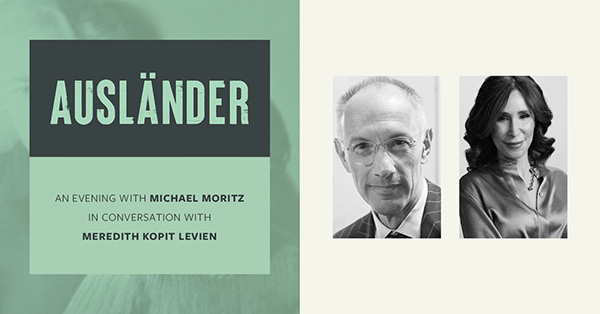
Ausländer: an Evening with Michael Moritz – In-person Event
Please note: This event is sold out.
Join the Center for Jewish History for a special conversation with Michael Moritz, celebrated investor, philanthropist, and author of the newly released memoir Ausländer: One Family’s Story of Escape and Exile.
When sorting through family papers after his mother's death, Moritz uncovered the stories of relatives murdered during the Holocaust and embarked on a journey to understand the legacy of displacement that shaped his family for generations. In Ausländer, he traces his parents' escape from Nazi Germany, their lives as refugees in Britain, and his own enduring sense of being an outsider, even after achieving extraordinary success in Silicon Valley.
Moritz will be in conversation with Meredith Kopit Levien, President and Chief Executive Officer of The New York Times Company, for a discussion about family, memory, identity, and the lessons history continues to hold for our present moment.
At once a poignant family history and a powerful reflection on identity, belonging, and the fragility of democracy, Ausländerspeaks to some of the most pressing questions of our time. Praised by critics as "brilliant" (The Economist) and "a triumph" (Jewish Chronicle), the book offers a deeply moving exploration of memory, exile, and resilience.
Don't miss this opportunity to hear Michael Moritz discuss his family's remarkable story, the process of uncovering the past, and why the lessons of history remain so relevant today.
About Michael Moritz
Michael Moritz was born in Cardiff, Wales, in 1954. A formerTIME journalist and regular contributor to the FT, he is the author of several books, including The Little Kingdom, the story of Apple's years as a private business. He was a partner in Sequoia Capital for thirty-five years and led the business between 1995 and 2012, becoming one of the most successful investors of his generation. Together with his wife, the author Harriet Heyman, he formed Crankstart in 2001—a San Francisco-based foundation devoted to helping those who might otherwise be left behind.
About Meredith Kopit Levien
Meredith Kopit Levien is President and CEO of The New York Times Company. A driving force behind the company’s essential subscription strategy, she has steered The Timesinto a thriving digital business that fuels the curiosity and passions of a global audience.
A reception and book sales will follow the program. The book can be preordered at a discount; information will be sent to all registrants when the book is available.
Ticket Info: This event is sold out.
Presented by:
book talk
lecture
Germany 1946: Safe Haven or Forbidden Land for Jews? - Live on Zoom
Shortly after the Holocaust a quarter million Jews lived in the four occupation zones of what was once Germany. Most of them were East European Holocaust survivors who found a temporary refuge on what many considered a cursed soil. Next to them was a much smaller group of German Jews who survived the Nazi terror or returned from exile to rebuild a “better Germany.” How did they relate to postwar Germany and what was the relationship between these two Jewish communities?
This event is part of Many Promised Lands, LBI's 2026 lecture series covering migration of German-Jewish refugees after 1946.
This programming is made possible through the generous support of the Levi-Thalheimer Fund for Research and Public History.
About the Speaker
Michael Brenner is Distinguished Professor of History and Seymour and Lillian Abensohn Chair in Israel Studies at American University in Washington DC, where he serves as director of the Center for Israel Studies. He also holds the chair of Jewish History and Culture at Ludwig Maximilian University in Munich. He is the International President of the Leo Baeck Institute for the Study of German-Jewish History and Culture and an elected member of the Bavarian Academy of Science, the Accademia Nazionale Virgiliana in Italy and the American Academy for Jewish Research. In 2014 he was awarded the order of merit of the Federal Republic of Germany. In 2020 he was the first recipient of the first Salo W. and Jeannette M. Baron Award for Scholarly Excellence in Research of the Jewish Experience. In 2023 he was awarded the Cultural Prize of Honor of the City of Munich.
He published 9 books, which have been translated in 12 languages, and edited 19 volumes. His latest publications are In Hitler’s Munich: Jews, the Revolution, and the Rise of Nazism (Princeton University Press 2022), In Search of Israel: The History of an Idea (Princeton University Press, 2018), and A Short History of the Jews (Princeton University Press 2010).
Ticket Info: Free; registration required
Presented by:
lecture
book talk
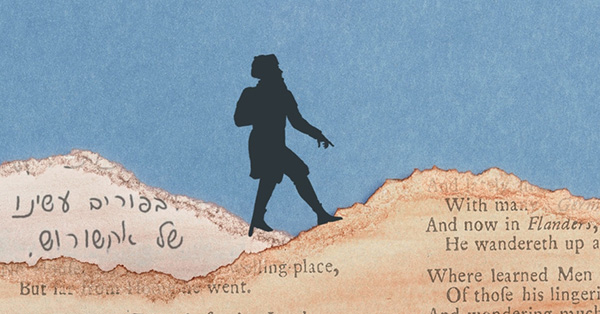
I, Wandering Jew - In-person Program
Join the Leo Baeck Institute for an evening with National Jewish Book Award–winning historian Yair Mintzker as he discusses his latest book, I, Wandering Jew.
Originating from a mysterious 1602 pamphlet, the legend of the "Wandering Jew" has fascinated and fraught European history for over four centuries. Part historical detective story and part deeply personal memoir, Mintzker’s work traces the metamorphoses of this infamous antisemitic trope across five centuries. Moving backward in time from 1950s Israel to the myth's 17th-century origins, the author uncovers surprising affinities between his own life and this legendary figure.
About the Speaker
Yair Mintzker is a specialist in the history of early modern and modern Germany, and the author or editor of five books and many articles in the field. His latest monograph, I, Wandering Jew (Princeton University Press, 2026), combines history, detective story, and memoir to create a surprising and revealing account of the antisemitic myth of “the Wandering Jew.” His previous book, The Many Deaths of Jew Süss (Princeton University Press, 2017), is a retelling of the trial and execution of Joseph Süss Oppenheimer, the notorious “Jew Süss.” The book won the National Jewish Book Award in History and was chosen by the Financial Times as one of the best books of 2017. Born and raised in Jerusalem, Mintzker received his M.A. in history from Tel-Aviv University (2003) and his Ph.D. from Stanford (2009). He is the recipient of many prizes, including the Fritz Stern Dissertation Prize (2010) and the Urban History Association best book prize (2014), as well as fellowships from the DAAD, the Whiting Foundation, the Stanford Humanities Center, the Institute of Advanced Study in Princeton, and the Wissenschaftskolleg zu Berlin. He welcomes applications from prospective graduate students interested in working on topics related to central European history from 1648 to the mid-twentieth century.
Ticket Info: Free; registration required
Presented by:
book talk
exhibit tour and discussion
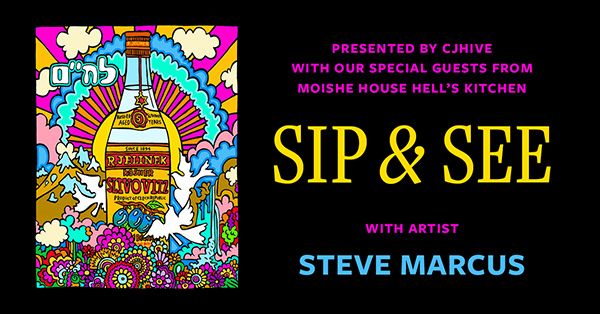
Sip & See with Artist Steve Marcus – In-person Event
Curious what all the buzz is about?
Join CJHive, the Center for Jewish History’s community for young Jewish adults, for Sip and See with Artist Steve Marcus, an evening of art, conversation, and connection.
Step into Steve Marcus’s vibrant exhibition, Psychedelicatessen: A Powerful Dose of Art, where Jewish history, deli culture, and 1960s psychedelia come together in a colorful celebration. Meet Steve, hear the stories behind his work, and enjoy an evening of mingling at the munchies bar with fellow young professionals.
Whether you’re an art lover, a history buff, or simply looking for a fun night out, come see what’s creating the buzz. Connect with new people, discover something unexpected, and be part of the CJHive community.
With special guests from Moishe House Hell's Kitchen.
Bee curious. Bee inspired. Bee part of the hive.
Ticket Info: $18; RSVP, space is limited.
CJHive events are intended for young adults ages 21 to 43. A valid government-issued photo ID is required for entry.
Presented by:
exhibit tour and discussion
walking tour
In the Footsteps of Yiddish Women Writers: A Walking Tour
This walking tour meets outside of The Forward Building, 175 East Broadway, New York, NY 10002, and will run from 6:00pm to 8:00pm.
One of the most dynamic areas of Yiddish translations and research in recent years has been the recovery of women who wrote in Yiddish. In this Lower East Side walking tour led by Dr. Sonia Gollance, we will visit sites associated with celebrated and less-familiar women writers. We will also learn more about their Yiddish literary contributions and how they fit into the broader Yiddish literary community.
About the Guide
Sonia Gollance is Associate Professor of Yiddish Studies at University College London. Her work focuses on Yiddish and German literature, dance, theatre, and gender. She is the author of It Could Lead to Dancing: Mixed-Sex Dancing and Jewish Modernity (Stanford University Press, 2021), a finalist for the National Jewish Book Awards. She has taught at the University of Vienna, The Ohio State University, and the University of Göttingen, as well as at klezmer festivals in Europe and North America.
Ticket Info: $30; YIVO members & students: $25
Presented by:
walking tour
lecture
More than Dates: Yiddish Calendars as Cultural Agents, 1870-1914 – Live on Zoom
Nathan Cohen | Delivered in Yiddish.
Beginning in the mid-nineteenth century and until the outbreak of WWI, some Yiddish calendars / almanacs began to change their traditional character and broaden their scope. Political, social, economic, and cultural changes in both non-Jewish and Jewish societies, motivated publishers, editors, and writers to make use of the familiar and accessible format of the calendar in order to disseminate Maskilic and utilitarian ideas, as well as to bring Yiddish readers new literary works, both original and translated (at a higher or more popular level), alongside instructive insights in various fields of knowledge. All of this transformed the almanac into a kind of condensed encyclopedia and presented Yiddish as a “normal” language of culture rather than a "mere jargon.” In this presentation Nathan Cohen will provide an overview of several aspects of this highly interesting phenomenon.
About the Speaker
Nathan Cohen is a full Professor at the Rena Costa Center for Yiddish Studies at the Department of Literature of the Jewish People at Bar-Ilan University. Since 1998, he has been Associate Editor of the bi-annual journal Yad Vashem Studies. His main fields of research and teaching include the cultural history of the Jews of Eastern Europe in the nineteenth and twentieth centuries, the history of the book and reading in Yiddish, modern Yiddish literature, the Jews of Poland between the two world wars, and Yiddish literature and culture during the Holocaust period. He is the author of Books, Writers and Newspapers: The Jewish Cultural Center in Warsaw, 1918-1942 (Jerusalem: Magnes Press, 2003, Hebrew; translated into Polish and published by the Jewish Historical Institute in 2021) and Yiddish – The Linguistic Leap from a Common Dialect to a Cultural and Literary Language (Jerusalem: The Zalman Shazar Center, 2020, Hebrew; translated into English under the title Yiddish Transformed: Reading Habits in the Russian Empire, 1860-1914, New York and Oxford: Berhahn, 2023), as well as tens of articles in peer-reviewed periodicals.
Ticket Info: Free; registration required.
Presented by:
lecture
lecture
On the Threshold of a New Yiddish Language – Live on Zoom
Daria Vakhrushova | Delivered in Yiddish.
“We may be standing at the threshold of a new Yiddish language – Yiddish-Russian,” proclaimed Ayzik Zaretski in 1930. This claim sparked heated debates among Soviet Yiddish linguists. Indeed, Soviet Yiddish is still best known today for its major influence from Russian, but was Russification the only driving force behind the linguistic developments in the Soviet Union? In that country, Yiddish received state support for the first time in its history and officially became a “national language,” even though the term carried rather different implications than it did at the Czernowitz language conference (1908). How does a former zhargon, as it was widely and derisively referred to, become a national language? How does one develop a kulturshprakh (‘language of culture’, i.e., one with widely recognized standards that is accepted as an adequate medium for all levels of communication – from “high culture” downward)? What is to be retained? What should be changed? What should be borrowed from neighbors? Apart from addressing concepts such as folkshprakh, kulturshprakh, and literarishe shprakh, Daria Vakhrushova will also examine the practical means in the Soviet setting to employ language policy (via language learning, linguistic conferences, research projects); in so doing, several samples of characteristic features of Soviet Yiddish will be presented.
About the Speaker
Daria Vakhrushova is a Yiddish lecturer at Ludwig Maximilian University Munich. She studied Translation and Translation Theory at Nizhny Novgorod State Linguistics University and received her PhD in Yiddish Culture, Language, and Literature in Düsseldorf in 2022. Her research focuses on Soviet Yiddish culture, literature, and translation. One of her particular interests is Yiddish grammar, in both its practical and theoretical dimensions. Her recently published book, Red Jews: Soviet Yiddish Culture, 1917–1934, examines Yiddish literary manifestos, literature, and translation projects in the Soviet Union.
Ticket Info: Free; registration required.
Presented by:
lecture
exhibit opening
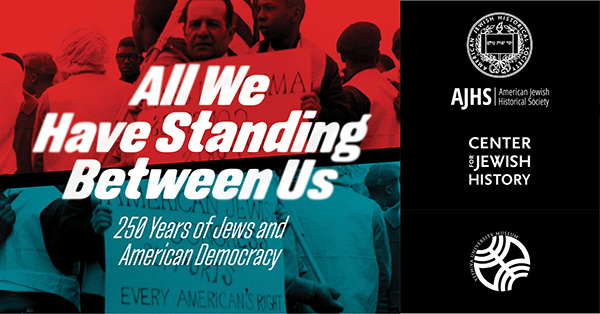
All We Have Standing Between Us: 250 Years of Jews and American Democracy – In-person Program
This event has reached capacity. To join the waitlist, email kbocaletti@cjh.org.
Please join the American Jewish Historical Society, the Center for Jewish History, and Yeshiva University Museum for the opening celebration of All We Have Standing Between Us: 250 Years of Jews and American Democracy.
Opening in commemoration of the 250th anniversary of the signing of the Declaration of Independence, All We Have Standing Between Us explores 250 years of Jewish participation in American democracy. Drawing from the collections of the American Jewish Historical Society, the exhibition examines how Jews have shaped, debated, and challenged the nation's democratic ideals from the Revolutionary era to the present.
We hope you will join us for this special evening and be among the first to experience this landmark exhibition.
Light refreshments and drinks will be served. RSVP by July 10 to reserve your place. Space is limited.
All We Have Standing Between Us: 250 Years of American Democracy is made possible thanks to generous funding from the Leon Levy Foundation. Additional funding is provided by the Knapp Family Foundation, Achelis and Bodman Foundation, the Atran Foundation, and Anonymous.
Ticket Info: This event has reached capacity. To join the waitlist, email kbocaletti@cjh.org.
Presented by:
exhibit opening
kid's event
PJ Library Bookmobile – In-person Event
We are excited to take part in the PJ Library Bookmobile this summer as it stops at the Center for Jewish History! This event is presented by PJ Library on Friday, July 17th at the Center. The Bookmobile will be parked here from 11:00 am to 1:30 pm and is free of cost. Come stop by and take home award-winning children's books that will bring you and the children in your life Jewish joy all summer long.
Ticket Info: Free, no registration required.
Presented by:


kid's event
lecture
On Early Yiddish Literature in Italy – Live on Zoom
Claudia Rosenzweig | Delivered in Yiddish.
In 1982 the celebrated Yiddish scholar Khone Shmeruk published a descriptive catalogue of Yiddish prints from Italy (from 1545 to 1663), listing thirty-five books (including desiderata). Two decades later, in 2003, Chava Turniansky and Erika Timm published a catalogue of old Yiddish manuscripts and printed books that numbered ninety-nine items. Since then, additional manuscripts and printed books have come to light. Claudia Rosenzweig will present some of these newly discovered items, along with the suggestion that, given evidence from written sources, the history of Yiddish in Italy is far more extensive than previously thought and has yet to be evaluated in terms of its richness and variety, as well as its connections with both Hebrew and non-Jewish prints of the time. Most of the works composed, copied, and printed in Italy during this period had a wide reception throughout “Yiddishland.” This suggests that, although the flourishing of Yiddish literature in 16th century Italy isn’t detachable from its local cultural context, the works that were created there became an intrinsic part of general Yiddish culture tout court.
About the Speaker
Claudia Rosenzweig graduated in Classical Studies from the University of Milan and later specialized in Old Yiddish Literature, with an emphasis on Yiddish Literature in Italy. Her PhD thesis, supervised by Prof. Chava Turniansky (Hebrew University, Jerusalem) and Prof. Erika Timm (University of Trier, Germany), focused on the chivalric poem Bovo d’Antona, a Yiddish rewriting of an Italian work composed in ottava rima. Rosenzweig worked with Prof. Erika Timm and Prof. Chava Turniansky on the volume Yiddish in Italia (Milan 2003), a broadly comprehensive presentation of Yiddish Literature in Italy covering more than one hundred texts. In October-November 2011 and February-March 2012 she took part in the European Seminar on Advanced Jewish Studies titled Old Yiddish: Old Texts, New Contexts at the Oxford Center for Hebrew and Jewish Studies.
Rosenzweig is the author of a critical edition of the Yiddish work Bovo d’Antona (Leiden – Boston 2015) and she is preparing a critical edition of the Mayse-bukh (Basel 1602) together with prof. Avidov Lipsker. She has taught at the Hebrew University of Jerusalem, the Università degli Studi di Milano, the Università degli Studi di Venezia, the Università degli Studi di Verona, the Charles University in Prague and Tel Aviv University. Rosenzweig is Associate Professor in the Department of Literature of the Jewish People at Bar-Ilan University (Ramat-Gan).
Ticket Info: Free; registration required.
Presented by:
lecture
exhibit opening
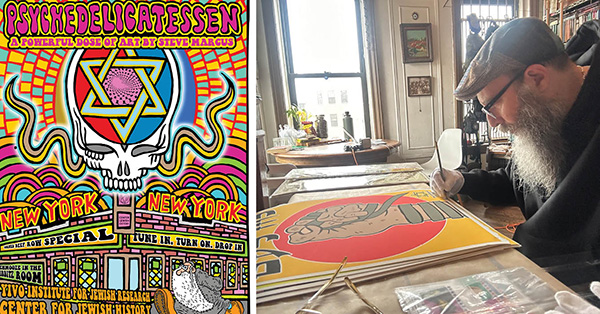
Psychedelicatessen: A Powerful Dose of Art by Steve Marcus – In-person Program
The kaleidoscopic new exhibit, Psychedelicatessen: A Powerful Dose of Art by Steve Marcus, presents a vibrant parodic mashup of 1960s counterculture and Jewish culture seen through the trippy lens of underground artist Steve Marcus. Inspired by the psychedelic art of the 1960s, Jewish culture, and vernacular graphics, Marcus has created a body of work that twists Jewish tradition together with the visual aesthetics of the Jewish delicatessen and Hippie subcultures.
At the heart of Psychedelicatessen is an exploration of cultural memory from multiple perspectives. Marcus draws upon the rich heritage of Eastern European Jewry and the immigrant experience in America, reimagining these traditions through bold colors, layered imagery, and inventive juxtapositions. His artwork invites viewers to consider how Jewish identity is preserved, transformed, and continually reinvented across generations.
Join us for the opening of Psychedelicatessen featuring YIVO Senior Academic Advisor & Director of Exhibitions Eddy Portnoy in conversation with Marcus.
About the Participants
Steve Marcus has received honors and awards from the American Society of Illustrators, and has several works in the art and American history collections in esteemed institutions, notably the the Oakland Museum of California, The Jewish Museum of Florida – FIU, The Yiddish Book Center, The Harvard Library, YIVO Institute for Jewish Research, and The Miami-Dade PLS. He is acknowledged as one of the Lower East Side’s most culturally influential residents in, “Jews: The People’s History of the Lower East Side,” and his work is written about by professors from Ohio State University, Tulane University, Florida State University, Harvard University and in scholarly books published by Duke University Press, The University of Texas Press, and the Florida International University. He is a member of the American Guild of Judaic Art.
Eddy Portnoy received his Ph.D. in Modern Jewish History from the Jewish Theological Seminary and holds an M.A in Yiddish Studies from Columbia. His articles on Jewish popular culture phenomena have appeared in The Drama Review, Polin, and Studies in Contemporary Jewry, among others. In addition to speaking on Jewish popular culture throughout Europe and North America, he has consulted on museum exhibits at the Museum of the City of New York, Musée d'art et d'histoire du judaïsme in Paris, and the Joods Historisch Museum in Amsterdam. He is the author of Bad Rabbi and Other Strange but True Stories from the Yiddish Press, published by Stanford University Press, 2017.
Ticket Info: Free, registration is required.
Presented by:
exhibit opening
lecture
Welcome to Otwock: A Virtual Visit to the Warsaw Suburb Before the War – Live on Zoom
Benny Mer (Majersdorf) | Delivered in Yiddish.
“Every Jewish street in Warsaw was a city unto itself,” wrote Isaac Bashevis Singer, and all the more so each suburb of Warsaw. Otwock was quite different from its neighbors. The crown suburb of the “Otwock Line” was, on its western side, a typical Polish-Jewish shtetl, with synagogues, craftsmen, charitable women, and Hasidim – the latter including the Lubavitcher Rebbe and the musical Modzhitser Rebbe whose homes were there. On its eastern side, Otwock was a Warsaw resort town, with refined villas, gardens, forests, and boarding houses. All that attracted distinguished guests, painters, and writers such as Alter Kacyzne, Kadya Molodowsky, Zusman Segalovitsh, Julian Tuwim, Janusz Korczak, and many others. This virtual visit will acquaint the public with the various facets of old Otwock through poems, short stories, and images. This lecture tour by Benny Mer (Majersdorf) is based on the speaker’s newly published Guide to Yiddish Warsaw, 1938.
About the Speaker
Benny Mer (Majersdorf) was born in Tel Aviv in 1971. He is the author of Smocza: A Biography of a Jewish Street in Warsaw (2018), as well as A Guide to Jewish Warsaw, 1938 (2025), and several other works. He has translated into Hebrew from Yiddish the works of Sholem Aleichem, Avrom Sutzkever, Isaac Bashevis Singer, Alexander Spiegelblat, Rivke Basman Ben-Hayim, among others, and has published an anthology of Yiddish poetry in Hebrew translation. Mer served as editor of the literary supplement of Haaretz and of the journal Dafke: Yiddishland and Its Culture. In 2015 he was awarded the Mendele Prize.
Ticket Info: Free; registration required.
Presented by:
lecture
lecture
The Red Jews: Intertextuality in a Yiddish Myth – Live on Zoom
Rebekka Voß | Delivered in English.
Envisioned as a tribe of ruddy-faced, redheaded, and red-bearded Jewish warriors clad in red attire, the legendary Ten Lost Tribes of Israel are referred to as “Red Jews” (royte yidlekh) in Yiddish. This unique figure is a creation of late medieval vernacular culture in Germany and became a shared motif among both Jews and Christians, circulating in both Yiddish and German. These two linguistic communities interpreted the Red Jews in different ways, each contesting their significance and viewing them through varying shades of red.
This lecture by Rebekka Voß will trace the journey of the Red Jews through both Jewish and Christian imaginations, from their medieval origins to their presence in Old Yiddish and modern Yiddish literature. Focusing on select stories of the Red Jews, the lecture will explore their intertextuality, illustrating how this popular literary motif engaged with canonical texts, including the Bible, works of Hebrew and Yiddish literature (such as Toledot Yeshu, the polemical counter-story of the life of Jesus, and the romance Viduvilt), as well as medieval German literature.
About the Speaker
Rebekka Voß is an associate professor at Goethe University in Frankfurt. Her research focuses on Jewish cultural history in early modern Europe, with special attention to cultural transfer between Jews and Christians.
Ticket Info: Free; registration required.
Presented by:
lecture
conversation
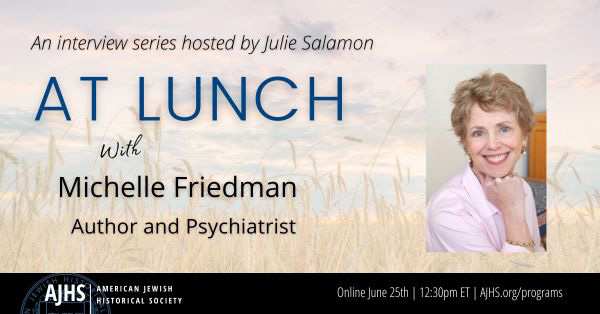
At Lunch with Michelle Friedman – Live on Zoom
Julie Salamon, New York Times best-selling author and journalist, sits down with author and psychiatrist Michelle Friedman to discuss her career and recent book Divine Corners. Michelle Friedman is a psychiatrist, psychoanalyst, and teacher whose life and work explore the art of listening and the resilience of the human spirit. Raised on a chicken farm in the Catskills by Holocaust survivor parents, she became a healer devoted to helping others find meaning and repair. In her recent memoir, Divine Corners, Michelle weaves together hair-raising stories of her parents’ wartime survival with vivid memories of life on the farm. Her unflinching yet loving inquiry explores Jewish identity, resilience, and what makes one person break while another survives.
A graduate of Barnard College, NYU School of Medicine, and the Columbia University Psychoanalytic Center, she holds the Sharon and Steven Lieberman Chair in Pastoral Counseling at Yeshivat Chovevei Torah and is also an Associate Professor of Clinical Psychiatry at the Icahn School of Medicine at Mount Sinai Hospital. She maintains a private practice in Manhattan, where she lives with her husband.
Ticket Info: Free; register online for a Zoom link
Presented by:
conversation
lecture
The Drama of Russian Jewry in the Long Twentieth Century – Live on Zoom
Zvi Gitelman | Delivered in English.
In 1900, there were five million Jews in the Russian Empire, more than in any other country in the world. Today, there are only about 300,000 Jews in the Former Soviet Union. For hundreds of years, Yiddish was the dominant language among the Ashkenazi Jews of Russia, but in 1989, only 11 percent claimed Yiddish was their “mother tongue.” The past 150 years have seen turbulent, sometimes tragic, changes among “Russian Jews.” At one time, they enjoyed dramatic educational, professional, and social upward mobility. But they also experienced two revolutions, two world wars, a civil war, drastic changes in their culture, including Yiddish, and the near-disappearance of Judaism. Their massive emigration, mostly to Israel, North America, and Western Europe, had a profound influence on the countries and cultures of their new homes. This lecture by Zvi Gitelman will explore the transformation of Russian Jewry during the twentieth century.
About the Speaker
Zvi Gitelman is the Preston R. Tisch Professor Emeritus of Judaic Studies and Professor Emeritus of Political Science at University of Michigan. He studies ethnicity and politics, especially in former Communist countries, as well as Israeli politics, East European politics, and Jewish political thought and behavior. His most recent edited book is The New Jewish Diaspora: Russian-speaking Immigrants in the United States, Israel and Germany (Rutgers University Press, 2016). In 2012, Cambridge University Press published his Jewish Identities in Postcommunist Russia and Ukraine: An Uncertain Ethnicity which drew on two large surveys that he conducted with two colleagues in Russia. Gitelman is co-editor of a forthcoming volume on Jewish thought, politics and literatures in the interwar (1918-1939) period (Yale University Press). He is writing a book on ethnic relations in the Soviet armed forces and the partisans during the war, and Soviet policy regarding the Holocaust.
Ticket Info: Free; registration required.
Presented by:
lecture
exhibit opening
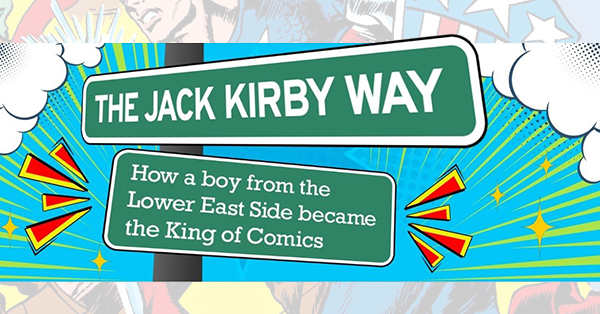
Comics and Cocktails with the Curators – In-person Program
Please note: This event is SOLD OUT.
Join the American Jewish Historical Society (AJHS) and the Center for Jewish History (CJH) for Comics and Cocktails with the Curators, a special opening event for The Jack Kirby Way: How a Boy from the Lower East Side Became the King of Comics.
Before he became the “King of Comics,” Jack Kirby was Jacob Kurtzberg, the son of Jewish immigrants growing up on New York’s Lower East Side during the Great Depression. He would go on to help create the Marvel Universe and forever transform popular culture. Featuring more than 70 pieces of original art, rare comics, and historic artifacts, this first-of-its-kind exhibition explores how Kirby’s Jewish identity, New York roots, and boundless imagination inspired generations of superheroes and stories that changed the world.
Curated by author, pop culture historian, and AJHS Trustee Roy Schwartz, along with Founding Trustee and Director of the Jack Kirby Museum & Research Center, Randolph Hoppe, this exhibition is presented by the American Jewish Historical Society in partnership with the Jack Kirby Museum & Research Center. Karen L. Green, Curator for Comics and Cartoons at Columbia University, will moderate this discussion.
Light refreshments will be served, and space is limited.
Ticket Info: This event is sold out.
Presented by:
exhibit opening
lecture
From Pamphleteers to Podcasts: How Evolving Media Environments Can Fuel Antisemitism and Authoritarianism, and What to Do About It - In-person Program
This event is part of LBI's Forum on Free Speech and Democracy.
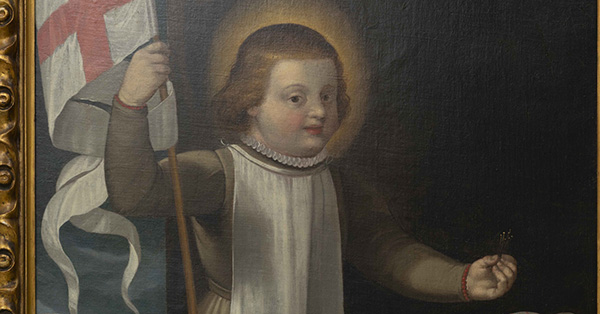
Each advance in media technology can serve both constructive and destructive purposes. When the printing press was invented in the fifteenth century, it helped disseminate the anti-Jewish blood libel and sear the image of a "dangerous" Jew in European Christian imagination. Later, modern newsprint and radio were quickly adopted by antisemites and white supremacists. Today, in the midst of another media revolution, extremism spreads rapidly online through social media and podcasts. This event will ask what role antisemitism and conspiracy theories have historically played in challenging democracies and undergirding authoritarianism. How does the structure of online platforms amplify extremists and create financial incentives for hate? And what should we do about it?
David Brody is the Executive Director and founder of the Alliance of Jewish Americans, a nonprofit, nonpartisan Jewish civil rights organization that confronts extremism and drives legal accountability in the U.S. He is a leading national expert on the intersections of white nationalism, surveillance technologies, and civil rights. Previously he was the director and founder of the Digital Justice Initiative at the Lawyers' Committee for Civil Rights Under Law, where he advocated for policies to protect privacy and civil rights online and litigated against white supremacists and voter suppression efforts.
Magda Teter is Professor of History and the Shvidler Chair in Judaic Studies at Fordham University. She is the author of several award-winning books, most recently, Blood Libel: On the Trail of An Antisemitic Myth (2020), Christian Supremacy: Reckoning with the Roots of Antisemitism and Racism (2023), Blood Libels, Hostile Archives: Reclaiming Interrupted Jewish Lives (2025). Her essays have also appeared in the New York Review of Books, Public Seminar, the JTA, and others. Teter's research has been supported by the John Simon Guggenheim Memorial Foundation, HF Guggenheim Foundation, the Cullman Center at the NYPL, the NEH, and the Center for Jewish History, among others. She is currently the President of the American Academy of Jewish Research.
About the Series Leo Baeck Institute Forum on Free Speech and Democracy
Made possible in part by support from the Erna & Heinz Mayer Fund at the LBI
As the United States observes its semiquincentennial anniversary, one of its most cherished political values is also one of its most hotly debated. Is free speech still protected in America? If not, what poses the greater threat: state repression, a censorious culture, or a corporate media environment where free expression belongs to the highest bidder? In a world where hatred quickly metastasizes online – are the people even safe from free speech?
The ideas that found expression in the First Amendment and the constitutions of other liberal democracies were shaped and reshaped by Jewish thinkers from Spinoza to Arendt, enabled processes of Jewish emancipation and religious reform, and are still seen as undergirding religious freedom in pluralistic societies.
In this series, scholars, activists, and public intellectuals will explore these questions through the lens of German-Jewish history, starting with documents in the LBI collections and mining them for insight into the present.
Ticket Info: Free; registration required
Presented by:
lecture
lecture
Heresy, Witch Hunts, and Political Persecution: The Problem of Speech from Enlightenment to the Present - In-person Program
This event is part of LBI's Forum on Free Speech and Democracy.
Made possible in part by support from the Erna & Heinz Mayer Fund at the LBI
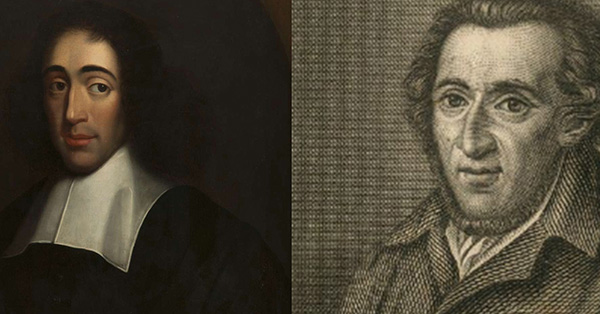
In 1783 the German philosopher Moses Mendelsohn published his monumental work Jerusalem – Or on Religious Power and Judaism where he laid out his blueprint for Jewish political and religious life. At the very center of Jerusalem was the idea that all human beings should be granted the ability to think and speak without religious coercion or censorship. To prove his point, Mendelsohn recuperated the legacy of the most infamous and detested heretic on the Continent, Barukh Spinoza, the so-called “atheist” and political “libertine.”
In this conversation, the philosopher Jason Stanley (Toronto) and the historian Eliyahu Stern (Yale) will discuss the relevance of Mendelssohn’s and Spinoza’s views on heresy and the freedom of speech to the threats facing American political life and Jewish communities and institutions today.
About the Series
Leo Baeck Institute Forum on Free Speech and Democracy
Made possible in part by support from the Erna & Heinz Mayer Fund at the LBI
As the United States observes its semiquincentennial anniversary, one of its most cherished political values is also one of its most hotly debated. Is free speech still protected in America? If not, what poses the greater threat: state repression, a censorious culture, or a corporate media environment where free expression belongs to the highest bidder? In a world where hatred quickly metastasizes online – are the people even safe from free speech?
The ideas that found expression in the First Amendment and the constitutions of other liberal democracies were shaped and reshaped by Jewish thinkers from Spinoza to Arendt, enabled processes of Jewish emancipation and religious reform, and are still seen as undergirding religious freedom in pluralistic societies.
In this series, scholars, activists, and public intellectuals will explore these questions through the lens of German-Jewish history, starting with documents in the LBI collections and mining them for insight into the present.
About the Speakers
Jason Stanley is a philosopher and the Bissell-Heyd-Associates Chair in American Studies at the Munk School of Global Affairs & Public Policy at the University of Toronto. He is the author of seven books, including How Propaganda Works (2015), the New York Times-bestselling How Fascism Works (2018), and Erasing History: How Fascists Rewrite the Past to Control the Future (2024). His books have been translated into more than 25 languages.
Before moving to the Munk School in 2025, Stanley was the Jacob Urowsky Professor of Philosophy at Yale University (2013–2025). He has also taught at Rutgers University (2004–2013), the University of Michigan (2000-2004), and Cornell University (1995-2000).
Eliyahu Stern is Professor of Modern Jewish Intellectual and Cultural History in the Departments of Religious Studies and History at Yale University. Previously, he was Junior William Golding Fellow in the Humanities at Brasenose College and the Oriental Institute, University of Oxford. He is the author of the award-winning, The Genius: Elijah of Vilna and the Making of Modern Judaism (2012). His second monograph Jewish Materialism: The Intellectual Revolution of the 1870s (2018) details the ideological background to Jews’ involvement in Zionism, Capitalism, and Communism. He has served as a term member on the Council on Foreign Relations and a consultant to the Museum of the History of Polish Jews in Warsaw, Poland. Currently, he is a member of the Academic Advisory Board of the Center of Jewish History.
Ticket Info: Free; registration required
Presented by:
lecture
lecture
Bearing Witness Across Generations: The Austrian Heritage Collection at 30 - In-person Program
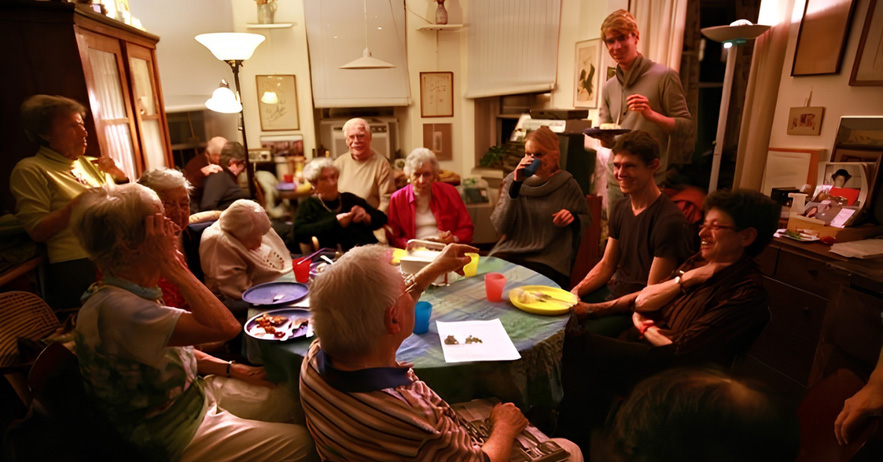
The Austrian Heritage Collection (AHC) is celebrating its 30th anniversary. Established through the collaboration of the National Fund of the Republic of Austria for Victims of National Socialism, the Austrian Cultural Forum New York (ACFNY), the GEDENKDIENST association, and the Leo Baeck Institute New York, Austrian volunteers have been traveling to New York every year since 1996. Since then, the AHC has pursued the goal of documenting the history of Austrian-Jewish emigrants who fled to North America during the years of Nazi rule over Europe.
Thirty years after its founding, 57 different Gedenkdienst volunteers have conducted more than 1,000 oral history interviews. More than 4,000 questionnaires have been returned, and numerous contemporary documents have been collected. The voices of many people who for a long time—particularly in their country of origin, Austria—found little or no public recognition have reached a wider audience through this project. Their stories are also carried forward by the volunteers serving in the Gedenkdienst program.
With the passing of the last emigrants and survivors—what is often referred to as the “end of the era of eyewitnesses”—the AHC is facing a new challenge. Since 2025, it has already become the reality for Gedenkdienst volunteers to interview primarily the children, nephews, and nieces of survivors and emigrants—the so-called second generation. While this will significantly and sustainably change the project in the future, these individuals also bring new perspectives. For this reason, the 30th anniversary of the Austrian Heritage Collection is not only a moment for celebration, but also a time for reflection.
Nina Glueckselig, Leonie Eidinger, and Beatrice Segal: their parents had fled from Austria and found a new home in the United States and Canada. These three members of the second generation tell the stories of their parents and relatives. They speak about their own histories, reflect on the significance of bearing witness, discuss the role of the second generation, and consider the future of the Austrian Heritage Collection.
The event is taking place in cooperation with the Austrian Cultural Forum New York (ACFNY).
About the Speakers
Nina Glueckselig - born in 1956 in Washington Heights, New York, is a retired nurse, social worker, and jewelry designer who researched the experiences of children of Holocaust survivors for her thesis.
Her parents, Leo and Ita Glueckselig, met while studying at the Academy of Fine Arts in Vienna. After a failed escape attempt, Leo witnessed Kristallnacht before emigrating to the United States with his brother and later served in the U.S. Army in the Philippines. Ida fled under an assumed name to Hungary and eventually returned to Poland; after the war, Leo located her through the American Red Cross. Leo went on to work as a graphic designer and illustrator in New York and was part of the Oskar-Maria-Graf Stammtisch, with his artwork exhibited in the US and Austria since 1999.
Listen to the interview with Leo Glueckselig conducted by Martin Horváth in 1997.
Listen to the interview with Nina Glueckselig conducted by Noel Kogler and Pia Maurer in 2025
Leonie Eidinger - daughter of Sidi Shernofsky and Manny Brecher, born in 1954 in Montreal, Canada, is a clinic coordinator for an ophthalmic in-home service for seniors.
Following the November pogrom of 1938, Sidi’s father was interned in Dachau and Buchenwald and released after the family secured visas to Shanghai. In 1939, Sidi and her parents traveled via Genoa to Shanghai, where her mother died shortly after their arrival. Sidi and her father were later forced to move to the Shanghai Ghetto in the Hongkou District, while she attended school outside the ghetto and her father worked as a jeweler. In 1947, they emigrated to Montreal via San Francisco and New York.
Listen to the interview with Sidi Shernofsky conducted by Emma Schrott in 2018.
Beatrice Segal - a clinical social worker and therapist, was born in New York City in 1962 to book editor David Segal and author Lore Segal.
Lore Segal was born in Vienna in 1928 and was sent to England on a Kindertransport after the Anschluss, where she lived with several families before reuniting with her parents. She later studied English literature in London, lived briefly in the Dominican Republic, and immigrated to the United States in 1951. She went on to teach creative writing at various American universities and became a well known author.
Lore Segal was interviewed for the Austrian Heritage Collection twice.
Listen to the interview with Lore Segal conducted by Klaus Fiala in 2008.
Listen to the interview with Lore Segal conducted by Miriam Bonaparte and Kevin Gheorghe in 2023.
Listen to the interview with Beatrice Segal conducted by Pia Mauerer and Noel Kogler in 2025.
Ticket Info: Free; registration required
Presented by:
lecture
celebration
Shmooze & Booze
Please note: This event is SOLD OUT.
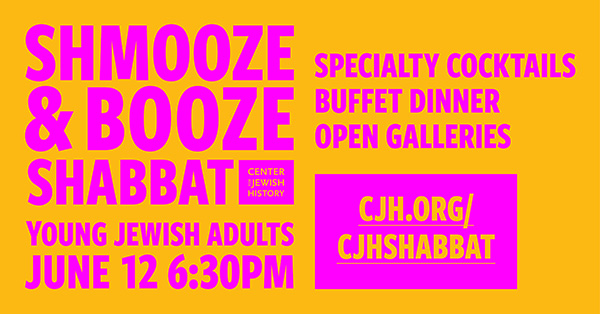
Celebrate the start of summer at Shmooze & Booze Shabbat, an elevated Shabbat dinner experience for young Jewish adults at the Center for Jewish History. Join NYC’s vibrant Jewish community for a stylish evening of connection and culture featuring curated cocktails, a buffet dinner, and exclusive after-hours access to CJH’s galleries.
As the foremost repository of Jewish history in the United States, the Center for Jewish History offers a truly distinctive setting to celebrate Jewish heritage while forging new connections with fellow young Jewish New Yorkers.
Blending the warmth of Shabbat with the energy of summer in the city, this special evening is the perfect opportunity to raise a glass and enjoy community connection in one of New York’s most extraordinary cultural spaces.
Optional Shabbat service at 6:30 pm.
Ticket Info: This event is sold out.
Presented by:


celebration
book talk
Polish-Jewish Masculinities and the Challenge of Modernity - Live on Zoom
At the turn of the twentieth century, Jewish men in Eastern Europe lived in a social reality in which both Jewish and non-Jewish men and women tested, debated, and redesigned masculinities. Men of Valor and Anxiety by Mariusz Kalczewiak explores how religion, class divisions, antisemitism, new domesticity, and militarization changed masculine ideas and practices in Eastern Europe between the 1890s and 1930s. Kalczewiak’s study ventures into the military barracks, yeshivot study halls, fraternity parties, and Jewish homes to demonstrate how complex Jewish masculinities were between orthodoxy, acculturation, Polish and Jewish nationalisms, and changing notions of domesticity and profession. Men of Valor and Anxiety is the first book to demonstrate how the links between ethnicity and gender were constructed within both global and local contexts.
Join YIVO for a discussion with Kalczewiak about this book, led by Miriam Mora.
About the Speakers
Mariusz Kalczewiak is a Professor of Jewish Studies at the University of Lucerne, Switzerland. He is a social and cultural historian of modern Jewish history, with a focus on Latin America and Eastern Europe. His award-winning book Polacos in Argentina: Polish Jews, Interwar Migration, and the Emergence of Transatlantic Jewish Culture was published in 2020 with the University of Alabama Press. His second book Men of Valor and Anxiety: Polish-Jewish Masculinities and the Challenge of Modernity came out in 2025 with Indiana University Press.
Miriam Mora is a historian of American immigration and ethnic history, with a focus on Jewish American gender identity. Her areas of research interest and specialization include modern Jewish history, gender and antisemitism, genocide studies, Holocaust memory and representation in pop culture, masculinity, history of Irish conflict, and American Jewish acculturation. Her first book, Carrying a Big Schtick: Jewish Acculturation and Masculinity in the Twentieth Century was released from Wayne State University Press in 2024. She previously served as Academic Director at the Center for Jewish History in New York City.
Ticket Info: Free; registration is required.
Presented by:
book talk
lecture
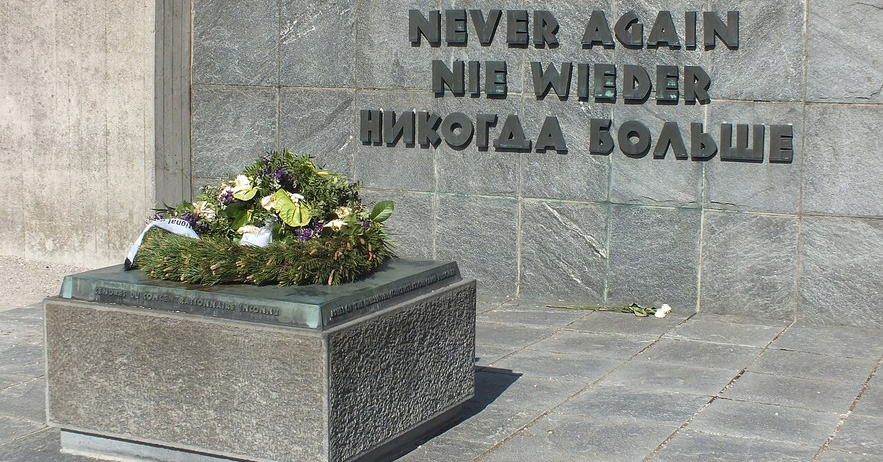
Never Again, When?: German Memory Culture, the Holocaust, and Free Expression - In-person Program
This event is part of LBI's Forum on Free Speech and Democracy.
In a recent article for New German Critique, sociologist Irit Dekel (Indiana University, Bloomington) described the phrase “Never Again” as a floating signifier, “flexible enough to carry different meanings for different audiences while remaining specific enough to galvanize various political actions, depending on the context and speakers.” In a comprehensive analysis of the use of the phrase in German discourse since October 7, 2023, she showed how “Never Again” has been deployed to argue for the singularity of the Holocaust and the need to protect Jews from a feared repetition of the catastrophe. When the same language is invoked to draw universal lessons from the Holocaust, however, it can draw both social and legal censure.
With philosopher Omri Boehm (The New School), Dekel will discuss the origins of the phrase “Never Again” in German history and the ways that Holocaust memory politics impacts free expression in Germany today.
About the Series
Leo Baeck Institute Forum on Free Speech and Democracy
Made possible in part by support from the Erna & Heinz Mayer Fund at the LBI
As the United States observes its semiquincentennial anniversary, one of its most cherished political values is also one of its most hotly debated. Is free speech still protected in America? If not, what poses the greater threat: state repression, a censorious culture, or a corporate media environment where free expression belongs to the highest bidder? In a world where hatred quickly metastasizes online – are the people even safe from free speech?
The ideas that found expression in the First Amendment and the constitutions of other liberal democracies were shaped and reshaped by Jewish thinkers from Spinoza to Arendt, enabled processes of Jewish emancipation and religious reform, and are still seen as undergirding religious freedom in pluralistic societies.
In this series, scholars, activists, and public intellectuals will explore these questions through the lens of German-Jewish history, starting with documents in the LBI collections and mining them for insight into the present.
About the Speakers
Irit Dekel is an Assistant Professor in Germanic Studies and Jewish Studies at Indiana University Bloomington. Her work focuses on the relations between collective memory, media and the public sphere, particularly on Holocaust memorialization and the representation of ethnic and religious difference in contemporary Germany. Dekel’s first book, Mediation at the Holocaust Memorial in Berlin (Palgrave, 2013), analyzed how various groups mediate their experience in the Holocaust Memorial. Her second book, ‘Witnessing Positions: Jews, Memories and Minorities in Contemporary Germany’ is forthcoming with Indiana University Press in January 2027. Dekel co-edited the Routledge Handbook of Memory Activism (2023).
Omri Boehm is Associate Professor and Chair of Philosophy at the New School for Social Research. He teaches and writes on early modern philosophy and philosophy of religion, with a specific focus on Descartes, Spinoza and Kant. His books include The Binding of Isaac: A Religious Model of Disobedience (Continuum, 2007), Kant’s Critique of Spinoza (Oxford University Press, 2014), Haifa Republic: A Democratic Future for Israel (Penguin Random House, 2021), and Radikaler Universalismus: Jenseits von Identität (Propyläen Verlag, 2023). In addition to his academic publications, he has also written for outlets including the LA Review of Books and the New York Times.
Ticket Info: Free; registration required
Presented by:
lecture
book talk
Eastern European Jewish Immigrant Bankers and the Shaping of American Finance, 1873–1930 - Live on Zoom
What are immigrants to do when business opportunities abound in their new home, but banks refuse essential financial support? How could they make the journey in the first place without helping hands? In this lively history, Rebecca Kobrin chronicles the turn-of-the-twentieth-century Jewish immigrants who stepped up by doing the lending themselves. Arriving from the Russian Empire and settling primarily in New York, they made livelihoods by assisting fellow Jews, so they could purchase passage to the United States and, after arriving, obtain credit that other lenders would not dare provide. Drawing on previously unexamined archival materials in Russian, Yiddish, German, and English, Credit to the Nation traces the novel practices of bankers who not only enabled the flourishing of American Jewry, but also revolutionized the US financial industry.
Join us for a discussion with Kobrin about this book, led by Annie Polland.
About the Speakers
Rebecca Kobrin is the Russell and Bettina Knapp Associate Professor of American Jewish History at Columbia University. She works in the fields of immigration history, urban studies, business history, Eastern European history and American Jewish History, specializing in modern Jewish migration. She received her B.A. (1994) from Yale University and her Ph.D. (2002) from the University of Pennsylvania. She served as the Blaustein Post-Doctoral Fellow at Yale University (2002-2004) and the American Academy of Jewish Research Post-Doctoral Fellow at New York University (2004-6). Her book Jewish Bialystok and Its Diaspora (Indiana University Press, 2010) was awarded the Jordan Schnitzer prize (2012). She is the editor of Chosen Capital: The Jewish Encounter with American Capitalism (Rutgers University Press, 2012), Salo Baron: Using the Past to Shape the Future of Jewish Studies in America (Columbia University Press, 2022), and is co-editor with Adam Teller of Purchasing Power: The Economics of Jewish History (University of Pennsylvania Press, 2015).
Annie Polland is a public historian, author, and President of the Lower East Side Tenement Museum, where she served as Vice President for Programs and Education from 2009 to 2017. Prior to her return to the Tenement Museum, she served as Executive Director of the American Jewish Historical Society. She is the co-author, with Daniel Soyer, of Emerging Metropolis: New York Jews in the Age of Immigration (New York University Press, 2013). She served as Vice President of Education at the Museum at Eldridge Street, where she wrote Landmark of the Spirit: The Eldridge Street Synagogue (Yale University Press, 2008).
Ticket Info: Free; registration is required.
Presented by:
book talk
book talk
The Interracial Left and the International Workers Order, 1930–1954 - Live on Zoom
From Popular Front to Cold War tells the story of the International Workers Order (IWO), an organization founded in 1930 to provide life, burial, and health insurance to its members. The IWO broadened its mission to promote interracial solidarity, support labor unions, combat racism and antisemitism, and champion progressive social programs from the Great Depression into the postwar era.
At its height, the IWO had almost two hundred thousand members drawn from a broad ethnic and racial spectrum of the working class. It operated summer camps, published foreign-language newspapers, and supported a wide range of cultural activities. An early advocate for the United States' entry into World War II, the IWO was also ahead of its time in championing the nascent civil rights movement. After the war, it was declared a subversive organization due to its ties to the Communist Party and disbanded in 1954, though its legacy as a model for working-class cooperation across racial and ethnic differences endures to this day.
Join editor Elissa Sampson and contributors Jennifer Young and Felicia Bevel about this book, in a discussion led by Kate Rosenblatt.
About the Speakers
Elissa Sampson is a Research Associate in Cornell University's Jewish Studies Program. She is an urban geographer who studies how the past is actively used to create new spaces of migration, memory, heritage, and activism. Her life-long interest in migration, diaspora, re-diasporization, and culture has been pursued in the Lower East Side, Brooklyn, Jerusalem, Paris, and elsewhere and points to the dynamic interactions among diasporas in shared spaces/places.
Jennifer Young is the Education Program Manager at the Yiddish Book Center. Jennifer served as the Director of Education at the YIVO Institute, where she also worked as Digital Learning Curator to produce YIVO's first online class, Discovering Ashkenaz. She has also worked at the Tenement Museum, the Lower East Side Jewish Conservancy, and the New York Historical Society. Jennifer received a B.A. in Anthropology and Jewish Studies from McGill University and an M.A. in Anthropology from the University of Illinois. After completing doctoral studies in Jewish history at NYU, she received an M.Ed in Museum Curriculum and Pedagogy from the University of British Columbia. She also serves as part of a scholars' working group dedicated to research and scholarship of the Yiddish Left, sponsored by Cornell University.
Felicia Bevel is an Assistant Professor of History at the University of North Florida. Her research and teaching interests include African American history, twentieth century U.S. history, cultural history, and childhood studies. Her current research examines early twentieth century American cultural productions that romanticized the Old South and circulated outside the U.S. within the larger Pacific world, specifically in Canada and Australia. Her work has been supported over the years by the Ford Foundation, ACLS, and Florida Education fund. At UNF, she teaches courses such as the Civil Rights Movement, the Black Pacific, and Blackness in Archives and has served on the advisory boards of the Digital Humanities Institute and Africana Studies. She is also a faculty member on the Red Hill Cemetery Project, a collaboration between UNF and the Okefenokee Heritage Center and Black Hertiage Committtee to document the history of an African American cemetery in Waycross, GA.
Kate Rosenblatt is the Jay and Leslie Cohen Assistant Professor of Religion and Jewish Studies at Emory University. She is a historian of American religion with a focus on the history and experience of American Jews. She earned a BA in American history from Columbia University (2006), a BA in Bible and Ancient Semitic Languages from the Jewish Theological Seminary (2006), and both an MA in Jewish Studies (2009) and a PhD in American history (2016) from the University of Michigan. Her first book, Cooperative Battlegrounds: Farmers, Workers, and the Search for Economic Alternatives (under contract, History of American Capitalism series, Columbia University) details the efforts of a coalition of Americans – workers, farmers, religious clergy and their laities, labor activists, reforms, state and federal bureaucrats, and others – to put forward an alternative expression of American capitalism by way of producer and consumer cooperatives across the twentieth century. She is also at work on a second book project, a reappraisal of the post-World War II American Jewish left.
Ticket Info: Free; registration is required.
Presented by:
book talk
lecture
Tradition in Installments: Rabbinic Periodicals and the Making of an Orthodox Public Sphere, 1850–1940 – Live on Zoom
Between 1850 and 1940, a remarkable transformation occurred in the world of traditional Jewish learning: the emergence of a vibrant "periodical culture." This period witnessed the publication of dozens of distinct titles of "professional" rabbinic journals that reshaped Orthodox intellectual circles. Neither newspapers nor popular magazines, these were specialized scholarly periodicals devoted to Talmudic debate and halakhic reasoning—published in installments and read by scholars from Odessa to Chicago. However, the significance of this medium extends far beyond narrow legal discussions; it both reflected and catalyzed profound shifts within the social and religious landscapes of Orthodox Judaism, playing a pivotal role in forging a cohesive identity within an increasingly interconnected world.
Despite its impact, this phenomenon has remained almost entirely unstudied, falling between the cracks of historians focused on popular press and traditional scholars focused on legal content rather than media form. This lecture introduces a major research project that draws on YIVO’s unparalleled holdings to recover these journals as a historical phenomenon – one that transformed how rabbinic scholars argued, published, and understood themselves as a community. By adopting modern attributes and serial formats, these publications transformed private correspondence into a public, interactive, and transnational rabbinic public sphere, generating a new type of intellectual "buzz."
In this lecture, Elad Schlesinger will discuss how these journals served as a stage for intense halakhic and ideological polemics, simultaneously challenging and reinforcing traditional structures of authority; examine how they provided a unique hybrid space where tradition and innovation coexisted without rigid boundaries; and show how they fostered global connectivity and a sense of scholarly universality. Ultimately, these modern journals did not merely document Orthodox life; they actively shaped it.
About the Speaker
Elad Schlesinger studies Jewish and European history, rabbinic culture, and Jewish law. His work examines the sociology of knowledge production, the evolution of scholarly practices, and the intersection of law and print culture from the late Middle Ages to the modern era. His current research focuses on rabbinic periodicals as a phenomenon of media and intellectual history. He received his PhD from Ben-Gurion University of the Negev and is currently a postdoctoral visiting scholar at the Skirball Department of Hebrew and Judaic Studies at New York University. Prior to that, he was the Gruss Scholar-in-Residence at NYU Law School. He is the 2025-2026 recipient of the The Professor Bernard Choseed Memorial Fellowship and the Natalie and Mendel Racolin Memorial Fellowship in East European Jewish Studies.
Ticket Info: Free; register for an email reminder.
Presented by:
lecture
workshop
Community Read: The Yiddish Sherlock Holmes - Live on Zoom
Meet Max Spitzkopf: legendary private eye, undefeated foe of villains, and passionate defender of the Jewish people. No matter how hopeless or dangerous the case, when “the investigatory profession’s greatest artist” is summoned, justice is assured. Aided by his trusty assistant, Fuchs, super-sleuth Spitzkopf deploys equal parts physical bravery and intellectual ingenuity—not to mention a knack for stealthy disguise—to unpick evil conspiracies, outwit the canniest of criminals, and restore moral order to the world. Giving a unique twist to a beloved literary genre, Spitzkopf’s mysteries are a vibrant testament to Jewish life, in all its variety, during the last years of the Austro-Hungarian Empire.
Join us for a beshutfesdike leyenung, or a “Community Read.” Led by translator Mikhl Yashinsky, attendees will read selections of the original Yiddish text from Adventures of Max Spitzkopf: The Yiddish Sherlock Holmes by Jonas Kreppel.
Read a selection of the text in Yiddish, transliteration, and English translation.
About the Speaker
Mikhl Yashinsky is a writer, singer-actor, and teacher in Manhattan. He was born in Detroit and graduated with a degree in modern European history and literature from Harvard. His “Di psure loyt khaim” (The Gospel According to Chaim), put on by New Yiddish Rep in 2024, was hailed as the first new full-length Yiddish-language drama produced professionally in the United States, outside of the Hasidic world, for many decades and “jolted the repertoire with a work that is both traditional and delightfully subversive” (Forward). His Yiddish-language erotic one-act “Vos flist durkhn oder” (Blessing of the New Moon) premiered at 2022’s Lower East Side Play Festival. With National Yiddish Theatre Folksbiene, he has performed in “Fidler afn dakh” (Fiddler on the Roof) directed by Joel Grey, “Tsvishn falndike vent” (Amid Falling Walls) and “Di kishef-makherin” (The Sorceress), in which Mikhl brought a “keen, if malevolent, psychology” to the title role (New York Times). In 2023, Yashinsky made his Carnegie Hall début, singing the anthem of the Vilna Partisans in the Holocaust memorial concert “We Are Here.” He has taught Yiddish at Columbia, University of Michigan, Tel Aviv University, UMass Amherst, the Yiddish Book Center, YIVO, and The Workers Circle, and co-authored the award-winning textbook In eynem. His translations of the memoirs of Ester-Rokhl Kaminska, the “Mama of Yiddish Theatre,” and the detective stories of Max Spitzkopf, the “Yiddish Sherlock Holmes,” were published in 2025 by Bloomsbury and the Yiddish Book Center, respectively. More information on his website: www.yashinsky.com
Ticket Info: Free; registration is required.
Presented by:
workshop
book talk
Malka Owsiany Recounts by Mark Turkow - Live on Zoom
First published in Yiddish in 1946 and translated into Spanish in 2001, Malka Owsiany Recounts...: A Chronicle of Our Time by Mark Turkow is now available for the first time in English. Malka Owsiany was only 20 years old when she described the horrors of the Holocaust to Yiddish writer and Jewish community leader Mark Turkow. Malka’s account was among the first Holocaust testimonies available in the immediate postwar years. She discusses rebuilding her life and marrying a fellow survivor, Meir, as well as her memories of the rich Polish Jewish communal life from her youth that was destroyed by the Nazis.
Join us for a talk with translator Sandra Chiritescu about this English translation, in a discussion led by Rachelle Grossman.
About the Speakers
Sandra Chiritescu is Clinical Assistant Professor of Yiddish at New York University. She has previously taught Yiddish at Columbia University and the Worker’s Circle. She holds a BA in German philology from the University of Zurich and a PhD in Yiddish Studies from Columbia University. Her dissertation “Bubbes, Mames and Daughters: Uncovering Twentieth- and Twenty-First Century American Jewish and American Yiddish Feminist Genealogies” brings together her research interests in Yiddish literature and culture, American Jewish literature, feminist and queer theory, and translation theory. Her translation of an early Holocaust survivor testimony from 1946 by a woman is available under the title Malka Owsiany Recounts (Cherry Orchard Press, 2025).
Rachelle Grossman is an assistant professor of comparative literature at the University of Illinois, Urbana-Champaign. Her work focuses on the intersection of Yiddish and its transnational connections with other literatures, languages, and cultures. In her research, she develops a geopolitical approach to literature, focusing especially on the transformation of literary centers and peripheries in the postwar period. She is also interested in technologies of print and how they impact literature as material culture.
Ticket Info: Free; registration is required.
Presented by:
book talk
concert
Leo Zeitlin and the Music of His World - In-person Program and Live on Zoom
Leo Zeitlin (1884–1930) was a composer, violinist, violist, and conductor born in Pinsk who specialized in classical works infused with Jewish themes. Best known for his Eli Zion for cello and orchestra, Zeitlin was an active member of the St. Petersburg Society for Jewish Folk Music and spent formative years teaching and conducting in Ekaterinoslav and Vilna before emigrating to New York, where he worked as an arranger and violist for the Capitol Theatre.
After his death, Zeitlin’s music fell into obscurity until cellist and musicologist Paula Eisenstein Baker (1939–2024) began studying and championing his work in the late 1980s. Eisenstein Baker’s publications in YIVO Annual and other journals, as well as her critical edition of Zeitlin’s complete chamber music for A-R Editions, were instrumental in reviving his legacy. This concert celebrates Eisenstein Baker’s scholarship and the recent donation of her archival collection to YIVO.
Performances by Julian Schwarz (cello), Marika Bournaki (piano), Peter Sirotin and Daniel Kurganov (violins), Colin Brookes (viola), and Ori Marcu (mezzo-soprano) will feature a variety of chamber and vocal music by Zeitlin, alongside works by composers with whom he was in dialogue, including Joseph Achron, Alexander Krein, Joachim Stutschewsky, Mikhail Gnesin, Lazare Saminsky, Joel Engel, Alexander Zhitomirsky, and Michael Lewin.
The Sidney Krum Young Artists Concert Series is made possible by a generous gift from the Estate of Sidney Krum.
This program is supported, in part, by public funds from the New York City Department of Cultural Affairs, in partnership with the City Council.
Presented by:
concert
exhibit opening
Jews Are Magic: Occult Practices from Palmistry to Professional Psychic – In-person Program and Live on Zoom
From palm and face reading to phrenology; from reading tea leaves and coffee grounds to lead and wax pouring practices; through to mind-reading, hypnosis, and mentalism, the Jewish experience with the occult is a rich field for exploration that continues into the present.
The opening of YIVO’s latest exhibit, Jews Are Magic: Occult Practices from Palmistry to Professional Psychics, will include a panel discussion featuring specialists on the Jewish occult, Samuel Glauber and Rokhl Kafrissen, moderated by YIVO Senior Academic Advisor & Director of Exhibitions, Eddy Portnoy. The discussion will consider the history and nature of Jewish occult practices, as well as their modernization and professionalization.
About the Speakers
Samuel Glauber is the Miriam Barr Librarian for Jewish & Near Eastern Studies at Washington University in St. Louis. A scholar of modern Judaism specializing in East European Jewry and its diaspora communities, he is currently completing a PhD in the Department of Jewish Thought at Ben-Gurion University of the Negev, where he is writing a dissertation exploring Jewish engagement with modern occult currents in late-nineteenth- and early-twentieth century Eastern Europe. His work has appeared in, among other journals, Nashim, Jewish Historical Studies, In geveb, Polin, and East European Jewish Studies, and he is the co-editor of four collections of Hebrew essays published by Blima Books. In 2021–2022, he held the Fellowship in American Jewish Studies at YIVO, where he worked on the archive of Yiddish writer and occultist B. Rivkin, and in 2026–2027 he will be the inaugural recipient of the YIVO Ben-Gurion University Fellowship in Jewish Studies.
Rokhl Kafrissen is a journalist, teacher, and playwright and the winner of the prestigious 2022 Adrienne Cooper Dreaming in Yiddish prize. Between 2017 and the end of 2024, her “Rokhl’s Golden City” column appeared 150 times in Tablet magazine, covering the length and breadth of Yiddish culture. In the fall of 2023 and 2024, she designed and taught courses for the Yiddish Book Center focusing on Ashkenazi women's folk magic. Her ongoing series of “Everyday Ashkenazi Magic” classes have developed a cult following online, covering topics such as the evil eye, Yiddish incantations, spirit intercession work, and recovering embodied spiritual practices of the shtetl.
Eddy Portnoy is the Senior Academic Advisor and Director of Exhibitions at the YIVO Institute for Jewish Research. The exhibitions he has created for YIVO have won plaudits from The New York Times, The Wall Street Journal, VICE, The Forward, and others. He has written numerous articles on topics relating to Jewish popular culture and is also the author of Bad Rabbi and Other Strange but True Stories from the Yiddish Press (Stanford University Press, 2017).
Ticket Info: Free; register for an email reminder.
Presented by:
exhibit opening
conversation
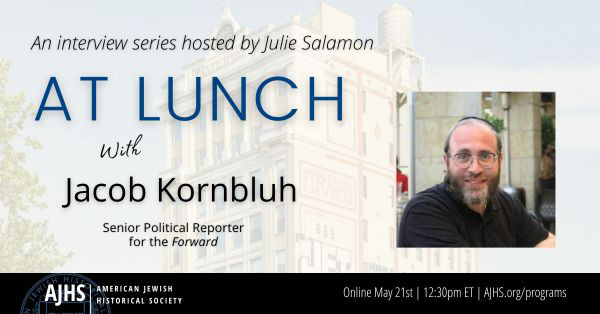
At Lunch with Jacob Kornbluh – Live on Zoom
Julie Salamon, New York Times best-selling author sits down with the Forward’s Senior Political Reporter Jacob Kornbluh. Kornbluh is a British-American who covers events related to New York City and the Jewish Community. He received attention for his coverage of Jewish responses to COVID-19, notably in New York’s Orthodox population. Kornbluh was profiled in the New York Times for his coverage of recently inaugurated NYC Mayor Zohran Mamdani and his administration.
Ticket Info: Free; register online for a Zoom link
Presented by:
conversation
concert
Jewish Songs and Dances for Piano: Juliusz Wolfsohn’s 'Paraphrasen' - Book III – Live on YouTUbe
Join YIVO for a YouTube premiere performance by Ryan MacEvoy McCullough of Book III of Juliusz Wolfsohn’s Paraphrasen: a collection of 12 virtuosic piano fantasies based on Yiddish folksongs. Wolfsohn was a Warsaw- born pianist, critic, and composer who was active in the Association for the Promotion of Jewish Music in Vienna. Born in Warsaw in 1880, Wolfsohn later settled in the United States, where he died in 1944. Paraphrasen is one of multiple works Wolfsohn composed on Eastern European Jewish themes.
Register for the YouTube premiere performance of Paraphrasen, Book II taking place on March 9, 2026.
Watch the performance of Paraphrasen, Book I.
The Sidney Krum Young Artists Concert Series is made possible by a generous gift from the Estate of Sidney Krum.
About the Performer
Pianist Ryan MacEvoy McCullough has developed a rich musical life as soloist, vocal and instrumental collaborator, composer, recording artist, and pedagogue. His growing discography features many world premiere recordings, including solo piano works of Milosz Magin (Acte Prealable), Andrew McPherson (Secrets of Antikythera, Innova), John Liberatore (Line Drawings, Albany), Nicholas Vines (Hipster Zombies from Mars, Navona), art song and solo piano music of John Harbison and James Primosch (Descent/Return, Albany), and art song by Sheila Silver (Beauty Intolerable, Albany). He has also appeared on PBS’s Great Performances (Now Hear This, “The Schubert Generation”) and NPR’s From the Top. He has appeared as a concerto soloist with major orchestras including with the Los Angeles Philharmonic and Toronto Symphony Orchestra and has collaborated with such conductors as Gisele Ben-Dur, George Benjamin, Fabien Gabel, Leonid Grin, Anthony Parnther, Larry Rachleff, Mischa Santora, and Joshua Weilerstein. He lives in Kingston, NY, with his wife, soprano Lucy Fitz Gibbon.
Ticket Info: Free; register for an email reminder.
Presented by:
concert
concert
Khantshe in Amerike — An Operetta by Joseph Rumshinsky - In-person Program and Live on Zoom
Join YIVO for a performance of the music of Khantshe in Amerike, a 1912 operetta with music by Joseph Rumshinsky, play by Nokhem Rakov, and lyrics by Isidore Lillian.
Premiered in New York City, Khantshe in Amerike was subsequently performed around the world. The show was a turning point in Rumshinsky’s output, noted for having put “American rhythm” on the Yiddish stage for the first time according to Yiddish theater historian Zalmen Zylbercweig (1894–1972). Khantshe was also a star vehicle which marked a pivotal moment in the career of singer, actor, and impresario Bessie Tomashefsky.
Khantshe in Amerike is a musical comedy whose action revolves around an independent minded young woman named Khantshe who dresses as a man and becomes the chauffeur for the wealthy Rubin Goldhendler. The show touches on serious topics including love, gender, women's suffrage and the changing social status of women in turn-of-the-century America.
Reconstructed from a variety of archival materials collected at YIVO—including from the recently donated Tomashefsky Archive from Michael Tilson Thomas—the operetta will be performed by students of the Bard Conservatory Vocal Arts Program.
The Sidney Krum Young Artists Concert Series is made possible by a generous gift from the Estate of Sidney Krum.
This program is supported, in part, by public funds from the New York City Department of Cultural Affairs, in partnership with the City Council.
Ticket Info:
In Person: $15; YIVO members & students: $10
Livestream: Free; registration is required
Presented by:
concert
lecture
From Lublin to New York and Back: Yankev Glatshteyn and His Peregrinations – Live on Zoom
Yankev Glatshteyn (1896-1971), known in English as Jacob Glatstein, was a sophisticated Yiddish poet experimenting with form and language, as well as a novelist, short story writer, a versatile critic, editor and an important New York intellectual. Born in Lublin, Poland, Glatshteyn spent the first eighteen years of his life there before leaving in 1914, just before the outbreak of WWI, for New York where he, along with other Yiddish poets, established an important literary movement called Introspectivism in English and Inzikhism in Yiddish.
In the summer of 1934, he journeyed to Poland to visit his family and see his dying mother. The result of that visit were two travelogues: Ven Yash iz geforn (1938) and Ven Yash iz gekumen (1940]. In these books Glatshteyn combines his reminiscences and reflections from various times, but late 1930s journey and his early years in Lublin, juxtaposed with his American experience are central. Lublin and the surrounding region thus occupy an important place in these books.
Glatshteyn frequently returned to Lublin in his poetry as well. His first collection of poems from 1921 was entitled Yankev Glatshteyn, in agreement with the Inzikhist poetic credo to focus on the self. Forty-five years later, in 1966, Glatshteyn published a collection of poems entitled: A Yid fun Lublin [A Jew from Lublin]. No longer focusing primarily on himself, he becomes a Jew from Lublin, walking the streets of New York, feeling that he is part of the city.
In addition to focusing on the centrality of Lublin in Glatshteyn’s literary universe, new archival discoveries, including information about his post-WWII contacts with Yiddish writers and activists in Poland and his unfulfilled plan to visit the city of his birth in August 1964, thirty years after the first journey, will be explored.
About the Speaker
Monika Adamczyk-Garbowska is Professor of Comparative Literature at Maria Curie-Sklodowska University in Lublin; in the years 2000-2011 she was the Head of the Center for Jewish Studies. She is the author and editor of several books on Jewish topics in Polish and co-editor of Contemporary Jewish Writing in Poland: An Anthology (2001, with Antony Polonsky); Jewish Presence in Absence: The Aftermath of the Holocaust in Poland 1944-2010 (2014, with Feliks Tych); and Polin 28: Jewish Writing in Poland (2016, with Eugenia Prokop-Janiec, Antony Polonsky and Slawomir Zurek). She has translated more than twenty books from English and Yiddish into Polish. In 2004 she received the Jan Karski & Pola Nirenska Award for her research on Yiddish literature and language and in 2016 Irena Sendlerowa Memorial Award. She is the 2025-2026 Workmen’s Circle/Dr. Emanuel Patt Visiting Professorship in Eastern European Jewish Studies at the YIVO Institute for Jewish Research.
Ticket Info: Free; register for an email reminder.
Presented by:
lecture
walking tour
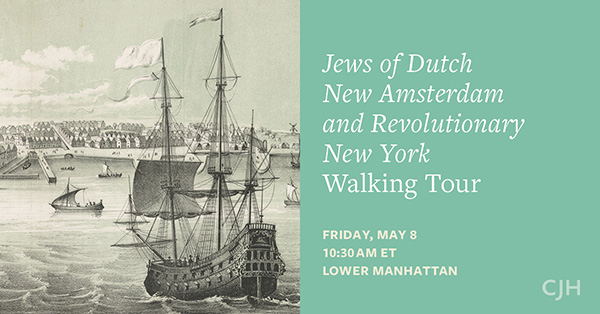
Jews of Dutch New Amsterdam and Revolutionary New York
On this tour, we will explore the origins of the American Jewish story, from the very first 23 Jewish refugees in 1654 in New Amsterdam to those who fought to ensure that their new home would honor religious tolerance. We'll see the oldest Jewish cemetery in the United States, complete with Jews who fought for and established the country. New York has been one of the great centers of 2,000 years of the Jewish diaspora, but it was also the origin point of the American Jewish experience.
The tour takes place using NYC sidewalks and is accessible to participants with various levels of mobility. There may be cracks and normal wear-and-tear present on the sidewalks. Please dress appropriately for the weather, as the tour takes place, rain or shine. The length of the walking tour is approximately two and a half hours.
The meeting location for the tour will be e-mailed to all registered participants.
This program is sponsored by the Ackman & Ziff Family Genealogy Institute.
About the Tour Guide
After a stint in finance in NYC, Jonathan Goldstein made Aliya in 2006 and got his hands in the dirt, earning an MA in Land of Israel Studies and Archeology at Bar Ilan University as well as the Ministry of Tourism's Guiding Certification. Since then, he has been creating Jewish heritage travel experiences around the world focused on exploring questions of identity and our place in this complex world we live in. His primary areas of expertise include Israel, Central Europe, New York City, and the last 4,000 years of Jewish history.
Ticket Info: The tour is sold out.
Presented by:
walking tour
the blavatnik chamber music series at cjh
From Café to Concert Hall - In-Person Concert & Live on YouTube
Join Phoenix Chamber Ensemble pianists Vassa Shevel and Inessa Zaretsky with guest artists Anna Elashvili (violin), Daniel Panner (viola), and Serafim Smegelskiy (cello), for an evening of Paul Schoenfeld, Clara Schumann, and Robert Schumann.
Program:
Paul Schoenfeld - Café Music for Piano Trio
Clara Schumann, Three Romances for Viola and Piano, Op.22
Robert Schumann, Piano Quartet in E- Flat Major, Op.47
Founded in 2005 by pianists Vassa Shevel and Inessa Zaretsky, the Phoenix Chamber Ensemble has become a vital part of the New York classical community, presenting more than 70 public concerts at the Center for Jewish History. The ensemble has garnered a devoted following with its innovative programming and sensitive interpretations, earned an international reputation presenting concerts in Russia, Poland, Italy, and other European venues, and collaborated with numerous acclaimed guest artists, including clarinetist David Krakauer, the Grammy-nominated Enso Quartet, the Tesla Quartet, members of the Jasper String Quartet, the New York Little Opera Company, the Metropolitan Opera, and New York City Ballet.
Made possible by the Stravinsky Institute Foundation through the generous support of the Blavatnik Family Foundation.
Ticket Info:
In-person: $18 general, $10 seniors, $8 members click here to register
YouTube: Pay what you wish; click here to register
Presented by:
the blavatnik chamber music series at cjh
lecture
Yiddish Theater, George Gershwin, and the Birth of an American Sound - Live on Zoom
As a teenager, George Gershwin attended Yiddish theater regularly. Khantshe in Amerike, by family friend Joseph Rumshinsky, featured a working-class woman asserting her rights and her desires. But not only did the show include a Suffragette Parade—it has also been described as the first Yiddish musical to incorporate American rhythm. This lecture by scholar Ronald Robboy will explore the idea that Gershwin’s internalization of Black Americans’ music was influenced by his early immersion in Yiddish theater.
This program is supported, in part, by public funds from the New York City Department of Cultural Affairs, in partnership with the City Council.
About the Speaker
Ronald Robboy is a musician and independent scholar based in San Diego, where he was a professional cellist for many years and, beginning in the 1970s, an early West Coast experimentalist in the klezmer revival. He has written and lectured extensively on Yiddish theater music, and in 1998 was named Senior Researcher for Michael Tilson Thomas’s Thomashefsky Project. Robboy is leading YIVO Institute’s reconstruction of the score to composer Joseph Rumshinsky’s operetta Khantshe in Amerike (1912), to be performed in New York at the Center for Jewish History in May 2026.
Ticket Info: Free; registration is required.
Presented by:
lecture
book talk
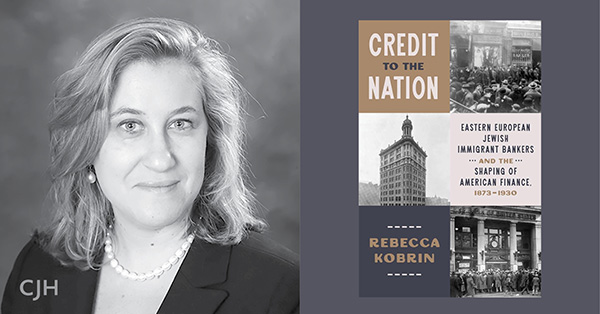
Credit to the Nation, Rebecca Kobrin - In-person Program
Join us for a compelling book talk celebrating Credit to the Nation: Jewish Immigrant Bankers and American Finance, 1870–1930. Historian Rebecca Kobrin uncovers a powerful and often overlooked story: how Jewish immigrants, shut out of traditional financial institutions, built their own systems of credit to survive and thrive in the United States.
Arriving from the Russian Empire at the turn of the twentieth century, these immigrants created networks of lending that enabled others to secure passage to America, establish businesses, and gain a foothold in a new society. Drawing on rich archival materials in Russian, Yiddish, German, and English, Kobrin traces how these grassroots financial practices not only sustained immigrant communities but also reshaped New York’s urban and economic landscape. Their investments fueled real estate growth across the city, even as speculation contributed to the dramatic collapse of institutions like the Bank of United States during the Great Depression.
At once a story of innovation and caution, Credit to the Nation connects the past to the present, asking what happens when access to credit is denied and how marginalized communities respond.
Kobrin will be joined in conversation with Michael R. Cohen, Executive Director of the Grant Center for the American Jewish Experience and Stuart and Suzanne Grant Professor of the American Jewish Experience at Tulane University.
About the Speakers
Rebecca Kobrin is the Russell and Bettina Knapp Associate Professor of American Jewish History at Columbia University and Co-Director of the Institute for Israel and Jewish Studies. A leading scholar of modern Jewish migration, her work spans international migration, urban history, American religion, and diaspora studies. She is the author and editor of several award-winning books, including Jewish Bialystok and Its Diaspora, recipient of the Jordan Schnitzer Prize, and a co-leader of the acclaimed Historical NYC Project, a digital map visualizing demographic change in New York City from 1850 to 1940. She has also received Columbia University’s Lenfest Distinguished Faculty Award for excellence in teaching and mentorship.
Michael R. Cohen is Executive Director of the Grant Center for the American Jewish Experience and Stuart and Suzanne Grant Professor of the American Jewish Experience at Tulane University. A historian of American Jewish life, his scholarship explores Jewish politics, identity, and communal leadership in the United States. He is the author of The Birth of Conservative Judaism: Solomon Schechter’s Disciples and the Creation of an American Religious Movement, and his work has appeared in numerous academic journals and edited volumes. In addition to his research, Cohen is an engaged public historian and educator, frequently contributing to conversations on Jewish history and contemporary issues.
Book signing and dessert reception to follow the discussion.
Ticket Info: Free, pay what you wish; registration is required.
Presented by:
book talk
book talk
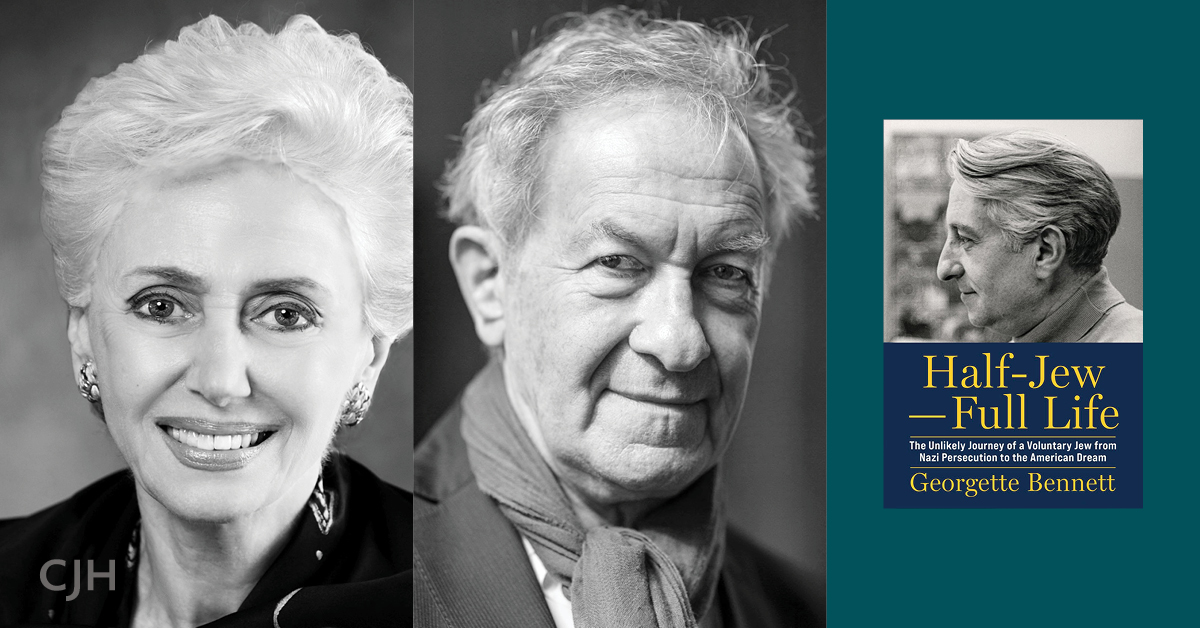
Half-Jew, Full Life - In-person Program
Join us for an engaging evening with Dr. Georgette Bennett in conversation with Sir Simon Schama as they discuss Bennett’s new book, Half-Jew, Full Life: The Unlikely Journey of a Voluntary Jew from Nazi Persecution to the American Dream. This special book talk explores themes of identity, memory, resilience, and belonging, brought to life through Bennett’s deeply personal story and Schama’s incisive historical perspective.
Dr. Georgette Bennett is an award-winning sociologist, author, and former broadcast journalist, as well as an innovative philanthropic leader. She is the founder of the Multifaith Alliance, which has mobilized more than $630 million in humanitarian aid, and previously established the Tanenbaum Center for Interreligious Understanding. A pioneer in community policing earlier in her career, she has also advised the U.S. State Department on countering religion-based violence. Dr. Bennett is the author of several books, including Religicide and Thou Shalt Not Stand Idly By, and has received numerous honors, including the AARP Purpose Prize and recognition on Forbes’ “50 Over 50 Women of Impact” list.
Sir Simon Schama is University Professor of Art History and History at Columbia University and a Contributing Editor of the Financial Times. He has previously taught at Cambridge, Oxford, and Harvard Universities. An award-winning author of more than twenty books translated into over twenty languages, his works include The Story of the Jews, Volumes I and II. His most recent book, Foreign Bodies: Pandemics, Vaccines and the Health of Nations, was published in 2023. Schama is also the writer-presenter of more than sixty documentaries on art, history, and literature for BBC television; his most recent film, The Road to Auschwitz, aired on PBS in 2025.
Together, Bennett and Schama will explore the intersections of personal history and collective memory, offering a thought-provoking conversation on heritage, identity, and the enduring impact of the past. A Q&A with the audience will follow.
Ticket Info: Free, pay what you wish
Presented by:
book talk
conference
Antisemitism in the United States Today: Current Social Science Research – In-Person Program
Dwarfed by other research in social sciences, antisemitism appears to be emerging or perhaps reemerging as a topic for scholarly research. While much of the recent scholarship on antisemitism has been impressionistic or personal reflection, there is a small body of rigorous social science research.
This conference brings together experts from the fields of Psychology, Political Science, Human Development, Education, Technology, and Social Work to discuss research on antisemitism.
The conference topics have been carefully selected after examining the published literature on antisemitism, and an assessment of the current professional and educational landscape.
The six topics include:
- Defining and Measuring Antisemitism
- Psychological and Social Mechanisms of Antisemitism
- Antisemitism Online
- The College Campus Environment
- Professional Organization Response and Graduate Training
- Systemic Change Strategies to Confront Antisemitism
Preliminary Schedule of Events
(All times are tentative)
8:30 – 9:30am: Check-In & Breakfast
9:30 – 9:40am: Welcome
- Dr. Leslie F. Halpern, Dean, Ferkauf Graduate School of Psychology Yeshiva University
- Dr. Randy Magen, Dorothy & David Schachne Dean, Wurzweiler School of Social Work Yeshiva University
9:40 – 10:25am: Keynote Address
- Dr. James Loeffler, Felix Posen Professor in Modern Jewish History, Director, Leonard and Helen R. Stulman Jewish Studies Program
Johns Hopkins University
Symposium Sessions
10:30 – 11:00am: Symposium 1: Defining and Measuring Antisemitism
Facilitator: Dr. Charlie Auerbach, Professor, Wurzweiler School of Social Work
Presenters:
- Dr. Jeff Sherman, Professor, Department of Psychology, UC Davis
- Dr. Graham Wright, Associate Research Scientist & Associate Research Professor, Cohen Center for Modern Jewish Studies & Heller School for Social Policy, Brandeis University
11:05am – 12:00pm: Symposium 2: Psychological and Social Mechanisms of Antisemitism
Facilitator: Dr. Sarah L. Friedman, Research Professor, Department of Psychological and Brain Sciences,The George Washington University
Presenters:
- Dr. Jeff Sherman, Professor, Department of Psychology, UC Davis
- Dr. Kent Harber, Professor, Department of Psychology, Rutgers University – Newark Campus
- Dr. Caryn Block, Professor of Psychology and Education, Teachers College, Columbia University
12:00 – 12:50pm: Lunch Break
1:00 – 1:55pm: Symposium 3: Antisemitism Online
Facilitator: Dr. Andrea H. Weinberger, Professor, Ferkauf Graduate School of Psychology
Presenters:
- Dr. Todd Pittinsky, Professor, Technology & Society, Stony Brook University
- Dr. Jeremy Blackburn, Associate Professor, School of Computing, Binghamton University (SUNY)
- Dr. Gunther Jikeli, Associate Professor for the Study of Antisemitism, Institute for the Study of Contemporary Antisemitism, Indiana University Bloomington
2:00– 2:40pm: Symposium 4: The College Campus Environment
Facilitator: Dr. Jessica Kahn, Associate Dean, Wurzweiler School of Social Work
Presenters:
- Dr. Graham Wright, Associate Research Professor, Cohen Center for Modern Jewish Studies, Brandeis University
- Dr. Dana Weinberg, Professor of Sociology, Queens College, CUNY
2:40 – 3:55pm: Beverage & Snack Break
3:00 – 3:55pm: Symposium 5: Professional Organization Response and Graduate Training
Facilitator: Dr. Arlene (Lu) Steinberg, Ferkauf Advisory Board Chair, APA Council Leadership Team (CLT) Member-at-large
Presenters:
- Dr. Dana Marlowe, Clinical Professor, Graduate School of Social Service, Fordham University
- Dr. David R. Hodge, Distinguished Professor, Spirituality, Religion and Culture, School of Social Work, Arizona State University
- Dr. Dan Livney, APA Division 39 Board Member, APA Council Representative
4:00 – 4:55pm: Symposium 6: Systemic Change Strategies to Confront Antisemitism
Facilitator: Dr. Sarah Bloch-Elkouby, Assistant Professor, Ferkauf Graduate School of Psychology
Presenters:
- Dr. Miri Bar-Halpern, Director of Trauma Services and Training, Parents4Peace
- Dr. Tara Liberman, Founder & Director, Jewish Community Mental Health Initiative (JCMHI)
- Dr. Laura Shaw Frank, Vice President, American Jewish Committee (AJC), AJC Center for Education Advocacy
5:00 – 5:15pm: Concluding Remarks
- Dr. Leslie F. Halpern, Dean, Ferkauf Graduate School of Psychology Yeshiva University
- Dr. Randy Magen, Dorothy & David Schachne Dean, Wurzweiler School of Social Work Yeshiva University
Free admission, including all CEUs earned by attending. Register Here
Ticket Info: Free admission, including all CEUs earned by attending.
Presented by:
conference
book talk
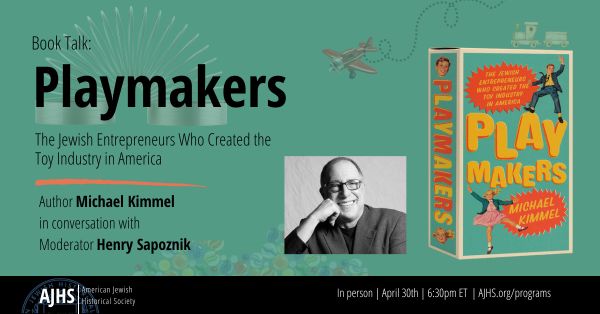
Playmakers: The Jewish Entrepreneurs Who Created the Toy Industry in America – In-person Program
Join us for a conversation with author Michael Kimmel, SUNY distinguished professor emeritus of sociology, and moderator Henry Sapoznik.
Michael Kimmel reveals the illuminating story behind the creation of the American toy industry in his new book, PLAYMAKERS: The Jewish Entrepreneurs Who Created The Toy Industry In America. This fascinating and entertaining new book uncovers how a group of first-generation Jewish American immigrants and their families – including the creators of Hasbro, Mattel, Lionel Trains, Superman, Batman, Eloise, the editors of Parents’ Magazine and developmental psychologists – helped transform the concept of American childhood in the 20th century. Based on extensive research, Kimmel’s newest work explores how these inventors created a vision of American childhood that they never experienced themselves. From the Teddy Bear and Mr. Potato Head to the rise of Barbie and G.I. Joe, PLAYMAKERS uncovers the fascinating cultural and historical forces that shaped the toys, games, and entertainment that defined a generation.
Ticket Info: $10 General Admission, Student $5
Presented by:
book talk
book talk
Menachem Kipnis: Yiddish Folklore and Photographs from Interwar Poland - Live on Zoom
Menachem Kipnis (1878–1942) was one of the early twentieth-century’s greatest Jewish Eastern European ethnomusicologists, folklorists, and photographers. He had a weekly column in the Warsaw Yiddish newspaper Haynt, retelling humorous old folk stories about the fictional Polish town of Chelm, populated exclusively by fools. At the same time, his photographs of Jewish life in Eastern Europe regularly appeared in the Forverts (Forward), the most popular Yiddish daily newspaper in the United States.
Menachem Kipnis, edited by Sheila E. Jelen and translated by Raphael Finkel, brings these photographs and stories into dialogue with one another, bridging the Jewish communities in Poland and in America during the interwar period. This dialogue, between image and text, between European metropolis and American metropolis, captures a key historical moment when American Jews sought to imagine the lives of their coreligionists in the “Old Country” and Eastern European urban Jews sought to distinguish themselves from their Jewish compatriots who were still living in the shtetl.
Join YIVO for a discussion with Jelen and Finkel about this book, moderated by Natan M. Meir.
Learn more about Menachem Kipnis in the YIVO Encyclopedia.
About the Speaker
Sheila E. Jelen is a professor in the Divinity School at the University of Chicago. Her scholarship is in the field of modern Jewish literature and culture, with a particular emphasis on gender and Jewish literacy and the intersection between ethnographic, photographic, and literary discourses in popular reconstructions of pre-Holocaust Eastern European Jewish life in Israel and the United States. She is the author of Salvage Poetics: Post-Holocaust American Jewish Folk Ethnographies and Testimonial Montage: A Family of Israeli Holocaust Testimonies from the Cracow Ghetto Resistance.
Raphael Finkel is professor emeritus of computer science at the University of Kentucky. He compiled the first version of the Jargon File. Finkel is also an activist for the survival of the Yiddish language.
Natan M. Meir is the Lorry I. Lokey Chair in Judaic Studies at Portland State University. He is the author of Kiev, Jewish Metropolis: A History, 1859-1914 and Stepchildren of the Shtetl: The Destitute, Disabled, and Mad of Jewish Eastern Europe, 1800-1939. He lectures widely on Jewish history and culture in Ukraine, Russia, Poland, and the Baltics; Jewish folklore and magic; and Jewish disability history. He is now working on a study of lived Judaism that explores the persistence of folk traditions and magical practices in the lives of ordinary Jews.
Ticket Info: Free; registration is required.
Presented by:
book talk
panel discussion
The Future of Holocaust Memory: Poland and Beyond - Live on Zoom
Holocaust distortion in Poland involves reshaping or minimizing facts about the Holocaust, often emphasizing Polish victimhood while obscuring instances of local collaboration, participation, or indifference. It appears in political rhetoric, memory laws, public commemorations, and attacks on critical scholarship. YIVO’s Poland vs. Holocaust History series examines these dynamics and situates the Polish case within a broader European context.
This discussion panel will reflect on the future of Holocaust memory in Poland and in a broader international context. Bringing together Jan T. Gross, Elzbieta Janicka, and Jan Grabowski, the conversation will address the evolving challenges facing Holocaust remembrance amid political polarization, historical revisionism, and generational change. The panelists will consider the roles of scholarship, education, public debate, and cultural institutions in sustaining honest engagement with the past. The discussion will also explore how national and transnational perspectives can coexist, and what is at stake for historical truth, democratic values, and moral responsibility in shaping the future of Holocaust memory.
Buy Whitewash: Poland and the Jews by Jan Grabowski.
About the Speaker
Jan T. Gross is the Norman B. Tomlinson ‘16 and ‘48 Professor of War and Society, Emeritus at Princeton University. He was a 2001 National Book Award nominee for his widely acclaimed Neighbors: The Destruction of the Jewish Community in Jedwabne, Poland. His most recent book, Fear: Anti-Semitism in Poland after Auschwitz, was named one of the best books of the year by The Washington Post.
Elzbieta Janicka is a historian of literature, cultural anthropologist, and visual artist. She received her M.A. at the Université Paris VII Denis Diderot and her Ph.D. and postdoctoral degree at Warsaw University. Janicka is the author of Sztuka czy Naród? [Art or the Nation?] (Kraków: Universitas, 2006) and Festung Warschau [Forteress Warsaw] (Warszawa: Krytyka Polityczna, 2011). She co-authored Philo-Semitic Violence. Poland’s Jewish Past in New Polish Narratives (Lanham, MD: Rowman & Littlefield, 2021; with Tomasz Zukowski) and This Was Not America: A Wrangle Through Jewish-Polish-American History (Boston: Academic Studies Press, 2022; with Michael Steinlauf). Her individual exhibitions are: Ja, fotografia (1998); Miejsce nieparzyste [The Odd Place] (2006); and Inne Miasto [Other City] (2013, with Wojciech Wilczyk). Her research pertains to the identity and community building function of Polish antisemitism as well as the place and role of the Polish majority in the structure of the Holocaust. She works at the Institute of Slavic Studies of the Polish Academy of Sciences.
Jan Grabowski is a Professor of History at the University of Ottawa and a Fellow of the Royal Society of Canada. His interests focus on the Holocaust in Poland and, more specifically, on the relations between Jews and Poles during the war. He has authored/co-authored or edited twenty books and published more than eighty articles published in learned journals in many languages. Grabowski’s book Hunt for the Jews: Betrayal and Murder in German-Occupied Poland has been awarded the Yad Vashem International Book Prize for 2014. In 2018 he co-edited and co-authored “Dalej jest noc” [Night Without End] (a two-volume study of the fate of the Jews in selected counties of occupied Poland). Night Without End was published in 2022 in English by Indiana University Press. Grabowski’s most recent book On Duty: The Role of the Polish “Blue” Police in the Holocaust was published in Poland in March 2020, and the English edition was published in May 2024 by Yad Vashem Presses.
Ticket Info: Free; registration is required.
Presented by:
panel discussion
family history today
When Jokele Berkowicz Became Jakob Funkelstein: Reassessing the Adoption of Jewish Family Names in Galicia - Live on Zoom
In the 1780s, thousands of Jews in Habsburg Galicia adopted new family names, many of which are still in use today. The history of these surnames is often overshadowed by literary anecdotes of discriminatory naming practices. This lecture presents a historical reassessment of the topic based on recently discovered archival materials and a detailed analysis of thousands of surnames. In addition to examining the political background, we will explore the actual process of name creation, investigating the roles played by both Austrian officials and the Jewish population in establishing these new identities.
Participants will gain insight into the diverse origins of these names—ranging from fantasy creations and professional designations to personal characteristics and even literary influences. Crucially, these names often tell us more about the Jewish community than one might expect. Finally, the presentation will offer a practical overview of names in Galician genealogical sources, including metrical books, census lists, and gravestones. By understanding the administrative logic behind name adoption, researchers can better navigate the challenges of tracing biographies and family histories in Galician sources, even back into the era before hereditary surnames.
About the Speaker
Johannes Czakai, PhD, historian, is a postdoctoral fellow at the Martin Buber Society of Fellows at the Hebrew University of Jerusalem. He studied History and Jewish Studies in Berlin, Potsdam, and Krakow and received his PhD from the Free University of Berlin. His research focuses on early modern Jewish history, names, genealogy, conversions, and espionage. In 2021, he published his multiple award-winning book Nochems neue Namen. Die Juden Galiziens und der Bukowina und die Einführung deutscher Vor- und Familiennamen 1772–1820 [Nochem’s New Names: The Jews of Galicia and Bukovina and the Adoption of German First and Family Names, 1772–1820] (Göttingen: Wallstein 2021). His current research project deals with Jewish conversions to Christianity in early modern and modern Silesia.
Presented by the Ackman & Ziff Family Genealogy Institute at the Center for Jewish History.
Ticket Info: Pay what you wish
Presented by:
family history today
book talk
The Afterlife of Yiddish in German-Jewish Culture, 1818–1938 - Live on Zoom
From the late eighteenth century onwards, as growing circles of the German-Jewish population shifted from speaking Yiddish to German, the once-popular early modern corpus of Old Yiddish literature ceased to be published in the German-speaking lands. But this rich literary corpus did not entirely disappear from the cultural landscape of modern German Jews. In A Lingering Legacy: The Afterlife of Yiddish in German-Jewish Culture, 1818-1938, Aya Elyada shows how Old Yiddish texts continued to be retold, translated, adapted, discussed, and explored in the works of nineteenth and early-twentieth-century German Jewish authors.
In doing so, she uncovers a rich afterlife, in which these beloved Yiddish works were not only newly appreciated as historical monuments, but also served as the focus of lively discussions on a range of pertinent topics within modern German-Jewish culture, including tradition and secularization, acculturation and nostalgia, emancipation and antisemitism, gender relations, and religious reform. Illuminating how modern German-Jewish authors engaged with their premodern Yiddish heritage as central to modern Jewish experience and their distinctive cultural identity, this book unfolds a new dimension to German-Jewish history, culture, and literature.
Join YIVO for a discussion with Elyada about this book, led by Samuel Spinner.
About the Speaker
Aya Elyada is Associate Professor in the Department of History at the Hebrew University of Jerusalem. Her research focuses on Yiddish-German encounters and the social history of language and translation. Before joining the Hebrew University in 2012, she was a visiting PhD student at the University of Munich and a postdoctoral fellow at Duke University. She is the author of A Goy Who Speaks Yiddish: Christians and the Jewish Language in Early Modern Germany.
Samuel Spinner is Associate Professor, Zelda and Myer Tandetnik Chair in Yiddish Language, Literature and Culture at Johns Hopkins University. He specializes in Yiddish and German-Jewish literature and culture from the nineteenth century to the present. He is the author of Jewish Primitivism and is currently working on a book on Holocaust memory. He co-edits the German Jewish Cultures series at Indiana University Press and serves on the editorial board of In geveb.
Ticket Info: Free; registration is required.
Presented by:
book talk
film screening

INKED: Our Stories Remarked - In-person Program
Inked: Our Stories Remarked is an exploration into a captivating yet complex, new phenomenon—where third generation descendants of Holocaust survivors choose to remember their ancestors through commemorative Holocaust tattoos. Through interviews with Holocaust survivors and their descendants, combined with cinematic visuals and archival footage, this short documentary explores the decision to etch history onto the body—an act that invites us to confront essential questions about memory, Jewish identity, and self-expression.
The screening will be followed by a lively discussion with filmmaker Dara Bratt, Senior Rabbi of Congregation Beth Elohim in Brooklyn Rabbi Rachel Timoner, 3G Katherine Fishman, and founding partner at Plan A Advisors Adam R. Gaynor, Ph.D.
About the Speakers
Dara Bratt is a passionate storyteller dedicated to unveiling cinematic beauty in all her work. Collectively, her films have screened all over the world, including the Tribeca Film Festival, SXSW, Cannes, Abu Dhabi International Film Festival, Savannah Film Festival, ShortShorts Tokyo and many more. She is the recipient of the Alfred P. Sloan Production grant, the FAP grant from the National Film Board of Canada, the Tribeca Film Institute Sloan Award, the documentary grant from the Academy of Motion Pictures, Arts, and Sciences, the production grant from First Look Films for Topic, and most recently, was the 2023 Claims Conference short production film grant recipient. Dara holds her MFA in film from Tisch School of the Arts, NYU. Born and raised in Montreal, she now calls Brooklyn, NY home
Rabbi Rachel Timoner is grateful to serve as Senior Rabbi of Congregation Beth Elohim in Brooklyn. She is honored to stand with families at times of great joy and deep sorrow in their lives, and delighted to witness a flowering of creativity, community, learning, spirituality, and action at CBE.
Katherine Fishman is a native New Yorker and a peri-anesthesia nurse practicing in New York. As the granddaughter of two Holocaust survivors, she grew up deeply influenced by their strength, resilience, and perseverance. These values have shaped both her personal perspective and her professional path in healthcare. After the events of October 7, Katherine joined 3GNY, recognizing the importance of carrying forward her family’s story and preserving the legacy of Holocaust survivors. In May, she participated in a joint 3GNY and JDC Entwine delegation trip to Poland, further deepening her commitment to remembrance, education, and sharing her family’s history.
Adam R. Gaynor, Ph.D., is a founding partner at Plan A Advisors, a management consulting firm for nonprofits. Adam advises a wide range of organizations and philanthropies on their strategic direction and has deep experience in educational, social justice and human service organizations. Adam was previously Executive Director of The Curriculum Initiative, a national Jewish program that worked with over 240 schools. He has served in a range of nonprofit leadership positions including Assistant Director of the Bronfman Center at NYU, social worker with The Educational Alliance, Project Manager at the Center for Social and Environmental Activism in Jerusalem, and Director of Multicultural Affairs at Bates College. Gaynor earned a BA in Women’s Studies from Bates College, an MS in Social Work from Columbia University, an MA in Jewish Studies from the Jewish Theological Seminary, and a Ph.D. in Education and Jewish Studies at NYU.
Co-presented by:

Ticket Info: Pay what you wish
Presented by:
film screening
concert
Musical Memoir - In-person Program
Join us for a special concert of the New York premiere of Muriel’s Songs (2023) by Eric Chasalow and a performance of Alex Weiser's Coney Island Days (2022), two song cycles that commemorate the composers’ grandmothers and detail how they navigated 20th century American Jewish life in New York City. The program will open with Joan Tower’s Petroushskates (1980).
Muriel’s Songs traverses the tumult of 20th century America from the very personal, intimate, and primarily domestic perspective of Chasalow’s grandmother, Muriel, with each song inhabiting its own musical world with stylistic points of departure from Baroque to Tin Pan Alley, The Beatles, Latin Jazz and Disco to Milton Babbitt. The songs describe Muriel’s experiences coming of age and through adulthood, including piano lessons, marriage, and family vacations.
Coney Island Days sets to music words from an oral history interview with Weiser’s grandmother, Irene, about childhood in the bilingual immigrant world of Coney Island in the 1930s and ‘40s. Irene would buy penny candies, spend days at the movies, explore Coney Island’s rides and beaches, eat at Nathan’s, and spend summers living behind her family’s knish store.
Both song cycles serve as love letters to the composers’ grandmothers and invoke the nostalgia of 20th century New York Jewish life.
This concert will be performed by the Talea Ensemble, followed by a discussion with Chasalow and Weiser.
About the Participants
Drawing from every corner of the soundworld, Eric Chasalow creates genre-defying music. As a mentor and long time arts advocate, he works tirelessly to nurture developing composers and encourage a community with the greatest respect for the arts and artists. Part of the last generation of composers to work at the Columbia-Princeton Electronic Music Center, Eric has received awards from the John Simon Guggenheim Foundation, the New York Foundation for the Arts, the Koussevitzky Music Foundation, Fromm Foundation at Harvard, and the American Academy of Arts & Letters. Eric’s music has been commissioned and performed by numerous soloists and ensembles in the US and abroad including Talea Ensemble (New York), Ensemble Phoenix (Basel), and California EAR Unit (Los Angeles). Eric is the Irving Fine Professor of Music at Brandeis University where he directs the Brandeis Electro-Acoustic Music Studio (BEAMS). He is a proud alumnus of Bates College, studied at New England Conservatory of Music, and earned the DMA from Columbia University, studying primarily with Mario Davidovsky.
Alex Weiser is the Director of Public Programs at the YIVO Institute where he curates programs that explore history with an eye to contemporary Jewish culture. As a composer, Weiser’s debut album and all the days were purple, was named a 2020 Pulitzer Prize Finalist. The album features songs in Yiddish and English sung by Eliza Bagg. A second album, in a dark blue night, features two song cycles which explore Jewish New York history sung by Annie Rosen. Other projects include operas Tevye’s Daughters with librettist Stephanie Fleischmann (American Lyric Theater), andState of the Jews and The Great Dictionary of the Yiddish Language with librettist Ben Kaplan (American Opera Projects).
Recipient of the Chamber Music America/ASCAP Award for Adventurous Programming, the Talea Ensemble has brought to life at least 80 commissions of major new works since it was founded in 2008, including bold and inventive productions combining music and other genres. In addition to a robust NYC performance season, festival engagements have included the Lincoln Center Festival, Donaueschingen Musiktage, Internationales Musikinstitut Darmstadt, Warsaw Autumn, Wien Modern, Vancouver New Music, Time of Music Finland, TIME:SPANS, NY Philharmonic Artist Spotlight Series, and many more. Talea’s recordings have been distributed worldwide on the KAIROS, Wergo, Gravina Musica, Tzadik, Innova, and New World Records labels. Talea supports early-career composers through US school residencies, a commissioning program, and a composer recording workshop.
Ticket Info: $18; ASJM & YIVO members: $12; Seniors & students: $9
Presented by:
concert
members only event
Meet the Fellows: Shiyong Lu - In-person Program and Live on Zoom
Join fellow CJH members for an exclusive lecture by Shiyong Lu, the Sid and Ruth Lapidus Graduate Student Fellow at the Center for Jewish History. Shiyong will present her research, “We Offer Chicken Chop Suey on Sundays: How Chinese Food Purveyors Encountered Jews in Twentieth-Century America.”
This 50-minute lecture offers a unique opportunity to engage directly with an emerging scholar and explore an intriguing intersection of cultural and culinary history.
Light refreshments will be served.
Ticket Info: This is an exclusive event for CJH members. To register or for membership questions please email membership@cjh.org. Please indicate how you plan to attend on your registration.
Presented by:
members only event
book talk
Songs of Translation: Bene Israel Performance from India to Israel - Live on Zoom
The Bene Israel are a Jewish community from western India who, over centuries, developed a distinctive identity in relation to other Jewish and non-Jewish communities, translating their sounds, words, and practices to have uniquely Marathi Jewish meanings. Some men sing Marathi Jewish songs, but over the past half century, women have assumed the important cultural role of stewarding these songs for the future. As author Anna C. Schultz demonstrates in her new book Echoes of Translation: Audibility and Relationally in Indian Jewish Women’s Songs, the Bene Israel women are translators who creatively mediate the worlds around them through song; while they may not always be visible, they are audible, and this book amplifies their relational soundings.
Schultz explores sonic translation among the Bene Israel through the metaphor of the echo: a resonant, transformative, relational phenomenon. The voices of Bene Israel women today, like Ovid's Echo, resonate empathically with loved ones they have survived, and, faintly, with those they never knew. Singing this repertoire teaches singers and listeners not only how to be Jewish, but also how to be Bene Israel. It also fosters sociality, providing a medium through which women echo one another, sharing cultural expertise while securing affective ties. But women also echo with one another; that is, they collectively and audibly translate sacred texts as embodied experience in the here and now. Women's repertories and practices were shaped in a richly diverse context, colored by interlinguistic translation between Hebrew, Marathi, Hindi, and English, as well as by other forms of cultural translation: translations from Cochin and Baghdadi Jewish to Bene Israel practice, Christian and Hindu religious discourse to Jewish religious discourse, from one ritual context to another, from men to women, from the written page to embodied performance, and from the past to the present.
About the Speaker
Anna C. Schultz is Professor and Chair of Music at the University of Chicago. As an ethnomusicologist and cultural historian, the twin issues animating her research are music’s power to activate profound religious experience and suture communities, and music as power, that is, music’s role in structuring and dismantling caste, race, gender, nation, and class. Her first book is Singing a Hindu Nation: Marathi Devotional Performance and Nationalism (Oxford University Press, 2013), and her second book is Echoes of Translation: Audibility and Relationality in Indian Jewish Women’s Song (Oxford University Press, 2026). Schultz also writes on race, place, and gender in American country music. With Sumanth Gopinath, she was awarded the H. Colin Slim Award by the American Musicological Society, and she received Honorable Mention for the Society of Ethnomusicology’s Jaap Kunst Prize. Dr. Schultz’s research has been supported by Fulbright-Hays, the American Council of Learned Societies, the American Association of University Women, the Franke Institute of the Humanities, and the Neubauer Collegium, among other organizations.
Ticket Info: Free; registration is required.
Presented by:
book talk
conversation
At Lunch with Winnie Holzman – Live on Zoom
Winnie Holzman is the writer (with renowned composer/ lyricist Stephen Schwartz) of the hit musical Wicked, which has been running for over 20 years on Broadway, and has been produced all over the world. She also co-wrote both screenplays for the movie adaptations of Wicked.
After graduating from Princeton University, Winnie went to New York City where she and three friends formed a comedy group, performing in various venues Off Off Broadway. She was accepted into the first class of the newly formed NYU Musical Theatre Program, where she studied with such luminaries as Arthur Laurents and Stephen Sondheim. Her thesis musical, Birds of Paradise, (written with composer David Evans) was eventually produced off-Broadway, directed by Laurents.
Relocating to Los Angeles, she was asked to join the writing staff of the groundbreaking TV drama thirtysomething, and went on to create another memorable TV series– My So-Called Life.
Other TV credits include Once and Again, (reuniting with her mentors, Ed Zwick and Marshall Herskovitz) Huge ( collaborating with her daughter, Savannah Dooley) and Roadies (with Cameron Crowe).
Her (non-musical) play Choice was recently produced at the McCarter Theatre in Princeton, New Jersey. She’s written two other plays with her husband, actor Paul Dooley: Post-its: Notes on a Marriage, and Assisted Living. Also an actress, she appeared in the movie Jerry Maguire and as Larry David’s wife’s therapist on Curb Your Enthusiasm.
Winnie is currently at work on an original drama series for HBO, which will reunite her with the star of My So-Called Life, Claire Danes.
Ticket Info: Free; register online for a Zoom link
Presented by:
conversation
lecture
The Cantorial “Golden Age” in America - Live on Zoom
In this lecture demonstration, scholar-musician Jeremiah Lockwood discusses some of the major stars of the cantorial “golden age” and takes a deeper look at the emergence of khazones (the Yiddish word for cantorial music) as a form of popular culture in the US in the early 20th century. Taking over from Europe as the center point of cantorial culture after World War I, cantors in America were major stars of radio, concert, Yiddish theater, and even the emerging sound film industry. Alongside the popularity of cantors as artists and public representatives of Jewish culture there developed a discourse of critique of cantors and their populist art, sometimes referred to as hefker khazones (cantorial music of abandonment) by critics. This lecture will explore the phenomenon of cantorial music as popular culture and will include samples of historic recordings of American cantors of the Jewish immigrant era.
This program is supported, in part, by public funds from the New York City Department of Cultural Affairs, in partnership with the City Council.
About the Speaker
Jeremiah Lockwood is a scholar and musician, working in the fields of Jewish studies, performance studies, and ethnomusicology. He is the founder of the band, The Sway Machinery, and is currently a Fellow at the Katz Center for Advanced Judaic Studies at UPenn. His work engages with issues arising from peering into the archive and imagining the power of “lost” forms of expression to articulate keenly felt needs in the present. His book Golden Ages: Hasidic Singers and Cantorial Revival in the Digital Era was published by University of California Press in 2024.
Ticket Info: Free; registration is required.
Presented by:
lecture
performance
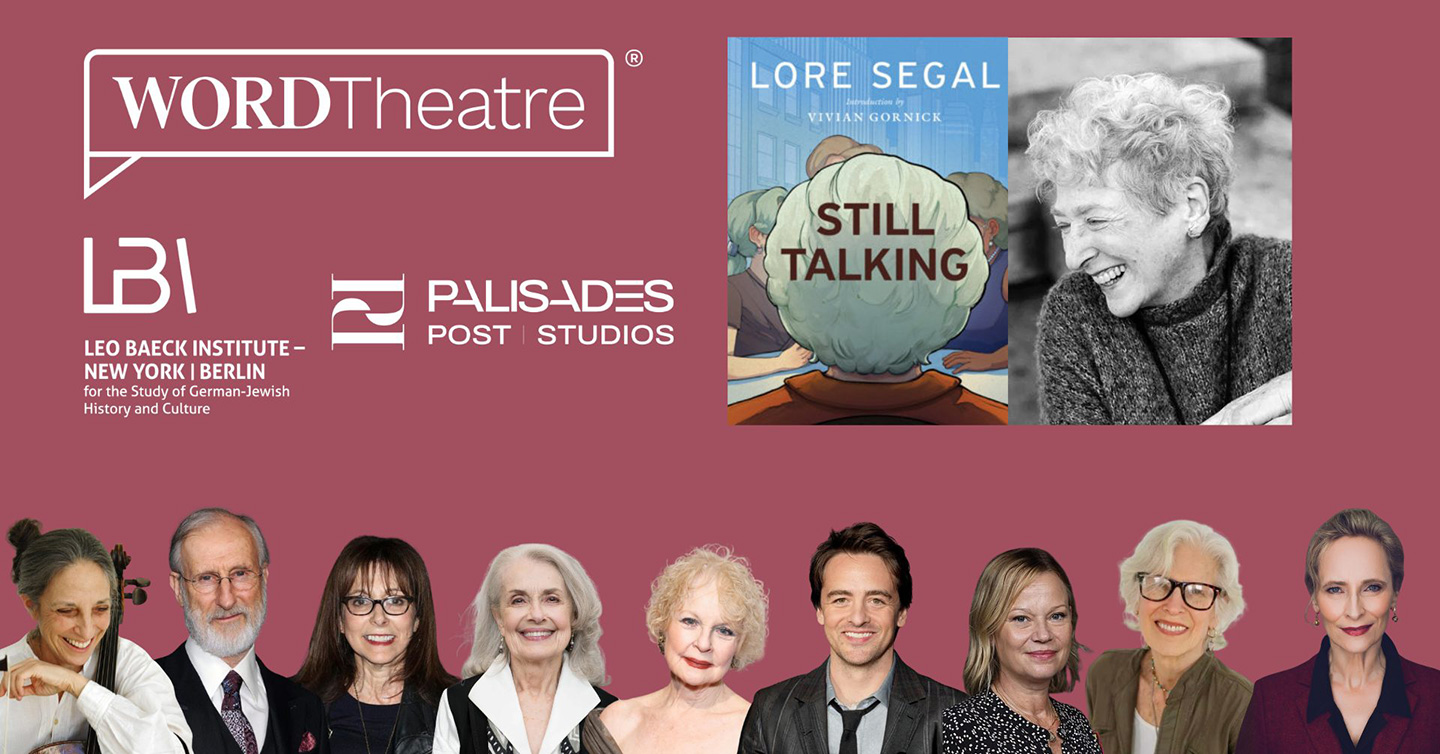
Still Talking: Celebrating Lore Segal in Performance - In-person Program
With the generous support of Randy & Jane Sinisi | Palisades Post, WORDTheatre brings Lore Segal’s final short story collection, Still Talking, to life with performances by James Cromwell (Succession), Toni Kalem (The Sopranos), Mary Beth Peil (Dawson’s Creek), Penny Fuller (All the President’s Men), Cynthia Adler (Happyish), Laila Robins (The Walking Dead), Vincent Piazza (Tulsa King), and Samantha Mathis (Broken Arrow). Cellist Susan Salm will provide musical accompaniment. Curated, produced & directed by WORDTheatre’s Founder & Artistic Director, Cedering Fox.
This program is the closing celebration of the Leo Baeck Institute's exhibition "And That's True Too: The Life and Work of Lore Segal," which has been extended through April 28, 2026 at the Center for Jewish history.
About the Performers
James Oliver Cromwell is an esteemed actor and activist. Known for his extensive work as a character actor, he has received a Primetime Emmy Award as well as a nomination for the Academy Award for Best Supporting Actor for Babe (1995). Other notable roles include in L.A. Confidential (1997), Deep Impact (1998), Boardwalk Empire (2012–2013), and Succession (2018–2023), for which he earned three Primetime Emmy Award nominations for Outstanding Guest Actor.
Mary Beth Peil is known for her long career on stage and screen, including her Tony-nominated performance in The King and I (1985) on Broadway. On television, she is recognized for roles in Dawson’s Creek (1998–2003) and The Good Wife (2009–2016).
Toni Kalem has an extensive background as an actress in theater, television, and film. Audiences know her as Despie, in Philip Kaufman’s cult classic, The Wanderers, Private Gianelli in Private Benjamin, and as Angie Bonpensiero on The Sopranos, for which she also wrote. Her other numerous writing credits include the Sundance Award winning film, A Slipping-Down Life, adapted from Anne Tylers’s novel, starring Guy Pearce and Lili Taylor, which she also directed.
Penny Fuller is an actress known for her extensive work on Broadway and television, winning an Emmy for playing Mrs. Kendal in The Elephant Man and earning Tony nominations for Applause (as Eve Harrington) and The Dinner Party. A versatile performer since the 1960s, she’s recognized for roles in All the President’s Men, Cat on a Hot Tin Roof, and Sunday in the Park with George.
Cynthia Adler is one of the top commercial voice-overs and narrators in America, having worked extensively with HBO, Discovery Channel, and PBS. She was the voice of many cartoon characters for Hanna Barbara, and for the animated feature “Fantastic Planet.” She has dubbed leading roles in numerous foreign films, such as Swept Away, and Seven Beauties, for Lina Wertmueller, 1900 for Bernardo Bertolucci, and Scenes From A Marriage for Ingmar Bergman. Her on-screen film credits include Che Cosa? for Italian Television, Hangin’ Out With Cici, for ABC, George Romero’s Knightriders, and Banana’s Is My Business for PBS.
Laila Robins is known for her stage and screen work, including films such as Planes, Trains, and Automobiles (1987), An Innocent Man (1989), and True Crime (1999). On television, she has appeared in Homeland (2014), The Blacklist (2013), and The Boys (2019).
Vincent Piazza is an American film, television and stage actor. Currently a series regular in Taylor Sheridan's Tulsa King (2022-present), Piazza had a role in The Sopranos, and went on to play Lucky Luciano in the HBO television series Boardwalk Empire (2010-2014). He has also played Earl Hefner in the comedy-drama Rocket Science and singer Tommy DeVito in Clint Eastwood's film adaptation of Jersey Boys (2014).
Samantha Mathis is an American actress known for her work in film, television, and theater. Mathis rose to prominence in the early 1990s with roles in films like Pump Up the Volume and Broken Arrow, and has since built a diverse career appearing in movies such as American Psycho and Little Women (1994). In addition to her screen work, she has been active in theater and serves as a leader in the actors’ community, including her role on the board of SAG-AFTRA.
Susan Salm received her earliest musical training in her native Chicago and later studied at the Juilliard School in New York with Leonard Rose and Harvey Shapiro and in master classes of Pablo Casals, Gregor Piatigorsky, and Pierre Fournier. As prizewinner of the coveted Concert Artists Guild Award, Ms. Salm was presented in her New York debut at Carnegie Hall. Since then she has appeared as soloist with major orchestras, including l’Orchestre de la Suisse Romande, the BBC Orchestra, the Berlin Symphony, Orchester der Frankfurter Museumsgesellschaft, Orchester des Norddeutschen Rundfunks, Bruckner Orchestra and San Francisco Symphony appearing with conductors Leonard Slatkin, Christoph von Dohnanyi, Otmar Suitner, Gunter Wand, and Erwin Ortner.
About the Author
Lore Segal was born on March 9, 1928, in Vienna, the only child of solidly middle-class parents; her father, Ignatz Groszmann, was chief accountant at a bank, while her mother, Franzi (Stern), was a homemaker. Her life changed dramatically, however, shortly after Hitler’s annexation of Austria, when she was one of a group of 500 Jewish schoolchildren quickly sent to England. For the next thirteen years she lived in several countries and with many different families—earning a B.A. from Bedford College, London, along the way—before finally achieving her independence and settling in New York. In 1961, Lore Groszmann married David Segal, an editor; they had two children, Beatrice and Jacob, before David’s sudden death in 1970. In addition to her writing career, Segal held teaching appointments at Columbia University, Princeton University, Bennington College, Sarah Lawrence College, the University of Illinois at Chicago, and Ohio State University, from which she retired in 1995. She was an active writer into her nineties.
Ticket Info: $45; LBI/CJH/Partner Members, Students, Seniors: $30
Presented by:
performance
lecture
Ashkenazi Jewish Food - Live on Zoom
In celebration of YIVO's 101st year, join us for our new Yiddish Civilization 101 series. Each program will highlight key topics in Ashkenazi history and culture, including shtetl life, Jewish humor, and Ashkenazi foodways, amongst others. Guided by expert scholars, each lecture will provide a greater understanding of Jewish life in Eastern Europe and its diasporas.
Ashkenazi Jewish foodways embrace numerous regional culinary cultures from Eastern and Central Europe. They are notable for using locally available ingredients to conform to the rituals of Jewish life, most distinctively the slow-simmered stews that developed for the Sabbath. Robust grains like barley and buckwheat, tangy dill pickles and pickled herring, comforting chicken soup with matzo balls or kreplach, and sweet pastries stuffed with poppyseed and nuts are some of the most characteristic flavors. When masses of Jews migrated to America in the late nineteenth century, they faced not only unfamiliar foods but also challenges to their culinary practices. This lecture by Darra Goldstein will discuss how Ashkenazi Jews adapted to life in their new country by adopting unfamiliar ingredients and engaging in debates about nutrition and the importance of domestic traditions, all the while keeping the beloved flavors of the Old Country intact. The lecture will conclude with a look at the American Jewish foodscape today.
About the Speaker
Darra Goldstein is the Willcox B. and Harriet M. Adsit Professor of Russian, Emerita at Williams College and Founding Editor of Gastronomica: The Journal of Food and Culture, named the 2012 Publication of the Year by the James Beard Foundation. She has published widely on literature, culture, art, and cuisine and consulted for the Council of Europe on using food to promote tolerance and diversity. Goldstein has also authored five award-winning cookbooks, including The Georgian Feast (1994 IACP Julia Child Cookbook of the Year) and is series editor of California Studies in Food and Culture (University of California Press). In 2013, she was named Distinguished Fellow in Food Studies at the Jackman Humanities Institute, University of Toronto, and in 2016 held the Macgeorge Fellowship at the University of Melbourne.
Ticket Info: Free; registration is required.
Presented by:
lecture
lecture
Klezmer and Other Displaced Musics in America - Live on Zoom
In this lecture, scholar and performer Walter Zev Feldman explores the vibrant, yet largely concealed, background of the klezmer revitalization in New York, Philadelphia and other American cities in the 1960s, decades after the period when America served as a crucible for immigrants and their diverse musical expressions. Drawing from his new memoir, From the Bronx to the Bosphorus, (Fordham University Press) Feldman will reflect on how he was instrumental in creating the klezmer revitalization in the US after learning from Greek immigrant musicians and then from the eminent klezmer Dave Tarras (1897-1989).
This program is supported, in part, by public funds from the New York City Department of Cultural Affairs, in partnership with the City Council.
About the Speaker
Walter Zev Feldman is a leading researcher in Ottoman Turkish and Jewish music, instrumental in the 1970s Klezmer Revival. His notable works include Klezmer: Music, History, and Memory (2016) and Music of the Ottoman Court: Makam, Composition and the Early Ottoman Instrumental Repertoire (1996; 2024, revised edition). Feldman has extensively studied the instrumental traditions of Moldova’s klezmer and lautar communities. He is the Academic Director of the Klezmer Institute.
Ticket Info: Free; registration is required.
Presented by:
lecture
book club
The Art of Being a Stranger - Live on Zoom
Karen Bermann grew up in the mad orbit of her father, Fritz, the rebellious child of a Viennese Orthodox Jewish family who fled Europe alone as an adolescent in the late 1930s. An irreverent, comic, rageful man with three names, who spoke three languages, lived on three continents, and always kept his papers in order, Fritz lived a life shaped by survival. In this memoir, told in alternating voices in brief, lyrical episodes, Bermann explores not only the mystery of her father but also the inheritance he passed on: intergenerational trauma, fragile familial bonds, and a fraught sense of belonging.
The Art of Being a Stranger is a darkly funny narrative told in poetry, prose, and mixed-media drawings. While her father taught her how to save herself, Bermann realized early on that what she truly needed was to be saved from him. Set against the backdrop of 1960s and 1970s New York City, The Art of Being a Stranger is a poignant comic-drama that offers an intimate, layered exploration of parents and children in the shadow of history.
Text: University of Toronto Press
Guest and Author: Karen Bermann
Karen Bermann is professor emerita of architecture at Iowa State University. She worked on sweat equity rehabilitation in her native New York in the 1970s and 80s, studied architecture at The Cooper Union, and taught design and drawing in Iowa and in Rome, where she lives now
Ticket Info: Free; registration required
Presented by:
book club
film screening
You Have Courage, Madame - In-person Program
The short film You Have Courage, Madame by Asaf Galay examines the life and work of Polish-Jewish photographer Julia Pirotte. The film is based on Pirotte’s Yiddish testimony from the Fortunoff Video Archive for Holocaust Testimonies and follows two photographers, Avishag Shaar-Yashuv and Irene Pletka, as they trace her journey through Poland and France. The artists embark on an inner and outer journey through Poland and the streets of Marseille, visiting the places Julia Pirotte lived and the sites she photographed, meeting people who knew her, and bringing a contemporary perspective to her unique legacy.
Join us for a screening of this film followed by a conversation with Galay, Pletka, producer Naama Pyritz, and scholar Barbara Kirshenblatt-Gimblett.
Watch the trailer:
Ticket Info: $15; YIVO members: $10
Presented by:

film screening
workshop
YIVO Learning and Media Center Archival Box Lesson - In-person Program
YIVO is opening the doors to its new Learning and Media Center (YLMC), a publicly accessible space for visitors to come and explore Jewish history and the YIVO Collections.
This workshop will feature YLMC Educator Susannah Trubman leading a guided lesson utilizing the YLMC’s Archival Box Lessons. The program will begin with a brief lecture on the history of the Yiddish theater in Eastern Europe and one of its early pioneers, Esther Rokhl Kaminska. This will be followed by an exploration of primary source materials relating to the life of Esther Rokhl Kaminska, and a group discussion.
Space is limited! Sign up today to be among the first to see the YLMC. All registrants will receive a YIVO mug of their choice.
Ticket Info: $18
Presented by:
workshop
book talk
Nazi Germany, Soviet Russia, and the Fate of the Jews - Live on Zoom
In the West, World War II is commonly understood as the Allies’ struggle against Nazism. Often elided, if not simply forgotten, is the Soviet Union’s crucial role in that fight. With World Enemy No. 1: Nazi Germany, Soviet Russia, and the Fate of the Jews, Jochen Hellbeck rectifies this omission by relocating the ideological core of the conflict. It was not the Western powers but Communist Russia that Nazi Germany viewed as an existential threat. Jewish revolutionaries, the Nazis believed, had seized power in 1917 and were preparing the Soviet state to destroy Germany and the world. And so, on June 22, 1941, a German army of three million attacked the Soviet Union to exterminate “Judeo-Bolshevism,” Hitler’s cardinal obsession. While Europe’s Jews were expelled, exiled, and persecuted by the Nazis, Soviet Jews were immediately slated for elimination. The Soviet lands thus became ground zero for systematic extermination, which was only later extended to all Jews, igniting the Holocaust.
Join YIVO for a discussion with Hellbeck about this book, led by historian Jeffrey Veidlinger.
About the Speaker
Jochen Hellbeck is Distinguished Professor of History at Rutgers University, specializing in modern Russia, the Soviet Union, and the history of World War II. The recipient of fellowships from the New York Public Library’s Dorothy and Lewis B. Cullman Center for Scholars and Writers, the John Simon Guggenheim Memorial Foundation, and the American Academy in Berlin, among others, he is the acclaimed author of Stalingrad: The City That Defeated the Third Reich, Revolution on My Mind: Writing a Diary under Stalin, and the online project “Facing Stalingrad.”
Jeffrey Veidlinger is the Joseph Brodsky Collegiate Professor of History and Judaic Studies and Inaugural Director of the Raoul Wallenberg Institute at the University of Michigan. His most recent book, In the Midst of Civilized Europe: The Pogroms of 1918–1921 and the Onset of the Holocaust, won the Stan Vine Book Award and a Canadian Jewish Literary Award. He is also the author of The Moscow State Yiddish Theater: Jewish Culture on the Soviet Stage, Jewish Public Culture in the Late Russian Empire, and In the Shadow of the Shtetl: Small-Town Jewish Life in Soviet Ukraine.
Ticket Info: Free; registration is required.
Presented by:
book talk
family history today
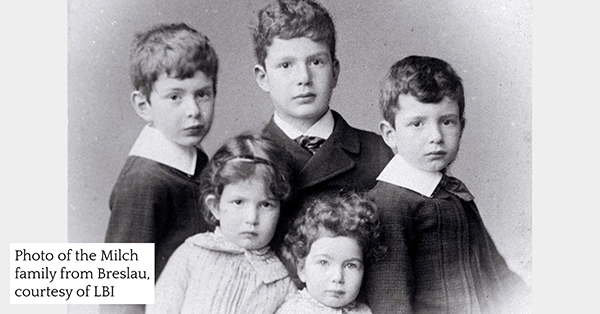
Family History Today: Doing Research On and In Prussian Poland - Live on Zoom
Genealogy research in Prussian Poland—the Polish parts of the 18th and 19th century German Empire—has special challenges. Town names have been changed, many records have been lost, and few staffers at the Polish Archives read German. But the Jewish families that lived in the areas that were east of the Oder River have a rich heritage that deserves to discovered. Roger Lustig’s lecture will review the basic geography and history of Prussian Poland, focus on online resources for genealogical research in the area, including several new ones, and feature vital tips and tricks to working with the Polish State Archives, both online and in person.
About the Speaker
Roger Lustig is a genealogical researcher based in Princeton, NJ. Since 2002 he has specialized in the Jewish families of Prussian Poland, especially Upper Silesia and West Prussia. He has done research in archives in the US, Germany and Poland.
As research coordinator for JewishGen’s Germany Research Division, he is developing databases, including NALDEX (Name-Adoption List index), Württemberg Family Registers and the Hessen-Gatermann database. He has also contributed over 40,000 Prussian records to the JRI-Poland database, for which he is the Prussian Poland Area Coordinator.
He has given presentations at fourteen IAJGS conferences, scholarly conferences in Germany and Poland, and various genealogical societies in the US and Canada.
He moderates the GerSIG group on Facebook, and is one of 3 admins of the Tracing the Tribe group—one of the largest Jewish genealogy groups on Facebook.
Presented by the Ackman & Ziff Family Genealogy Institute at the Center for Jewish History.
Ticket Info: Pay what you wish
Presented by:
family history today
members event
Behind-the-scenes Archival Experience at the Center for Jewish History
Register for a special behind-the-scenes archival experience at the Center for Jewish History on Thursday, March 26 from 6:00–7:30 PM. This exclusive opportunity for our History Enthusiast and Archivist members, offers a unique opportunity to explore rare historical documents from the Center’s collections. The session will be led by Center President Dr. Gavriel Rosenfeld and Center Research Director, Dr. Mirjam Thulin, who will guide participants through a curated selection of archival materials and share insights into the stories these documents reveal about Jewish history. The evening will also include a reception. Space is limited and advanced registration is required.
Ticket Info: To register or check your membership status please email membership@cjh.org
Presented by:
members event
book talk
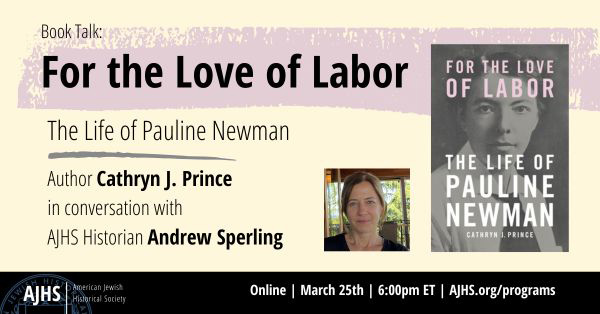
For the Love of Labor: The Life of Pauline Newman – Live on Zoom
Join author Cathryn J. Prince and moderator Andrew Sperling for a discussion on For the Love of Labor: The life of Pauline Newman.
From her start as one of the youngest activists in US history, Pauline Newman helped shape the International Ladies’ Garment Workers’ Union (ILGWU) into a dominant force in industrial America. Cathryn J. Prince tells the story of a self-educated Jewish immigrant who dedicated herself to a legion of causes and lifelong battles against sexism and classism.
Prince follows Newman’s life from a youth split between Lithuania and New York City sweatshops to her work as an advisor to New Deal–era labor secretary Frances Perkins. Newman’s long hours at the Triangle Shirtwaist Factory informed her entrée into labor activism. In the following years, she tirelessly advocated for workers, ran for New York Secretary of State as a socialist, and became the first woman to serve as the ILGWU general organizer. Her interest in the health of workers led to service on the Joint Board of Sanitary Control and a decades-long term as education director of the ILGWU health center. Membership in Eleanor Roosevelt’s circle opened doors to government positions and advisory roles that continued into the postwar era. Prince also weaves in the details of Newman’s fifty-year relationship with a woman, her struggles with her sexual identity, and her final years.
Engaging and panoramic, For the Love of Labor is the first major biography of an important figure in labor and women’s history.
About the Author
Cathryn J. Prince is an adjunct professor of journalism at Fordham University. Her books include Queen of the Mountaineers: The Trailblazing Life of Fanny Bullock Workman and American Daredevil: The Extraordinary Life of Richard Halliburton, the World’s First Celebrity Travel Writer.
Ticket Info: Free; register online for a Zoom link
Presented by:
book talk
lecture
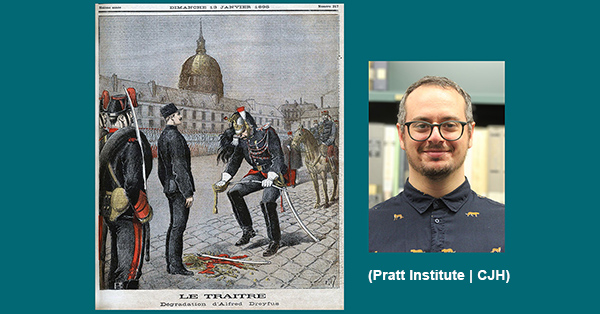
Laughing at the Dreyfus Affair: Cartoon Antisemitism and the Politics of Ridicule - In-person Program and Live on Zoom
An evening lecture with the Center’s Leon Levy fellow Dr. Andrew Kotick (Pratt Institute | CJH)
The Dreyfus Affair was arguably the most famous political and judicial scandal of 19th century France. It erupted in 1894 when the French officer Alfred Dreyfus (1859-1935) was accused and convicted of being a German spy. Just two years after Dreyfus's conviction and exile, however, the accusations against him were revealed to be an antisemitic conspiracy. In the years that followed, his case went through several appeals, and in the summer of 1906, the verdict against him was overturned.
To this day, the Dreyfus Affair is seen as the culmination of antisemitism in 19th-century France and is remembered in historical memory as a fundamental conflict of values concerning morality and justice in the Third French Republic. At the same time, the affair was also a media spectacle. The Dreyfus Affair occurred in an era when larger print runs for newspapers together with surging literacy rates produced growing numbers of readers in French society. Within this media landscape, Dr. Andrew Kotick's lecture examines the affair from a new perspective by exploring the laughter it provoked. Using satirical caricatures and drawings, he investigates how visual humor shaped the emotional climate of the affair and contributed to making antisemitism a mass phenomenon. Based on examples taken from illustrated press, especially the popular weekly newspaper, Le Rire, Kotick shows how ridicule was used as a political weapon to influence public opinion, define belonging and exclusion, and reshape modern mass politics. By analyzing the visual culture of the affair, Kotick illustrates how laughter became one of the most effective forms of expression in political life.
Co-sponsored by the NYU Center for the Study of Antisemitism and the Institute of French Studies at NYU
Image: Henri Meyer. "Le traître : Dégradation d’Alfred Dreyfus" cover illustration for Le Petit Journal : supplément illustré (13 January 1895). Courtesy of Wikimedia Commons (public domain).
Ticket Info:
In-person: Pay what you wish; registration is required
Stream: Pay what you wish; registration is required
Presented by:
lecture
lecture
Holocaust Distortion in Poland: A Comparative European Perspective - Live on Zoom
Holocaust distortion in Poland involves reshaping or minimizing facts about the Holocaust, often emphasizing Polish victimhood while obscuring instances of local collaboration, participation, or indifference. It appears in political rhetoric, memory laws, public commemorations, and attacks on critical scholarship. YIVO’s Poland vs. Holocaust History series examines these dynamics and situates the Polish case within a broader European context.
This lecture by Jan Grabowski will examine the phenomenon of Holocaust distortion in Poland within a broader comparative European framework. It explores how historical narratives about the Holocaust are reshaped, minimized, or selectively reinterpreted in public discourse, politics, education, and law. Particular attention will be paid to the interaction between state-sponsored memory policies, nationalist narratives, and scholarly research, as well as to the pressures faced by historians and educators. By comparing developments in Poland with those in other European countries—including Hungary, Lithuania, Germany, and Russia—the lecture highlights both shared patterns and national specificities in confronting difficult pasts. The discussion addresses legal instruments, public controversies, commemorative practices, and the role of civil society in shaping Holocaust memory. Ultimately, the lecture asks how and why Holocaust distortion emerges, what distinguishes distortion from legitimate historical debate, and what the consequences are for democratic culture, academic freedom, and Europe’s collective understanding of the Holocaust.
Buy Whitewash: Poland and the Jews by Jan Grabowski.
About the Speaker
Jan Grabowski is a Professor of History at the University of Ottawa and a Fellow of the Royal Society of Canada. His interests focus on the Holocaust in Poland and, more specifically, on the relations between Jews and Poles during the war. He has authored/co-authored or edited twenty books and published more than eighty articles published in learned journals in many languages. Grabowski’s book Hunt for the Jews: Betrayal and Murder in German-Occupied Poland has been awarded the Yad Vashem International Book Prize for 2014. In 2018 he co-edited and co-authored “Dalej jest noc” [Night Without End] (a two-volume study of the fate of the Jews in selected counties of occupied Poland). Night Without End was published in 2022 in English by Indiana University Press. Grabowski’s most recent book On Duty: The Role of the Polish “Blue” Police in the Holocaust was published in Poland in March 2020, and the English edition was published in May 2024 by Yad Vashem Presses.
Ticket Info: Free; registration is required.
Presented by:
lecture
book discussion
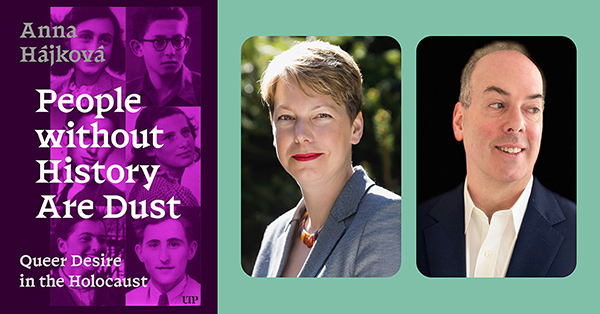
People Without History Are Dust: Queer Desire in the Holocaust - In-Person Program
Where are the stories of great queer love in the Holocaust? There are almost none. Anna Hájková, author of People without History are Dust: Queer Desire in the Holocaust (2025), explains why the history of same-sex desire in the Shoah, that is, queerness among Jews persecuted by the Nazis for their race, has been excluded and marginalized, and how its return to our understanding of the Holocaust can offer an inclusive and feminist history of this genocide. Based on original and extensive archival research, Dr. Hájková's book offers groundbreaking insight into the queer history of the Holocaust.
Dr. Hájková, Reader of Modern European Continental History at the University of Warwick, United Kingdom, will introduce her book – winner of a National Jewish Book Award – in conversation with Benjamin Carter Hett, Professor of History, Hunter College and the Graduate Center, City University of New York. Content Advisory: This book talk includes sensitive material related to sexual violence, which may be distressing. Attendee discretion is advised.
People without History are Dust: Queer Desire in the Holocaust will be available for purchase and signing after the program.
About the Speakers
Anna Hájková is Reader of Modern European Continental History at the University of Warwick, United Kingdom. She currently serves the University as Director of the European History Research Centre, and from 2021-2025, served as Co-Director of the Warwick Centre for Global Jewish Studies. She earned her Ph.D. in Modern European History from the University of Toronto. Dr. Hájková is the author of, among other books, The Last Ghetto: An Everyday History of Theresienstadt (2020) and People without History are Dust: Queer Desire in the Holocaust (2025). She is the pioneer of queer Holocaust history.
Benjamin Carter Hett earned a J.D. at the University of Toronto and practiced litigation in Toronto before earning a Ph.D. in history at Harvard University. Since 2003, he has taught at Hunter College and the Graduate Center, City University of New York. Dr. Hett has authored six books including The Death of Democracy: Hitler’s Rise to Power and the Downfall of the Weimar Republic (2018), winner of the 2019 Vine Award for History and named one of the year’s best books by The Times of London and the Daily Telegraph; and The Nazi Menace: Hitler, Churchill, Roosevelt, Stalin, and the Road to War (2020), named an editors’ choice by the New York Times Book Review.
Ticket Info: Pay what you wish; registration is required
Presented by:
book discussion
conversation
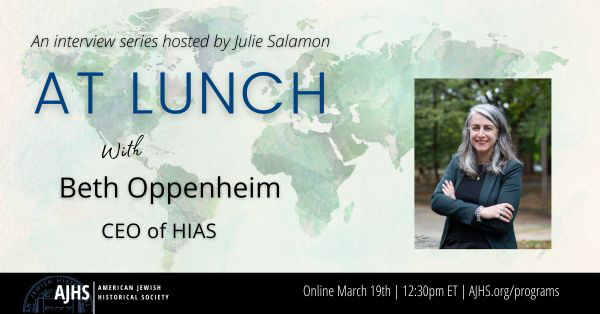
At Lunch with Beth Oppenheim – Live on Zoom
Julie Salamon, New York Times best-selling author, sits down with Beth Oppenheim, CEO of HIAS. Dr. Beth Oppenheim has 23 years of experience working in refugee resettlement and international development. She is an expert on issues of displacement and sustainable systems change with a focus on work in Africa, having lived in and supported organizations in Kenya, Uganda, South Africa, and Mozambique, amongst other countries around the world. She has held leadership positions at two of the U.S.’ ten resettlement agencies, helping rethink the ways in which we continue to preserve welcome for newcomers across the country.
Oppenheim began working at HIAS in October 2023 and has held several senior leadership roles, serving as Chief Advancement Officer, Chief External Relations Officer, and Interim CEO. Under her leadership, HIAS has risen to the challenges facing the humanitarian sector with integrity and courage, centering the Jewish and humanitarian values at the core of the organization’s identity. Oppenheim has led the organization in re-envisioning its programmatic work and assistance for refugees and displaced people in the U.S. and around the world and ensuring the organization’s leading role in advocating against policies that demonize and harm immigrants, refugees and asylum seekers.
She holds a doctorate from the University of Cape Town in South Africa, where she focused on the ways in which local communities play an important role in solving critical resource gaps in the Global South. She also holds a Master of Science in Global Affairs from NYU, and a Bachelor of Arts in Metropolitan Studies and Hebrew and Judaic Studies from NYU. A recognized thought leader in her field, Oppenheim has written and published extensively on development and the NGO sector.
Ticket Info: Free; register online for a Zoom link
Presented by:
conversation
book launch
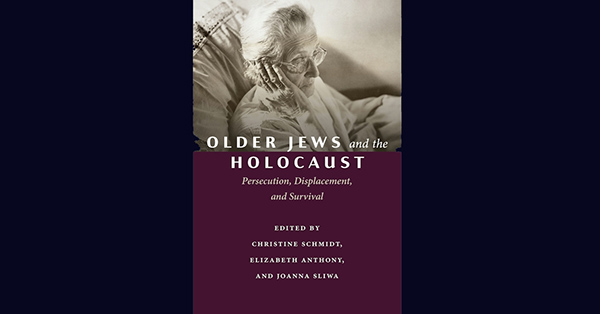
Older Jews and the Holocaust - In-person Program
Join the Claims Conference, the Leo Baeck Institute, and the editors and contributors of the newly published book for a discussion about the experiences of German and Austrian older adults during and after the Holocaust.
How did older German and Austrian Jews experience the Holocaust? What do we know about care for older and aging survivors immediately after the Holocaust? How has this history informed the efforts of the Claims Conference on behalf of Jewish Holocaust survivors over the years? The volume editors and contributors, all Holocaust historians, will discuss these and other questions at the launch of their groundbreaking book that explores the multifaceted lives of elderly Jewish victims and survivors, Older Jews and the Holocaust: Persecution, Displacement, and Survival (Wayne State University Press, coming out on March 17, 2026).
Books will be available for purchase and signing.
With Assistance from the Conference on Jewish Material Claims Against Germany
Supported by the German Federal Ministry of Finance
Project Partners: The Ernst Hecht Charitable Foundation, the United States Holocaust Memorial Museum, and the Wiener Holocaust Library.
About the Speakers
Dr. Elizabeth Anthony is the director of Visiting Scholar Programs at the United States Holocaust Memorial Museum’s Jack, Joseph and Morton Mandel Center for Advanced Holocaust Studies. Her book, The Compromise of Return: Viennese Jews after the Holocaust, was co-published by Wayne State University Press and the U.S. Holocaust Memorial Museum in 2021 and was a commended finalist for The Wiener Holocaust Library’s Ernst Fraenkel Book Prize. Anthony was co-editor of and a contributor to Freilegungen: Spiegelungen der NS-Verfolgung und ihrer Konsequenzen, Jahrbuch des International Tracing Service (2015). She also has published chapters in Lessons and Legacies Volume XII (2017); The Future of Holocaust Memorialization: Confronting Racism, Antisemitism, and Homophobia through Memory Work (2015); and the Nürnberger Institut für NS-Forschung und jüdische Geschichte des 20. Jahrhunderts Jahrbuch 2010. Anthony received a PhD in history at Clark University in 2016.
Dr. Michael Geheran is Associate Professor of History and Deputy Director of the Resnick Center for Holocaust and Genocide Studies at the United States Military Academy at West Point. He is the author of Comrades Betrayed: Jewish World War I Veterans under Hitler (Cornell, 2020) and a contributing co-editor of Beyond Inclusion and Exclusion: Jewish Experiences of the First World War in Central Europe (Berghahn, 2018). He is currently completing a digital history of General Roméo Dallaire’s leadership during the Rwandan Genocide.
Dr. Christine Schmidt is Acting Co-Director of The Wiener Holocaust Library. Her research has focused on the history of postwar tracing and documentation efforts, the concentration camp system in Nazi Germany, and comparative studies of collaboration and resistance in France and Hungary. She is currently writing a social history and archival biography of a collection of survivor accounts recorded by The Wiener Library in the 1950s-60s. She has a forthcoming chapter in Holocaust Memory in the United Kingdom in the 1960s (Bloomsbury, 2025). Schmidt has recently published articles in the Journal of Transport History, the European Review of History, American Imago, Culture Unbound, and The Journal of Holocaust Research, and is co-editing (with Sandra Lipner, Clara Dijkstra, and Charlie Knight) Letters and the Holocaust: Methodology, Cases, and Reflections (Bloomsbury, 2025) and (with Suzanne Bardgett and Dan Stone) Survivors of Nazi Persecution - Beyond Camps and Forced Labour (Palgrave, 2025).
Dr. Joanna Sliwa is a Historian at the Conference on Jewish Material Claims Against Germany (Claims Conference) where she also administers the Saul Kagan Fellowship in Advanced Shoah Studies, and the University Partnership in Holocaust Studies. Joanna’s research concerns the history of the Claims Conference, compensation for Holocaust survivors, and Jewish property restitution. Joanna's own scholarship focuses on the Holocaust in Poland and on Polish Jewish history. She is the author of Jewish Childhood in Kraków: A Microhistory of the Holocaust (Rutgers University Press, 2021), which received the 2020 Ernst Fraenkel Prize from The Wiener Holocaust Library, and The Counterfeit Countess: The Jewish Woman Who Rescued Thousands of Poles during the Holocaust (with Elizabeth White; Simon and Schuster, 2024).
Chen Yurista is Chief Experience Officer at the Claims Conference. An attorney, licensed to practice in Israel and in the US, Chen previously served as the Executive Director of the Israeli office of the Claims Conference, worked on the Swiss Banks settlement, and was the CEO of the Foundation for the Benefit of Holocaust Victims in Israel. He graduated with honors from the faculties of Law and Economics at Tel Aviv University and holds an MBA from The Kellogg School of Management at Northwestern University. In his current position Chen continually evaluates practices, methods and strategies to improve the Claims Conference’s interactions with survivors in over 45 countries. Chen is a third generation to Holocaust survivors from Poland and from Germany.
Ticket Info: Free; registration required
Presented by:
book launch
lecture
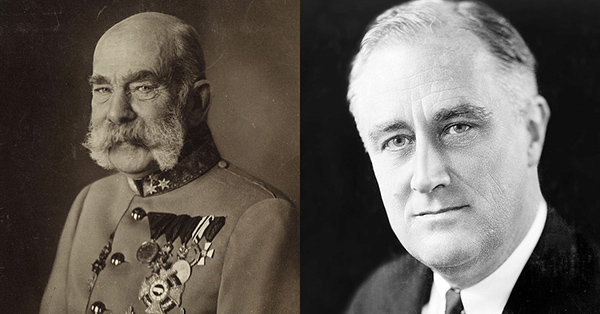
67th Leo Baeck Memorial Lecture by Marsha Rozenblit - Was New York Like Vienna? - In-person Program
Jews who fled Nazi Austria after the Anschluss in 1938 went to many places, but primarily to the United States, where they tried to make new homes for themselves. In so doing, many of them imagined that democratic America resembled the old Habsburg Monarchy, with its tolerance for ethnic diversity. They even imagined that the American president, Franklin Delano Roosevelt, was like the beloved Habsburg Emperor Franz Joseph, and New York was like Vienna. This talk will explore how Jews from Austria coped with American realities and used nostalgia for the Habsburg Monarchy as a way to adjust to their new lives in America.
About our Speaker
Marsha L. Rozenblit is the Harvey M. Meyerhoff Professor of Modern Jewish History at the University of Maryland, where she has been on the faculty since 1978. A social historian of the Jews of the Habsburg Monarchy and its successor states, she is the author of two scholarly books: The Jews of Vienna, 1867-1914: Assimilation and Identity (State University of New York Press, 1983); and Reconstructing a National Identity: The Jews of Habsburg Austria during World War I (Oxford University Press, 2001). She has also co-edited two books: Constructing Nationalities in East Central Europe(Berghahn Press, 2005); and World War I and the Jews: Conflict and Transformation in Europe, the Middle East, and America (Berghahn Press, 2017); and she has written over 35 scholarly articles on such topics as Jewish religious reform in nineteenth century Vienna, Jewish courtship and marriage in 1920s Vienna, and German-Jewish schools in Habsburg Moravia. She served as the president of the Association for Jewish Studies, 2009-2011.
Ticket Info: Free; registration required
Presented by:
lecture
book talk
She Made the Earth Move: Carole King and Jewish Identity - In-person Program
This presentation features a book talk by journalist and author Jane Eisner on Carole King: She Made the Earth Move, in which she traces the professional accomplishments and personal challenges of pop icon Carole King, exploring her unique contribution to American music.
Carole King’s extraordinary career has defined American popular music for more than half a century. Born in New York City in 1942, she shaped the soundtrack of 1960s teen culture with such songs as “Will You Love Me Tomorrow,” one of many Brill Building classics she wrote with her first husband, Gerry Goffin. She was a leading figure in the singer-songwriter movement of the 1970s, with dozens of Billboard Hot 100 hits and music awards—her 1971 album Tapestry won a record four Grammys. Yet she struggled to reconcile her fame with her roles as a wife and mother and retreated to the backwoods of Idaho, only to emerge in recent years as a political activist and the subject of the Tony-winning Broadway show Beautiful: The Carole King Musical.
In her book, Eisner places King’s life in historical and cultural context, revealing details of her humble beginnings in Jewish Brooklyn, the roots of her musical genius, her four marriages, and her anguish about public life. Drawing on numerous interviews as well as historical and contemporary sources, this book brings to life King’s professional accomplishments, her personal challenges, and her lasting contributions to the great American songbook.
About the Speakers
Jane Eisner is an accomplished journalist, educator, and nonprofit leader. She is author of Carole King: She Made the Earth Move from Yale University Press. Former editor-in-chief of the Forward and longtime Philadelphia Inquirer editor, she teaches, consults, writes widely, and speaks nationally on journalism, music, and Jewish life.
This program will be held at Hebrew Union College, New York Campus, 1 West 4th Street, New York City
Ticket Info: Free; registration is required.
Presented by:
book talk
panel discussion
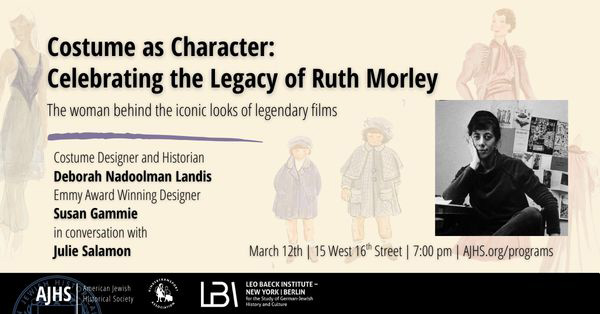
Costume as Character: Celebrating the Legacy of Ruth Morley – In-person Program
Costume designer Ruth Morley was behind the iconic looks of several characters now considered legendary in cinema history. A Kindertransport child refugee from Vienna, in the 1950’s she studied under German-American painter Hans Hofmann and went on to design costumes for opera and ballet before moving into theater, film and television. Her work can be seen in such iconic films as The Hustler (1961), The Miracle Worker (1962, Academy Award nomination), Taxi Driver (1976), Annie Hall (1977), Kramer vs Kramer (1979), One from the Heart (1981), The Chosen (1981), Tootsie (1982, BAFTA nomination) and Ghost (1990). In the 1980’s she began teaching and mentoring costume design graduate students at Brandeis and NYU.
Join panelists Deborah Nadoolman Landis (Costume Designer and Distinguished Professor at UCLA’s School of Theater, Film and Television, Founding Director of the David C. Copley Center for Costume Design), and Susan Gammie (Emmy award-winning costume designer, protege and friend of Ruth Morley), with moderator Julie Salamon (author of The Devil’s Candy, Net of Dreams) for a discussion about Ruth Morley’s career and her impact on the field of costume design. Additional special guests to be announced!
Ticket Info: General Admission: $10, Students: $5, IATSE local 829 & Kindertransport Association members: $5
Presented by:
panel discussion
lecture
‘Making a Scene’: Returning a Jewish Comic Opera Star to the Stage - Live on Zoom
Leonora Braham (1853-1931), creator of five principal soprano roles in Gilbert and Sullivan’s operettas between 1881 and 1887 (including Yum-Yum in The Mikado, 1885), first appeared in my research during a visit to the West London Synagogue archives in 2015. As Leonora Abraham, she sang in the Synagogue’s choir between 1870 and 1874, prior to her first professional engagement with the German Reed Entertainments. Having featured Braham’s life and work in two further pieces of scholarship, I was inspired by her opening words in a 1930 interview, ‘So someone has found me at last’, to write The Honour: a new 45-minute play with music which returns Braham to the environment in which she was happiest and best known.
This presentation gives an overview of Braham’s life on- and off-stage, and describes the reasons for and methods involved in giving her a platform beyond traditional scholarly materials. Danielle Padley will discuss the challenges of incorporating the subject of a performer’s Jewish background into theatre intended to appeal to and educate a wide and varied audience, and will look ahead to plans for incorporating more performative media into her research on Jewish music-making in Victorian England.
About the Speaker
Dr. Danielle Padley is a musicologist specialising in Jewish music-making in nineteenth-century England. She investigates musical activities within geographically and socially diverse Jewish communities to enhance and challenge accepted narratives about Jewish life in England. She is a Research Fellow at the Woolf Institute and an Affiliated Lecturer at the Faculty of Music, University of Cambridge, where she teaches the module ‘Music at the Margins of Victorian Society’. Danielle has an interdisciplinary publication and research record which explores Jewish musical activity in a variety of contexts, including synagogue worship, education, theatre, concert and drawing-room entertainments, and literary fiction. She is a trained singer and theatre performer, regularly performing both established and new writing within Cambridge’s local theatre scene. She grew up singing in and conducting synagogue choirs, and for nearly 12 years was Musical Director of Cambridge’s Hebrew choir, Kol Echad. Danielle also sings and plays violin, keys, and folk harp with folk-rock band Once Again.
Ticket Info: Free; registration is required.
Presented by:
lecture
concert
Jewish Songs and Dances for Piano: Juliusz Wolfsohn’s 'Paraphrasen' - Book II – Live on YouTUbe
Join YIVO for a YouTube premiere performance by Ryan MacEvoy McCullough of Book II of Juliusz Wolfsohn’s Paraphrasen: a collection of 12 virtuosic piano fantasies based on Yiddish folksongs. Wolfsohn was a Warsaw-born pianist, critic, and composer who was active in the Association for the Promotion of Jewish Music in Vienna. Born in Warsaw in 1880, Wolfsohn later settled in the United States, where he died in 1944. Paraphrasen is one of multiple works Wolfsohn composed on Eastern European Jewish themes.
Register for the YouTube premiere performance of Paraphrasen, Book III taking place on May 20, 2026.
Watch the performance of Paraphrasen, Book I.
The Sidney Krum Young Artists Concert Series is made possible by a generous gift from the Estate of Sidney Krum.
About the Performer
Pianist Ryan MacEvoy McCullough has developed a rich musical life as soloist, vocal and instrumental collaborator, composer, recording artist, and pedagogue. His growing discography features many world premiere recordings, including solo piano works of Milosz Magin (Acte Prealable), Andrew McPherson (Secrets of Antikythera, Innova), John Liberatore (Line Drawings, Albany), Nicholas Vines (Hipster Zombies from Mars, Navona), art song and solo piano music of John Harbison and James Primosch (Descent/Return, Albany), and art song by Sheila Silver (Beauty Intolerable, Albany). He has also appeared on PBS’s Great Performances (Now Hear This, “The Schubert Generation”) and NPR’s From the Top. He has appeared as a concerto soloist with major orchestras including with the Los Angeles Philharmonic and Toronto Symphony Orchestra and has collaborated with such conductors as Gisele Ben-Dur, George Benjamin, Fabien Gabel, Leonid Grin, Anthony Parnther, Larry Rachleff, Mischa Santora, and Joshua Weilerstein. He lives in Kingston, NY, with his wife, soprano Lucy Fitz Gibbon.
Ticket Info: Free; register for an email reminder.
Presented by:
concert
book talk and concert
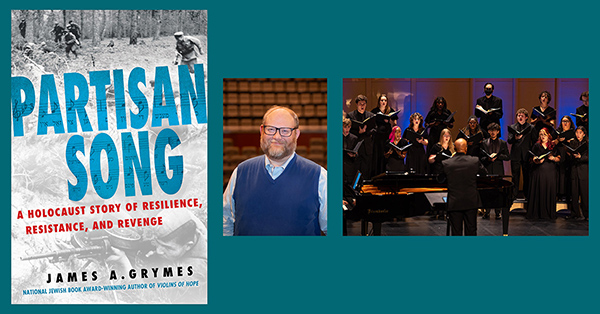
Partisan Song: Stories and Music of Holocaust Resistance – In-Person Program
Speaker: Dr. James A. Grymes
Musical performances by the University Chorale of UNC Charlotte, Dr. Jason Dungee, Director
A civil engineer and amateur musician, Moshe Gildenman had never even held a weapon until the Nazis invaded his hometown in Ukraine and killed 2,200 Jews, including his wife and daughter. Vowing revenge, he escaped to the forest with his son and formed one of the most successful partisan units in the guerilla war to fight the Nazis.
In his latest book, Partisan Song: A Holocaust Story of Resilience, Resistance, and Revenge, historian and National Jewish Book Award-winning author James A. Grymes chronicles the electrifying story of how this peaceful community member became a fierce resistance leader, and how music fueled his courage.
Join us for an evening of storytelling and music, as Grymes and the University Chorale of UNC Charlotte present readings from Partisan Song interspersed with performances of songs that inspired heroism during the Holocaust – music from the Yiddish songbook that Gildenman carried through the war, reconstructions of songs he composed in the ghetto and forest, and beloved anthems such as "Zog nit keyn mol." Grymes will also briefly introduce each song and English translations will be projected onscreen.
The program will be followed by a reception where the book will be available for purchase and signing.
This program is presented by the University of North Carolina at Charlotte and is supported in part by the Crane Family Charitable Foundation and the Blumenthal Foundation.
About the Speaker
Dr. James A. Grymes is a critically acclaimed author who frequently appears as a public speaker at libraries, museums, synagogues, and universities, as well as prominent venues such as the United Nations Headquarters, Weill Recital Hall at Carnegie Hall, the American Israel Public Affairs Committee (AIPAC) Policy Conference, and the historic 16th Street Baptist Church in Birmingham, Alabama. An internationally respected musicologist, he has been featured in interviews by The New York Times, The Wall Street Journal, ABC News, and CNN. Dr. Grymes lives in Charlotte, North Carolina, where he is Professor of Musicology at the University of North Carolina at Charlotte. He is a recipient of a National Jewish Book Award for his earlier work Violins of Hope: Instruments of Hope and Liberation in Mankind's Darkest Hour.
About the Chorale
The University Chorale of UNC Charlotte (above photo: credit Toby Schuetze), directed by Dr. Jason Dungee, is the flagship choral ensemble of the UNC Charlotte Department of Music. Consisting of both music majors and nonmajors, the Chorale proudly serves as ambassadors of the music department and the University at large, frequently performing in the greater Charlotte area and various locations throughout the southeastern United States. The Chorale has participated in several prestigious performances both domestically and abroad, including in Madrid, Spain for the 25th Anniversary Gala of the Gredos San Diego schools, and Venice, Italy, at the historic St. Mark’s Basilica.
Watch the trailer:
Ticket Info: Free; registration is required.
In-person registration
Livestream registration
Presented by:

Co-presented by:
book talk and concert
film screening
The Woman from Hamburg - In-person Program
Adapted from a true story by Hanna Krall, The Woman From Hamburg tells the story of Regina, a young Jewish woman who in 1943, Lvov, Poland, loses her entire family to the Holocaust. She is able to escape the ghetto and is rescued by a childless Polish couple, Jan and Barbara and hidden in their closet. In only a matter of months, the Polish man Jan has his way with Regina and she becomes pregnant. Jan’s wife, Barbara threatened by Jan, fakes her own pregnancy to stay alive. Regina gives birth to a daughter Helusia who she must abandon when the city is liberated. When the war is over Regina tries to get her child back but to no avail. Years later, Helusia, estranged from her birth mother Regina, goes on a quest to find her. Their meeting in Regina’s Hamburg doorway lights an uneasy path for Helusia on how to survive like her mother has before her. And gives her the sudden courage to carry this torch for future generations.
Join YIVO for a screening of this short film followed by a Q&A with writer and director Michael Masarof and producer Sharon Barnes.
Watch the trailer:
About the Speakers
Michael Masarof is a writer and director whose debut feature film First Love was called “intimate in both shooting style and script” by the LA Times. He received his MFA in Film Directing from New York University’s Graduate film program at the Tisch School of The Arts, where he was the recipient of the Jane Rosenthal Scholarship and the Warner Bros. Production Grant. He finished his BA in 2001 at American University. During his BA studies, he also attended the prestigious FAMU film school in Prague, completing the Czech Language short film Vytah. After university, he spent two years in film production, working under such industry luminaries as Al Maysles, Steven Daldry, Walter Salles, and Sydney Pollack, on his last narrative film The Interpreter. His 2007 short film You Should Have The Body won the first place prize at the International Munich Festival of Film Schools and screened as a special presentation at the 2008 Berlinale. In 2008, he was selected as a Distinguished Alumnus of Scarsdale High School. He has worked at Warner Bros. and 20th Century Fox film studios, and in 2019, his first feature film First Love was released on Amazon and other streaming platforms.
Sharon Barnes is an executive producer whose career is dedicated to creating culture and activating change via the arts. She has worked at the intersection of film, television, advertising, technology, and politics for the past 20 years, bringing emotional stories to life. Barnes produced work for highly accomplished directors, including Sara Colangelo (Little Accidents), Cary Fukunaga (Kofi), Behn Zeitlin (Glory at Sea), Banban Cheng (Guessing Game and Wicked Desire), Nanette Burstein (American Teen and IFC’s Film School TV series), and Rob Epstein (Howl). She has served three United States Presidents in both creative and political capacities. She worked as a White House Appointee for President Clinton. She also worked as the Digital Media Road Director for President Obama’s 2008 campaign. She served in the same capacity for President Biden. As a television development and series producer, Barnes helped create and manage series for IFC, A&E, History Channel, PBS, and Wolf Films. In 2016, Barnes was a finalist for the 2016 SFFS Filmmaking Kenneth Rainin Grant for the project Rent Girl. Sharon holds a M.F.A. degree from NYU’s Graduate Film program and a B.A. from the University of Texas at Austin.
Ticket Info: $15; YIVO members: $10
Presented by:
film screening
discussion
Tell Me a Lore: Revisiting the Children’s Books of Lore Segal - Live on Zoom
In addition to penning four novels and numerous short stories, Lore Segal received acclaim for her work for children. Tell Me a Mitzi and The Story of Mrs. Lovewright and Purrless, Her Cat are two of her well-known works. Professor Ellen Handler Spitz (Yale University) will give scholarly insights into Lore Segal's work for children. Sarah Lynn Baker, Executive Director of the Society of Children's Book Writers and Illustrators, as well as artists Paul O. Zelinsky, Sergio Ruzzier, and Sophie Blackall will join the conversation.
Ticket Info: Free; registration required
Presented by:
discussion
lecture
English Jokes, Yiddish Punchlines: American Jewish Humor - Live on Zoom
In celebration of YIVO's 101st year, join us for our new Yiddish Civilization 101 series. Each program will highlight key topics in Ashkenazi history and culture, including shtetl life, Jewish humor, and Ashkenazi foodways, amongst others. Guided by expert scholars, each lecture will provide a greater understanding of Jewish life in Eastern Europe and its diasporas.
The Jake and Becky were celebrating their 50th wedding anniversary and returned to the same hotel, and the same room where they spent the first night of their honeymoon. At 2am, Jake nudges Becky awake and says, “Bekele — derlang mir di tseyner — ikh vil dir a bays gebn.”
There are English-language jokes and there are Yiddish-language jokes, but there also exists a distinctly American Jewish joke telling phenomenon in which the bulk of a joke is told in English, but the punchline is delivered in Yiddish. A well-known product of the Borscht Belt, it has roots in vaudeville and the performance medium of what is known as the “Hebrew comedian,” a character who told such anecdotes as part of his act. This lecture by YIVO Senior Academic Advisor & Director of Exhibitions Eddy Portnoy will elucidate the history of this comic code-switching and will explore some of the reasons for the existence of this comedic phenomenon. We will also provide a number of examples from YIVO’s sound archives and library.
Please note that a number of the jokes to be discussed are considered offensive and risqué. Those with delicate sensibilities should consider avoiding this lecture.
About the Speaker
Eddy Portnoy received his Ph.D. in Modern Jewish History from the Jewish Theological Seminary and holds an M.A in Yiddish Studies from Columbia. His articles on Jewish popular culture phenomena have appeared in The Drama Review, Polin, and Studies in Contemporary Jewry, among others. In addition to speaking on Jewish popular culture throughout Europe and North America, he has consulted on museum exhibits at the Museum of the City of New York, Musée d'art et d'histoire du judaïsme in Paris, and the Joods Historisch Museum in Amsterdam. He is the author of Bad Rabbi and Other Strange but True Stories from the Yiddish Press, published by Stanford University Press, 2017.
Ticket Info: Free; registration is required.
Presented by:
lecture
lecture
Educating for an Uncertain Future in Interwar Poland - Live on Zoom
In the two decades between the First and Second World Wars, Jewish parents in Poland faced a proliferation of choices when it came to educating their children. Each choice offered a vision of what future Polish Jews desired, what they expected, and the gap between the two. State schools taught in Polish (sometimes with a schedule to accommodate traditional religious observance), secularist Yiddish schools with strong ties to Jewish socialism and the labor movement, Hebraist schools promoting political and cultural Zionism, and religious schools that retained--or innovated upon--traditionalist educational models reflected different opinions for what Jewish children in interwar Poland would need in the present to secure their future. In this lecture, Elena Hoffenberg draws upon materials held by YIVO to explore how projections about the future in terms of work, culture, and politics guided parents, educational activists, and young people themselves. Choices as reflections of competing political and religious commitments, as well as material constraints, to better understand what Polish Jews expected for their individual and communal futures.
About the Speaker
Elena Hoffenberg is a PhD candidate in history at the University of Chicago and proud alumna of the YIVO zumer-program. Her work focuses on the Jews of interwar Poland to better understand how individual experiences and communal discourses that link family and futurity in periods of uncertainty and crisis. She is the 2024-2025 recipient of the The Aleksander and Alicja Hertz Memorial Fellowship and the Samuel and Flora Weiss Research Fellowship in Polish Jewish Studies at the YIVO Institute for Jewish Research.
Ticket Info: Free; registration is required.
Presented by:
lecture
concert
Celebrating Vienna’s Center for Banned Music - In-person Program
Members of the Vienna Philharmonic with distinguished Czech pianist David Hausknecht celebrate the 20th Anniversary of Vienna’s Exilarte – Center for Banned Music and the 10th Anniversary of the University of Music and Performing Arts, Vienna’s Exilarte Research Center, with a performance of music by Gustav Mahler, Erwin Schulhoff, and Walter Bricht.
This concert honors the voices of those composers, performers, music researchers, and theater artists who were considered “degenerate” and were silenced by the Nazis during the Third Reich, and whose works have often been forgotten. For two decades, the Exilarte Center has served as a contact point and interface for the reception, research, preservation, and presentation of this important cultural heritage.
The concert will be followed by a reception.
This program will be held at Hebrew Union College, New York Campus, 1 West 4th Street, New York City
Ticket Info: Free; registration is required.
Presented by:
concert
book club
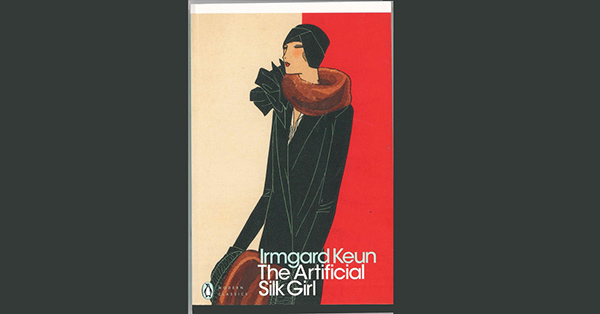
LBI Book Club: The Artificial Silk Girl - Live on Zoom
Professor Didem Uca will join LBI to discuss The Artificial Silk Girl
This enthralling tale of a “material girl” in 1930s Berlin is the masterpiece of a literary icon, rediscovered and restored to the same heights as such luminaries as Isherwood and Brecht.
In 1931 a young woman writer living in Germany penned her answer to Anita Loos’s Gentlemen Prefer Blondes and the era of cinematic glamour: The Artificial Silk Girl. Though a Nazi censorship board banned Irmgard Keun’s work in 1933 and destroyed all existing copies, the novel survived, as fresh and relevant today as the day it was written.
The Artificial Silk Girl is the story of Doris, beautiful and striving, who vows to write down all that happens to her as the star of her own life story. But instead of scripting what she hopes will be a quick rise to fame and fortune as either an actress or the mistress/wife of a wealthy man, she describes a slow descent into near prostitution and homelessness. Prewar Berlin is not the dazzling and exciting city of promise it seems; Doris unwittingly reveals a bleak, seamy urban landscape.
(Description: Penguin Random House).
Author Irmgard Kuen
Irmgard Keun (1905 – 1982) was a (non-Jewish) German novelist. She is noted for her portrayals of the life of women in the Weimar Republic as well as the early years of the Nazi Germany era. She was born into an affluent family and was given the autonomy to explore her passions. After her attempts at acting ended at the age of 16, Keun began working as a writer after years of working in Hamburg and Greifswald. Her books were eventually banned by Nazi authorities but gained recognition during the final years of her life. She was a romantic partner to the Jewish author Joseph Roth.
About Our Guest
Didem Uca is Assistant Professor of German Studies and associated faculty in the Departments of Women’s, Gender, and Sexuality Studies and Middle Eastern and South Asian Studies at Emory University. With a focus on intersectional approaches to post/migration cultures, Dr. Uca’s research has appeared in journals including Gegenwartsliteratur, Die Unterrichtspraxis / Teaching German, Seminar, and Monatshefte, for which she wrote about how the protagonist of Irmgard Keun's novel Child of All Nations can be interpreted as an adaptation of the character of Mignon from Johann Wolfgang von Goethe's Wilhelm Meister's Apprenticeship. As a literary translator from German and Turkish, her work has appeared in venues such as TRANSIT, Konturen, SAND Journal, and Turkish German Studies. A dedicated pedagogue, Dr. Uca's teaching has been honored with the Goethe-Institut/American Association of Teachers of German Certificate of Merit (2020) and the American Council on the Teaching of Foreign Languages German Special Interest Group's Early Career Award (2024).
Ticket Info: Free; registration required
Presented by:
book club
film screening
Outsider: Freud - In-person Program
Join YIVO for the New York premiere of Outsider: Freud, a journey into the life and work of Sigmund Freud in four acts, combining animation, dreams, and insights from leading psychoanalysts. The film explores Freud’s experiences of marginalization as a Jew in Vienna during Hitler’s rise and how these shaped his theories and personal life. Through an intimate lens, the film reveals new dimensions of Freud’s legacy, focusing on his impact on psychoanalysis, Judaism, and the power dynamics of being an outsider.
A Q&A with director Yair Qedar will follow the screening.
About the Speaker
Yair Qedar is an Israeli documentary filmmaker, social activist and former journalist. In his project “the Hebrews,” he has been chronicling the lives of Jewish and Israeli figures of the modern Hebrew literary canon. Qedar’s 19 feature-length documentaries have all premiered at film festivals and have won the director over 30 prizes. Qedar is also a leading LGBTQ activist and created the first Israeli LGBTQ newspaper.
Ticket Info: $15; YIVO members: $10
Presented by:
film screening
lecture
"If It Was with Men, It Would Totally Miss the Point": Religious Women's Selichot Events in Israel - Live on Zoom
This presentation by Dr. Naomi Cohn Zentner and Dr. Abigail Wood examines a striking recent phenomenon in Israeli Jewish religious life: selichot events performed for and by Orthodox women in the weeks before the High Holidays. Drawing hundreds of participants, these gatherings combine collective singing, performances by well-known singers, and embodied devotional practices. Based on research funded by the Israel Science Foundation, the presentation analyzes how performance and participation function as sites of spiritual and musical labour, illuminating changing forms of religious creativity, leadership, and public culture in contemporary Orthodoxy.
About the Speaker
Abigail Wood is a senior lecturer in ethnomusicology at the Music Division, School of Arts, Culture and Hermeneutics, University of Haifa. Her research is primarily concerned with musical life in urban spaces, from contemporary Jewish music to the reflection of the Israeli-Palestinian conflict in the contested soundscapes of Jerusalem’s Old City.
Naomi Cohn Zentner is a lecturer in Bar Ilan University’s music department. In 2024, she held the Katz Fellowship at the University of Pennsylvania’s Katz Center for Advanced Judaic Studies and in 2019 she was a visiting fellow at the Oxford Seminar in Advanced Jewish Studies focusing on early Jewish music. Her research interests lie in historical ethnomusicology, religious aspects of Israeli popular music, and the cross-fertilization of Ashkenazi and Sephardi liturgical traditions.
Ticket Info: Free; registration is required.
Presented by:
lecture
conversation
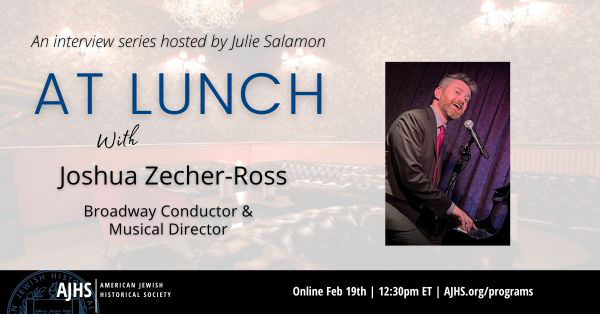
At Lunch with Joshua Zecher-Ross – Live on Zoom
Julie Salamon, New York Times best-selling author, sits down with Broadway conductor and musical director Joshua Zecher-Ross. Currently, the music director and conductor of Operation Mincemeat, now playing at The Golden Theatre and the score supervisor for The Queen of Versailles at the St. James Theatre. Previous Broadway credits include Water for Elephants, Be More Chill, and Once Upon a One More Time. Joshua has worked as a music director, conductor, arranger, and electronic music designer for dozens of shows across the country. He has performed in New York City at 54 Below, Joe’s Pub, Green Room 42, The Laurie Beechman, Birdland, The Duplex, and Feinstein’s at Nikko. He also works as a music supervisor, instructor, and accompanist at NY Film Academy Musical Theatre Program & Actor Therapy. He is a graduate of NYU: Steinhardt.
Ticket Info: Free; register online for a Zoom link
Presented by:
conversation
lecture
Denialism: Polish Style - Live on Zoom
Elzbieta Janicka focuses on the case of the former German Nazi death camp Treblinka, the place of murder and (un)rest of nearly one million Jews from several European countries, the majority from Poland. While keeping in mind that “Treblinka” is as an umbrella term for the forced labor camp Treblinka I (1941-1944), the extermination camp Treblinka II (1942-1943), and a railway station at Treblinka the village, Janicka examines symbolic topography, such as the symbols and narratives that are imprinted into these sites under the auspices of the Treblinka Museum. Regarding the unrestricted Polish bottom-up and top-down fight to “conquer the space” of the Holocaust and make it symbolically profitable for Poland, Janicka raises the question: Why doesn’t the present Polish strategy of “promoting Polish martyrdom upon the Jewish one” trigger an international scandal and condemnation?
Janicka argues that while Polish cultural institutions do not deny the Holocaust itself, they practice a form of denialism by obscuring the reality of Polish involvement in the Holocaust. This lecture fits into a broader debate about Polish public institutions that promote a counter-history of the Holocaust and have at their disposal extraordinary means of propaganda both within Poland and abroad.
About the Speaker
Elzbieta Janicka is a historian of literature, cultural anthropologist, and visual artist. She received her M.A. at the Université Paris VII Denis Diderot and her Ph.D. and postdoctoral degree at Warsaw University. Janicka is the author of Sztuka czy Narod? [Art or the Nation?] (Krakow: Universitas, 2006) and Festung Warschau [Forteress Warsaw] (Warszawa: Krytyka Polityczna, 2011). She co-authored Philo-Semitic Violence. Poland’s Jewish Past in New Polish Narratives (Lanham, MD: Rowman & Littlefield, 2021; with Tomasz Zukowski) and This Was Not America: A Wrangle Through Jewish-Polish-American History (Boston: Academic Studies Press, 2022; with Michael Steinlauf). Her individual exhibitions are: Ja, fotografia (1998); Miejsce nieparzyste [The Odd Place] (2006); and Inne Miasto [Other City] (2013, with Wojciech Wilczyk). Her research pertains to the identity and community building function of Polish antisemitism as well as the place and role of the Polish majority in the structure of the Holocaust. She works at the Institute of Slavic Studies of the Polish Academy of Sciences.
Ticket Info: Free; registration is required.
Presented by:
lecture
book talk
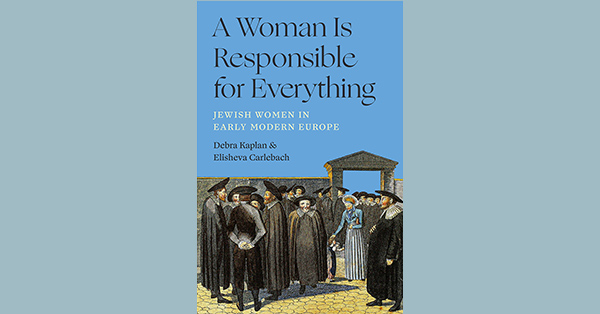
A Woman Is Responsible for Everything: Jewish Women in Early Modern Europe – In-Person Program
In small villages, bustling cities, and crowded ghettos across early modern Europe, Jewish women were increasingly active participants in the daily life of their communities, managing homes and professions, leading institutions and sororities, and crafting objects and texts of exquisite beauty. A Woman Is Responsible for Everything marshals a dazzling array of previously untapped archival sources to tell the stories of these women for the first time.
Join us for this important and illuminating discussion with authors Debra Kaplan and Elisheva Carlebach about the kehillah, a lively and thriving form of communal life that sustained European Jews for three centuries. They paint vibrant portraits of Jewish women of all walks of life, from those who wielded their wealth and influence in and out of their communities to the poorest maidservants and vagrants, from single and married women to the widowed and divorced. We will follow them into their homes and learn about the possessions they valued and used, the books they read, and the writings they composed. Speaking to us in their own voices, these women reveal tremendous economic initiative in the rural marketplace and the princely court, and they express their profound spirituality in the home as well as the synagogue. Mirjam Thulin, Director of Research and Associate Director of the Institute for Advanced Research at the Center for Jewish History, will moderate. A reception will follow the program, and the book will be available for purchase and signing.
About the Speakers
Debra Kaplan holds the Samuel Braun Chair for the History of the Jews in Germany at Bar-Ilan University. A social historian of premodern Ashkenaz, she is the author of Beyond Expulsion: Jews, Christians and Reformation Strasbourg (Stanford University Press, 2011) and The Patrons and their Poor: Jewish Community and Public Charity in Early Modern Germany (University of Pennsylvania Press, 2020) and with Elisheva Carlebach, A Woman is Responsible for Everything: Jewish Women in Early Modern Europe (Princeton University Press, 2025). Kaplan is on the board of directors of the Leo Baeck Institute Jerusalem and the Historical Society of Israel.
Elisheva Carlebach is Baron Professor of Jewish History, Culture and Society at Columbia University. Her books include The Pursuit of Heresy; Divided Souls: Converts from Judaism; Palaces of Time: Jewish Calendar and Culture, and Confronting Modernity, volume 6 in The Posen Library. She served as Editor of AJS Review and President of American Academy for Jewish Research. Carlebach was awarded Columbia’s Lenfest Distinguished Faculty Award, and recently, a mentorship award by the Association for Jewish Studies. Her most recent book is A Woman is Responsible for Everything, a new approach to the study of Jewish women, co-authored with Debra Kaplan. She is an officer on the Center for Jewish History’s Board of Directors.
Ticket Info: Pay what you wish; registration is required
Presented by:
book talk
lecture
The Shtetl: Myth and Reality - Live on Zoom
Even those who do not know much Yiddish have probably heard the word shtetl,” but what does that word mean exactly? Can we just say that it was a small town in Eastern Europe with a lot of Jews—and leave it at that? Or was the shtetl that nostalgic world of “tradition” so lovingly celebrated in Fiddler on the Roof? How are we to understand imaginary shtetls like Sholom Aleichem’s Kasrilevke, where the “little people” ran around, talked non stop, and tried to make sense of a world they could no longer understand understand or control?
Indeed the “shtetl” meant many things to many people. For many Zionists and Jewish leftists, the shtetl was a pathetic symbol of Jewish backwardness. Others cherished it as a place of real Jewishness, that fixed point that gave Jews in the diaspora the feeling of being home. The destruction of the Holocaust encouraged this nostalgia for the lost shtetl, especially as many Jews in the post-war world, newly comfortable and secure in their new homes, showed a new interest in their ethnic roots.
In this lecture, YIVO Visiting Research Historian Samuel Kassow will explore the “real shtetl” and the “imagined shtetl,” which both formed an integral part of Eastern European Jewish peoplehood.
About the Speaker
Samuel Kassow, Charles H. Northam Professor of History at Trinity College, holds a PhD from Princeton University and is a Fellow of the American Academy of Jewish Research. From 2006 until 2013, he was the lead historian for two galleries of the POLIN Museum of the History of Polish Jews in Warsaw, which opened in 2014. Professor Kassow is the author of Who Will Write Our History? Emanuel Ringelblum and the Secret Ghetto Archive (Indiana University Press, 2007), which received the Orbis Prize of the AAASS; was a finalist for a National Jewish Book Award; and has been translated into eight languages. White Goat Press recently published his translation of Warsaw Testament by Rokhl Auerbach, which received a National Jewish Book Award. A child of Holocaust survivors, Professor Kassow was born in a displaced-persons camp in Germany.
Ticket Info: Free; registration is required.
Presented by:
lecture
discussion
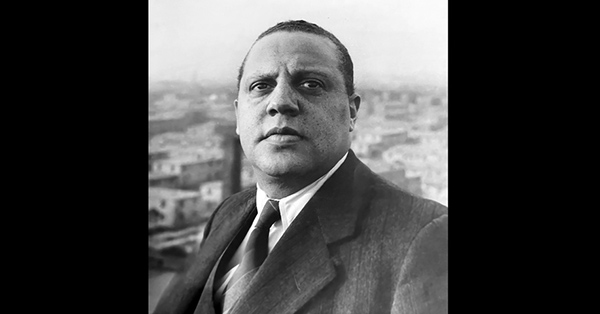
Horace Cayton: Black Renaissance Man and Raconteur - Live on Zoom
In this talk, writer Jeffery Allen will discuss the historical significance of Horace Cayton, who became the romantic partner to Lore Segal soon after the end of World War II. Allen will position Cayton, a well-known intellectual and political figure known for his quips and colorful personality, within the larger framework of the Harlem Renaissance, as a member of the generation termed the “New Negro” and as a part of the burgeoning Civil Rights Movement. Cayton served as the inspiration for Lore's character of Carter Bayoux in her best-known novel, Her First American.
About the Speaker
Jeffery Renard Allen is the award-winning author of six books of fiction and poetry, including the celebrated novel Song of the Shank, which was a front-page review in both The New York Times Book Review and The San Francisco Chronicle. Allen’s other accolades include The Chicago Tribune's Heartland Prize for Fiction, The Chicago Public Library’s Twenty-First Century Award, the Ernest J. Gaines Award for Literary Excellence, a grant from Creative Capital, a Whiting Writers' Award, a Guggenheim fellowship, a NYFA grant, residencies at the Bellagio Center, Ucross, The Hermitage, VCCA, Monson Arts, and Jentel Arts, and fellowships at The Center for Scholars and Writers, the Johannesburg Institute for Advanced Studies, and the Schomburg Center for Research in Black Culture. He was a finalist for both the PEN/Faulkner Award and the Carnegie Medal for Excellence in Fiction. Allen is the founder and editor of Taint Taint Taint magazine and is the Africa Editor for The Evergreen Review. His latest books are the short story collection Fat Time and the memoir An Unspeakable Hope, the latter co-authored with Leon Ford. Allen is at work on several projects, including a memoir entitled Mother-Wit, a book of poems called No Borders, and the short story collection Try Me. Allen makes his home in Johannesburg and New York. Find out more about him at www.writerjefferyrenardallen.com.
Ticket Info: Free; registration required
Presented by:
discussion
the blavatnik chamber music series at cjh
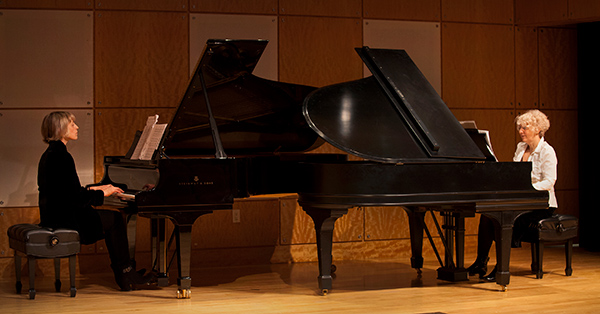
POSTPONED: Keyboard Kaleidoscope: Three Pianists on Two Pianos: Phoenix Chamber Ensemble Performs Mozart, Rachmaninoff, Schnittke, and Bizet
PLEASE NOTE: This event has been temporarily postponed. More details to follow.
Join Phoenix Chamber Ensemble pianists Vassa Shevel and Inessa Zaretsky with guest artist Ellen Braslavsky (piano) for an evening of Mozart, Rachmaninoff, Schnittke, and Bizet.
Program:
Wolfgang Amadeus Mozart, Sonata in D Major, K. 448, for Two Pianos, Four Hands
Sergei Rachmaninoff, Suite No.1. Op.5 for Two Pianos, Four Hands
Alfred Schnittke, Gogol Suite, arranged for two pianos by Valery Borovikov
Georges Bizet, Carmen Suite for Piano Six Hands, arranged by J. Kowalewski
Founded in 2005 by pianists Vassa Shevel and Inessa Zaretsky, the Phoenix Chamber Ensemble has become a vital part of the New York classical community, presenting more than 70 public concerts at the Center for Jewish History. The ensemble has garnered a devoted following with its innovative programming and sensitive interpretations, earned an international reputation presenting concerts in Russia, Poland, Italy, and other European venues, and collaborated with numerous acclaimed guest artists, including clarinetist David Krakauer, the Grammy-nominated Enso Quartet, the Tesla Quartet, members of the Jasper String Quartet, the New York Little Opera Company, the Metropolitan Opera, and New York City Ballet.
Made possible by the Stravinsky Institute Foundation through the generous support of the Blavatnik Family Foundation.
Ticket Info: This event has been temporarily postponed. More details to follow.
Presented by:
the blavatnik chamber music series at cjh
book talk
Confronting Representations of Black People in Yiddish Culture - Live on Zoom
Scholars have long argued that the Yiddish press consistently condemned discrimination against African Americans and emphasized parallels between Jewish oppression in Eastern Europe and Black life in the United States. In Crude Creatures, Gil Ribak challenges this view, showing that it reflects only a narrow portion of Jewish representations of Black people during the immigration era.
Drawing on previously unexplored Yiddish newspapers, theater, and literature from Eastern Europe and the United States through 1929, Ribak exposes a gap in existing scholarship. Although Jewish writers frequently denounced lynching, racial violence, and segregation, they often portrayed Black Africans and African Americans using crude stereotypes. Many Eastern European Jews encountered Black people only after immigrating, yet brought with them preconceived images shaped by rabbinic exegesis, pious advice, travel narratives, folklore, scientific explorations, pulp literature, press reports, political rhetoric, and educational materials. These depictions cast Black people as cannibals, oversexed, prone to violence, childlike, or just happy-go-lucky people. Crude Creatures revises the overly optimistic narrative of Black-Jewish relations and reveals how immigrant cultures adapted to America’s racial hierarchy.
Join us for a discussion about this book with Ribak, led by Clinical Assistant Professor at University of South Carolina Devin Randolph.
About the Speakers
Gil Ribak is the Shirley D. Curson Associate Professor at The Arizona Center for Judaic Studies at the University of Arizona. Born and raised in Israel, Ribak came to the U.S. on a Fulbright Fellowship and completed a Ph.D. in history at the University of Wisconsin-Madison. He held several academic positions, such as the Director of the Institute on Israeli-American Jewish Relations at the American Jewish University in Los Angeles. His book, Gentile New York: The Images of Non-Jews among Jewish Immigrants, was published by Rutgers University Press in 2012. In 2021-2022, Ribak served as the European Union's Marie S. Curie Senior Fellow at the Freiburg Institute for Advanced Studies at the Albert-Ludwig University in Freiburg, Germany.
Devin Randolph is Clinical Assistant Professor in the College of Education at the University of South Carolina. He studies the everyday experiences of targeted youth and systemic inequities. His research includes work with Jewish and African American-understanding the historical alliance, divergence and convergence and contours of racism and racial antisemitism. Randolph earned his Ph.D. in Foundations of Education from the University of South Carolina.
Ticket Info: Free; registration is required.
Presented by:
book talk
book talk
Pathways: Seven Short Stories by I. L. Peretz - In-person Program
The new graded reader Afn veg: Zibn dertseylungen fun Y.-L. Perets (Pathways: Seven Short Stories by I. L. Peretz), consists of seven classic short stories by the great author, I. L. Peretz, abridged and adapted for students by Moishele Alfonso.
Afn Veg features a side-by-side glossary, discussion questions, and audio recordings. This collection of adapted Peretz short stories gives the reader access to the very best that Yiddish literature has to offer, yet at such a level that even advanced beginners can comprehend it.
Every short story is divided into smaller chapters, with discussion questions at the end of each chapter. One feature that makes this reader so useful for students is the side-by-side glossary. The more difficult words and expressions appear in bold letters; right next to the Yiddish text is a glossary containing their translation, and in some cases, also the pronunciation. The book is a tremendous contribution to the learning materials available to today’s Yiddish students.
Join YIVO and League for Yiddish for a celebration of this new publication. Light refreshments will be served during the program.
This lecture will be held in Yiddish in person only.
About the Speaker
Moishele Alfonso received his B.A. in German, French and Italian from the University of Memphis. He attended the YIVO-Bard Uriel Weinreich Summer Program in 2018 and participated in the Yiddish Book Center’s Yiddish Pedagogy Fellowship (2018-19) and the Yiddish Pedagogy Practicum (2021-22). He has taught Yiddish at the Yiddish Book Center, the Workers Circle, and at Kadimah in Melbourne, Australia. In 2021-2022, Moishele transcribed Isaac Bashevis Singer’s book, Sonim: di geshikhte fun a libe (Enemies: a Love Story) into standardized Yiddish from the orthography used in its original serialized publication in the Forverts (1966). Moishele’s version was published in 2022 by Olniansky Farlag in Sweden and is the first time Sonim has ever appeared in book form in Yiddish.
Ticket Info: Free; registration is required.
Presented by:
book talk
book talk
Sounds of Survival: Polish Music and the Holocaust - In-person Program
Sounds of Survival explores the central role played by Jews in creating classical music in Poland. It examines an integrated Polish and Polish Jewish musical community as its members contended with antisemitism in the 1930s, attempted to survive the Nazi occupation, and established a renewed musical culture amid the ashes of World War II and the Holocaust. Reconstructing these musicians' lives from the 1920s into the 1950s, Mackenzie Pierce argues that despite nearly unimaginable violence, many Polish musicians treated the war as a time of reinvention and cultural preservation. Their faith that music was a source of cultural continuity, however, also marginalized experiences of wartime loss, especially those of Jewish victims and survivors of the Holocaust. Sounds of Survival not only reveals that the Holocaust was a central event within musical culture in Poland; it also shows why its musical aftermath has been difficult to hear.
About the Author
Mackenzie Pierce is assistant professor of musicology at the University of Michigan, Ann Arbor and author of Sounds of Survival: Polish Music and the Holocaust (University of California Press, 2025). He is a scholar of twentieth-century musical culture in Eastern Europe, with a focus on Polish-Jewish relations and classical music. Active in both the US and Europe, his research has been supported through fellowships from the American Council of Learned Societies, the United States Holocaust Memorial Museum, and the Polin Museum of the History of Polish Jews in Warsaw.
Ticket Info: Free; registration is required.
Presented by:
book talk
talk
Summer Program Information Session: Advanced Levels - Live on Zoom
Are you thinking of returning to the Summer Program to continue your advanced studies? Join Summer Program faculty and staff for a brief information session about YIVO’s advanced levels. Open to graduates of YIVO’s intermediate levels and those with comparable proficiency, this session will cover the structure of YIVO’s advanced levels, the admissions process, and more, with time for questions from prospective Summer Program students.
The session will be conducted in Yiddish and is entirely optional (prospective students are not required to attend).
Ticket Info: Free; registration is required.
Presented by:
talk
talk
Summer Program Information Session - Live on Zoom
Have you always wanted to study Yiddish at the YIVO-Bard Summer Program? Are you wondering what it would be like to spend six weeks studying at YIVO in New York City? Join faculty and staff of the Summer Program for one of our brief information sessions. These 45-minute sessions will cover the program’s structure, admissions process, and more, with time for questions from prospective Summer Program students. The sessions will be conducted in English and are entirely optional (prospective students are not required to attend).
Ticket Info: Free; registration is required.
Presented by:
talk
book club
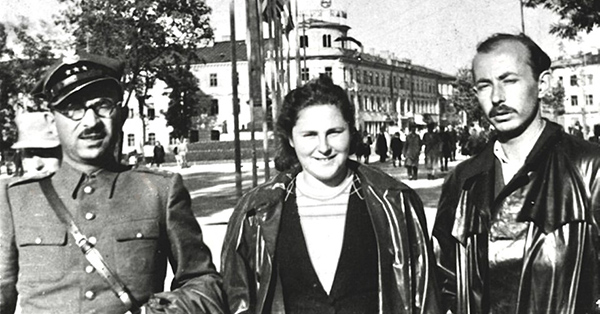
LBI Book Club: It Will Yet Be Heard: A Polish Rabbi's witness of the Shoah and Survival - Live on Zoom
Dr. Joanna Sliwá will join the LBI Book Club in January to discuss the book It Will Yet Be Heard: A Polish Rabbi's Witness of the Shoah and Survival by Leon Thorne.
It Will Yet Be Heard: A Polish Rabbi's Witness of the Shoah and Survival
Nobel laureate Isaac Bashevis Singer once described Dr. Leon Thorne’s memoir as a work of “bitter truth” that he compared favorably to the works of Tolstoy, Dostoevsky, and Proust. Out of print for over forty years, this lost classic of Holocaust literature now reappears in a revised, annotated edition, including both Thorne’s original 1961 memoir Out of the Ashes: The Story of a Survivor and his previously unpublished accounts of his arduous postwar experiences in Germany and Poland.
Rabbi Thorne composed his memoir under extraordinary conditions, confined to a small underground bunker below a Polish peasant’s pigsty. But, It Will Yet Be Heard is remarkable not only for the story of its composition, but also for its moral clarity and complexity. A deeply religious man, Rabbi Thorne bore witness to forced labor camps, human degradation, and the murders of entire communities. And once he emerged from hiding, he grappled not only with survivor’s guilt, but also with the lingering antisemitism and anti-Jewish violence in Poland even after the war ended. Harrowing, moving, and deeply insightful, Rabbi Thorne’s firsthand account offers a rediscovered perspective on the twentieth century’s greatest tragedy.
(Rutgers University Press)
Leon Thorne was a rabbi from Schodnica, near Drohobycz, in Austrian Galicia. He trained at the Breslau Seminary. Following the Holocaust, he served the post-war Jewish community of Frankfurt as a rabbi before immigrating to the United States, settling in Brooklyn, New York.
About Our Guest
Dr. Joanna Sliwá is a historian at the Conference on Jewish Material Claims Against Germany (Claims Conference) where she also administers academic programs. Joanna is a historian of the Holocaust and modern Polish Jewish history. She is the author of the award-winning book, Jewish Childhood in Kraków: A Microhistory of the Holocaust(Rutgers University Press, 2021) and, with Elizabeth (Barry) White, of The Counterfeit Countess: The Jewish Woman Who Rescued Thousands of Poles during the Holocaust (Simon and Schuster, 2024), which has been translated in several languages. A new volume that Joanna co-edited with Christine Schmidt and Elizabeth Anthony, Older Jews and the Holocaust:Persecution, Displacement, and Survival, will be published in 2026 (Wayne State University Press). She previously worked at the American Jewish Joint Distribution Committee, and at the Museum of Jewish Heritage—A Living Memorial to the Holocaust. She has taught Holocaust and Jewish history at Kean University and at Rutgers University and has served as a historical consultant and researcher, including for the PBS film In the Name of Their Mothers: The Story of Irena Sendler
Ticket Info: Free; registration required
Presented by:
book club
panel discussion
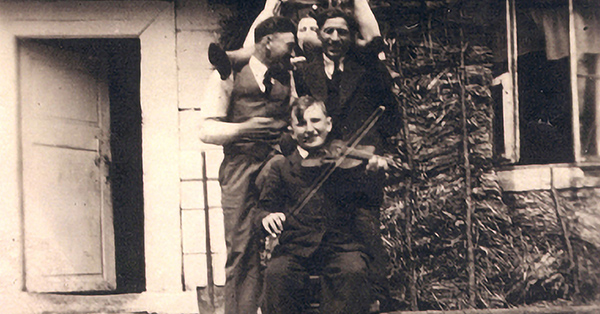
Holocaust Remembrance Today - a Living Responsibility: A Panel Discussion in Conjunction With the Exhibition "Between Life and Death: Stories of Rescue During the Holocaust" at the United Nations - In-person Program and Live on Zoom
Join us for a panel exploring how societies remember and reinterpret the Holocaust in the 21st century, and what meaning International Holocaust Remembrance Day holds today.
Inspired by the European Network Remembrance and Solidarity (ENRS) exhibition Between Life and Death: Stories of Rescue during the Holocaust, on view at the United Nations from January 15 to February 20 as part of remembrance and education outreach organized by the Holocaust and the United Nations Outreach Programme, the discussion will focus on acts of rescue, individual moral choices, and the legacy of human solidarity during one of the darkest periods in history.
Moderated by Jayashri Wyatt, the panel comprising Elzbieta Ficowska, Mordecai Paldiel, Jay Winter (Charles J. Stille Professor of History Emeritus at Yale University), and Daniel Blatman (Max and Rita Haber Professor Emeritus of Contemporary Jewry and Holocaust Studies at the Hebrew University of Jerusalem) will discuss how remembrance has evolved over the decades, how stories of rescuers and survivors can be communicated to younger generations, and how to respond to new challenges such as disinformation and the rapid development of AI, as well as the fading of living memory. The conversation will highlight why remembrance remains essential for shaping empathy, civic responsibility, and resilience in today’s world.
The panel discussion will take place at 7:00pm ET and will be preceded by a reception for the in-person audience at 6:00pm ET.
Co-presented by YIVO, Center for Jewish History, European Network Remembrance and Solidarity, the Holocaust and the United Nations Outreach Programme, and the Sousa Mendes Foundation
About the Panelists
Jayashri Wyatt is the Chief of Education Outreach, in the UN Department of Global Communications. She is a seasoned communications professional with a wealth of experience in the United Nations System producing high-level events, advocacy campaigns, and films for the Department of Global Communications, UNICEF, and the Office for the Coordination of Humanitarian Affairs (OCHA). She also has nearly a decade of experience as an educator championing women’s empowerment and gender equality.
Elzbieta Ficowska was born in the Warsaw ghetto in 1942 to Henia and Jossel Koppel. She survived because she was smuggled to the "Aryan side" and was hid from Germans by Stanislawa Bussold, a 56-year-old midwife and member of the underground who helped Jews. The only thing left from her Jewish parents is a little silver spoon bearing the girl's name and birth date. Her story is among those presented at the travelling exhibition Between Life and Death. For many years, she has been active in the Association of Children of the Holocaust, sharing her personal testimony of rescue and remembrance.
Dr. Mordecai Paldiel headed the Righteous Among the Nations Department at Yad Vashem from 1982-2007 and he serves on the Board of the Sousa Mendes Foundation. His books include Remembrance and Meaning: Dialogues and Thoughts on the Significance of Holocaust Rescuers; The Path of the Righteous: Gentile Rescuers of Jews During the Holocaust; Sheltering the Jews: Stories of Holocaust Rescuers; Churches and the Holocaust: Unholy Teaching, Good Samaritans and Reconciliation; Whosoever Saves One Life: The Uniqueness of the Righteous Among the Nations; Saving the Jews: Amazing Stories of Men and Women Who Defied the Final Solution; Diplomat Heroes of the Holocaust; German Rescuers of Jews: Individuals versus the Nazi System; Polish Rescuers of Jews: Selected Stories of Amazing Acts of Goodness; Poland, the Jews and the Holocaust: Promised Beginnings and Troubled Past; Saving One’s Own: Jewish Rescuers During the Holocaust and Righteous or Not: The Honoring of Rescuers of Jews. He serves on the B’nai B’rith Commission to honor Jewish rescuers of Jews during the Holocaust. Thanks to his efforts, there is now a square named for Aristides de Sousa Mendes in Jerusalem. He provided the list of 60 diplomat-rescuers honored by the US Congress in 2024 in the Forgotten Heroes of the Holocaust Congressional Gold Medal Act.
Jay Winter is the Charles J. Stille Professor of History Emeritus at Yale University and a leading scholar of 20th-century European history. A specialist on the World War I, he has profoundly influenced the study of memory, mourning, and the cultural consequences of modern conflict. He is the author of numerous seminal works, including Sites of Memory, Sites of Mourning: The Great War in European Cultural History (1995), The Great War and the Shaping of the 20th Century (1996), René Cassin and Human Rights (2013), The Cultural History of War in the Twentieth Century and After (2022), and most recently The Day the Great War Ended, 24 July 1923: The Civilianization of War (2022). He holds honorary degrees from the universities of Graz, Leuven, and Paris.
Daniel Blatman is the Max and Rita Haber Professor Emeritus of Contemporary Jewry and Holocaust Studies at the Hebrew University of Jerusalem. He previously served as director of the University’s Institute of Contemporary Jewry and of the Center for the Study of the History and Culture of Polish Jewry. His research focuses on twentieth-century Polish Jewry, the Jewish labor movement in Eastern Europe, the Jews of the Warsaw Ghetto, Polish–Jewish relations during the Holocaust and its aftermath, and Nazi extermination policy. Among his major publications are For Our Freedom and Yours: The Jewish Labor Bund in Poland, 1939–1945; Reportage from the Ghetto: The Jewish Underground Press in the Warsaw Ghetto; The Death Marches: The Final Phase of Nazi Genocide; and Conflicting Histories and Coexistence: New Perspectives on the Jewish–Polish Encounters. He is the recipient of the Jacob Buchman Memorial Prize, the Yad Vashem International Prize in Holocaust Studies, and was a finalist for the National Jewish Book Award.
Ticket Info: Free; registration is required.
Presented by:
panel discussion
talk
Summer Program Information Session - Live on Zoom
Have you always wanted to study Yiddish at the YIVO-Bard Summer Program? Are you wondering what it would be like to spend six weeks studying at YIVO in New York City? Join faculty and staff of the Summer Program for one of our brief information sessions. These 45-minute sessions will cover the program’s structure, admissions process, and more, with time for questions from prospective Summer Program students. The sessions will be conducted in English and are entirely optional (prospective students are not required to attend).
Ticket Info: Free; registration is required.
Presented by:
talk
book discussion

New Perspectives on the History of Antisemitism: A Roundtable Discussion With Mark Weitzman, Susannah Heschel, Maurice Samuels, and Samuel Freedman – In-Person Program
As concern over antisemitism has grown in recent years, so too have debates over how to understand and combat it. The Routledge History of Antisemitism, now in paperback, offers fresh perspectives into what has been called the oldest hatred. It explores antisemitism’s history and manifestations, ranging from its origins to the internet.
In the years following the Holocaust, many in North America and Europe viewed antisemitism as a historical issue with little current importance. However, recent events show that antisemitism is not just a matter of historical interest or of concern only to Jews. Antisemitism has become a major issue confronting and challenging our world. This volume starts with explorations of antisemitism in its many different shapes across time and then proceeds to a geographical perspective, covering a broad scope of experiences across different countries and regions. The final section discusses the manifestations of antisemitism in its varied cultural and social forms.
Join us for this critically important and illuminating discussion about the book’s insights into antisemitism featuring co-editor Mark Weitzman (World Jewish Restitution Organization) and contributors Susannah Heschel (Dartmouth) and Maurice Samuels (Yale). Samuel Freedman (Columbia) will moderate. A reception will follow the program. The book will be available for purchase and signing.
About the Speakers
Mark Weitzman is co-editor of The Routledge History of Antisemitism. He is Chief Operating Officer of the World Jewish Restitution Organization, the lead NGO working toward restitution of Jewish private and communal property seized during World War II. He is also the senior NGO member of the official U.S. delegation to the International Holocaust Remembrance Authority (IHRA), where he chaired the Committee on Antisemitism and Holocaust Denial and the Museums and Memorials Working Group. He was the architect of IHRA’s adoption of the Working Definition of Antisemitism and the lead author of IHRA’s Working Definition of Holocaust Denial and Distortion. He wrote the monograph Jews and Judaism in the Political Theology of Radical Catholic Traditionalists, and his chapter on “Holocaust Denial and Distortion” will be published in the forthcoming Cambridge University Press History of Antisemitism.
Susannah Heschel is Eli M. Black Distinguished Professor and chair of Jewish Studies at Dartmouth College. Her books include Abraham Geiger and the Jewish Jesus; The Aryan Jesus: Christian Theologians and the Bible in Nazi Germany; Jüdischer Islam: Islam und jüdisch-deutsche Selbstbestimmung; Jewish Studies and the Woman Question, written with Sarah Imhoff, and several edited books. She has received a Guggenheim Fellowship, grants from the Carnegie Corporation and the Ford Foundation, and five honorary doctorates from universities in the United States, Canada, Germany, and Switzerland.
Maurice Samuels is the Betty Jane Anlyan Professor of French at Yale University, where he also directs the Yale Program for the Study of Antisemitism. A recipient of a Guggenheim Fellowship and the Cullman Center Fellowship at the New York Public Library, he is the author of five books, including The Right to Difference: French Universalism and the Jews; The Betrayal of the Duchess; and Alfred Dreyfus: The Man at the Center of the Affair, published in Yale's Jewish Lives Series.
Samuel Freedman (above photo: credit Gabriela Bhaskar) has been an award-winning author, columnist, and professor. A former columnist for The New York Times and a professor emeritus at Columbia University Graduate School of Journalism, he is the author of the ten acclaimed books. The most recent of them, Into the Bright Sunshine: Young Hubert Humphrey and the Fight for Civil Rights, won the 2024 Hillman Prize for Book Journalism. Freedman’s previous books include Upon This Rock: The Miracles of a Black Church; The Inheritance: How Three Families and America Moved from Roosevelt to Reagan and Beyond; and Jew vs. Jew: The Struggle for the Soul of American Jewry. Four of his books have been listed among The New York Times’ Notable Books of the Year. Jew vs. Jew won the National Jewish Book Award for Non-Fiction and made the Publishers Weekly Religion Best-Sellers list.
This program is part of the Anne Frank in History and Memory series, which is made possible by the New York State Education Department and the New York City Department of Cultural Affairs.
Ticket Info: Pay what you wish; registration is required
Presented by:
book discussion
conversation
At Lunch with Margalit Fox – Live on Zoom
Julie Salamon, New York Times best-selling author, sits down with author and journalist Margalit Fox. Considered one of the foremost explanatory writers and literary stylists in American journalism, Margalit (mar-gah-LEET) Fox retired in 2018 from a 24-year-career at the New York Times, where she was most recently a senior writer. As a member of the newspaper’s celebrated obituary news department, she has written the Page One sendoffs of some of the best-known cultural figures of our era, including the pioneering feminist Betty Friedan, the writers Maya Angelou and Toni Morrison, the poet Adrienne Rich, the children’s author Maurice Sendak and the advice columnists Dear Abby and Ann Landers. She has also written the obituaries of many of the unsung heroes who have managed, quietly, to touch history, among them the inventors of the crash-test dummy, the bar code and the pink plastic lawn flamingo. In 2016, the Poynter Institute named her one of the six best writers in the New York Times’s history. The recipient of the William Saroyan International Prize for Nonfiction, Margalit is the author of four previous narrative nonfiction books: Talking Hands, The Riddle of the Labyrinth, Conan Doyle for the Defense and The Confidence Men. Originally trained as a cellist, she holds bachelor’s and master’s degrees in linguistics from Stony Brook University and a master’s degree from the Columbia University Graduate School of Journalism. She lives in Manhattan with her husband, the writer and critic George Robinson. margalitfox.com
Ticket Info: Free; register online for a Zoom link
Presented by:
conversation
exhibit opening
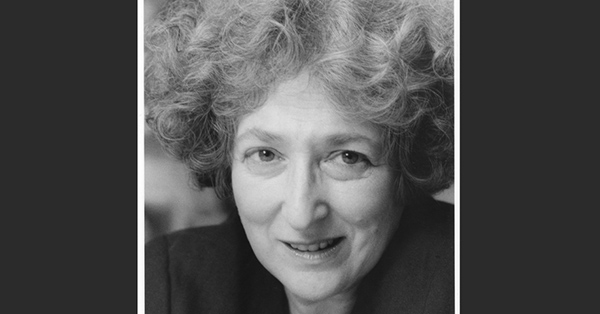
And That's True Too: The Life and Work of Lore Segal - In-person Program and Live on YouTube
On January 22, LBI will open its first exhibition of 2026 And That's True Too: The Life and Work of Lore Segal. Aside from the unveiling of the exhibition, the opening event will feature renowned actor Toni Kalem (The Sopranos) reading from Lore Segal’s autobiographical novel Other People’s Houses.
About the Exhibition
And That’s True Too: The Life and Work of Lore Segal presents a richly documented exploration of the life and literary legacy of Lore Segal (1928–2024). Born in Vienna, Segal survived Nazi persecution as a child when she escaped on one of the earliest Kindertransports to England. Her subsequent life—marked by displacement, reinvention, and a lifelong engagement with language—shaped a body of work distinguished by moral clarity, wit, and intellectual rigor.
The exhibition features photographs, manuscripts, rare books, and archival materials that trace Segal’s journey from prewar Vienna to New York and examine how exile informed her novels, short stories, translations, and children’s books, as well as her influential career as a teacher.
The title And That’s True Too reflects Segal’s commitment to complexity and multiple perspectives—an ethos that runs through her writing and her reflections on memory, identity, and human connection.
About our guest
Toni Kalem has an extensive background as an actress in film, television, and theater. Although known for her portrayal of Italian characters in iconic films such as Philip Kaufman’s, THE WANDERERS, PRIVATE BENJAMIN, and Angie Bonpensiero on THE SOPRANOS, for which she also wrote, Ms. Kalem is of Jewish descent. When she read Lore Segal’s autobiographical novel, OTHER PEOPLE’S HOUSES, she discovered the deeply personal story she’d always wanted to tell. Like Lore, her mother was also on the Kindertransport, but unlike Lore, she barely spoke of her experience. Ms. Kalem, who now has her German citizenship, has adapted OPH as a screenplay and plans to shoot in Vienna and the UK.
Some other film credits include adapting and directing Anne Tyler’s, A SLIPPING-DOWN LIFE, which was nominated for the Grand Jury Prize at the Sundance Film Festival, and an adaptation of Lisa Zeidner’s novel, LAYOVER, which she will direct starring Guy Pearce.
Ticket Info: Free; registration required
Presented by:
exhibit opening
members only event
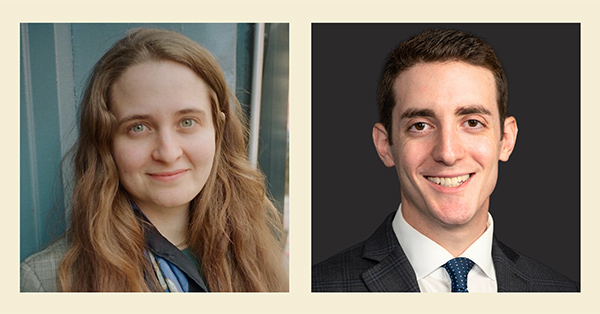
Meet the Fellows: Maytal Mark and Jonathan Green - In-person Program and Live on Zoom
Join us for a meet-and-greet with our fellows, Maytal Mark and Jonathan Green, who will share insights from their research on Middle Eastern intellectual history and the evolution of luxury and consumer culture. Light refreshments will be served.
Ticket Info: Free; registration is required - registration is limited to CJH members.
Presented by:
members only event
lecture
Dancing Modernity: Popular Yiddish Music in Interwar Poland and Lithuania - Live on Zoom
The early twentieth century brought a profound redefinition of everyday life. Accelerating modernization and political stratification increasingly divided society. Surprisingly, one modern phenomenon seduced nearly everyone: popular music. Regardless of political views or language (Yiddish, Polish, Lithuanian, or Hebrew), people of all kinds were lured by dance parties, musical theater, and the latest records. All of this was broadcast daily on the radio, captivating millions of listeners.
This presentation by Tomasz M. Jankowski invites you to explore the shared Jewish, Polish, and Lithuanian musical heritage and to listen to original recordings from the 1930s. Jews were involved in almost every step of the production process. Not only were many of the best interwar performers of Jewish origin, but composers, lyricists, and record label owners were as well. Artists succeeded in creating a trans-ethnic culture in which personal background lost its limiting significance. Popular genres, like Tango, Foxtrot and Boston, transcended national boundaries, traveling to and from Buenos Aires, New York, Paris, Warsaw and Kaunas. Popular dance music promised social emancipation and a temporary escape from everyday worries. It offered the hope that the future could be shared like a dance floor.
About the Speaker
Tomasz M. Jankowski is a postdoctoral researcher at the Center for Eastern European Jewish History at Vilnius University in Lithuania. He is interested in Jewish social entanglements in east-central Europe from the late 18th to the early 20th centuruies. His research ranges from family history and demography to popular music. Jankowski has published two books: Hebrew Polish Tango (Polin Museum, 2019) and Demography of a Shtetl (Brill, 2022). He has also been involved in documenting Jewish heritage for several institutions, including UNESCO.
Ticket Info: Free; registration is required.
Presented by:
lecture
lecture
Unwelcome Returns? (Re-)Naturalization Rights of German Jews and their Descendants in the Federal Republic of Germany - In-person Program
Article 116 Paragraph Two of the Basic Law (the German constitution of 1949) grants former German citizens whose citizenship was removed by the Nazi regime on the grounds of their Jewish ‘race’ the right to German citizenship upon application. This right is not restricted to the denaturalised individuals themselves, but also extends to their descendants. Yet during the over seventy-five years of the existence of the Federal Republic of Germany, there have been significant changes regarding which German Jews – and which groups of descendants – enjoyed that right to German citizenship. Drawing on previously unexamined material from archives throughout Germany, this talk reconstructs those developments, showing how antisemitic and former Nazi civil servants acted to restrict rights of German Jews in the 1950s and 1960s, establishing arbitrary exclusions that remained in force until the reform of the German Nationality Act in 2021.
About the Speaker
Nicholas Courtman is a Postdoctoral Research Fellow in the Department of History and the Department of Languages, Literatures and Cultures at King’s College London. He is currently completing a five-year research project funded by the Alfred Landecker Foundation as part of the Alfred Landecker Lecturer Programme entitled “Citizenship after Hitler: Continuity and Change in the Citizenship Law and Naturalisation Practice of the Federal Republic of Germany”.
Ticket Info: Free; registration required
Presented by:
lecture
family history today

Family History Today: Jews in the American South - Live on Zoom
Shari Rabin’s The Jewish South: An American History (Princeton University Press, 2025), is the first narrative survey of southern Jewish history. Exploring dynamics of race and religion, it features a wide range of Jewish southerners whose stories complicate popular understandings of their region. In this presentation, Rabin will offer an overview of the book, with a focus on the primary sources, including archival materials, newspaper articles, governmental documents, and more, which helped her understand the lives of southern Jews from the 17th to the 20th centuries.
About the Speaker
Shari Rabin is an associate professor of Jewish studies, religion, and history and chair of Jewish studies at Oberlin College. She is the author of Jews on the Frontier: Religion and Mobility in Nineteenth-century America (NYU Press, 2017), which won the National Jewish Book Award in American Jewish Studies, and The Jewish South: An American History, published this year by Princeton University Press. She serves as vice president of the Southern Jewish Historical Society.
Sponsored by the Ackman & Ziff Family Genealogy Institute
Ticket Info: Pay what you wish
Presented by:
family history today
book talk
Yiddish: A Global Culture - Live on Zoom
Yiddish: A Global Culture at the Yiddish Book Center in Amherst, MA showcases the extraordinary vibrancy and breadth of modern Yiddish culture—its literature, theater, art, music, journalism, politics—from the mid-nineteenth century to the present day. This exhibition catalog offers a panoramic view of Yiddish: A Global Culture to the general reader, placing the transnational story of Yiddish within broader world history. The 344 full-color pages include an eight-page gatefold of “Yiddishland,” the exhibition’s 60-foot mural, along with hundreds of stunning reproductions of artworks, rare artifacts, and other key exhibits. With illuminating introductory essays and a timeline highlighting the iconic figures, breakout creative masterpieces, and controversies of the Yiddish world, this volume brings to dramatic life the significance of one remarkable civilization and its ongoing legacy.
Join us for a discussion about this exhibition catalog with curator David Mazower, led by YIVO Senior Academic Advisor & Director of Exhibitions Eddy Portnoy.
This program is supported, in part, by public funds from the New York City Department of Cultural Affairs, in partnership with the City Council.
About the Speakers
David Mazower is research bibliographer and editorial director at the Yiddish Book Center. He is also the chief curator and writer of the Center’s landmark permanent exhibition, Yiddish: A Global Culture. Prior to joining the Center, he was a senior staff journalist with BBC World News in London and deputy curator of the Jewish Museum London. He writes for the Digital Yiddish Theatre Project and is the author of Yiddish Theatre in London. His dozens of published articles include several on his great-grandfather, Yiddish writer Sholem Asch, as well as explorations of Yiddish theater and popular culture, British Jewish history, Jewish art, and the Yiddish salon of Bronx poet Bertha Kling. He graduated with a degree in history from Cambridge University and has a postgraduate diploma in Russian.
Eddy Portnoy received his Ph.D. in Modern Jewish History from the Jewish Theological Seminary and holds an M.A in Yiddish Studies from Columbia. His articles on Jewish popular culture phenomena have appeared in The Drama Review, Polin, and Studies in Contemporary Jewry, among others. In addition to speaking on Jewish popular culture throughout Europe and North America, he has consulted on museum exhibits at the Museum of the City of New York, Musée d'art et d'histoire du judaïsme in Paris, and the Joods Historisch Museum in Amsterdam. He is the author of Bad Rabbi and Other Strange but True Stories from the Yiddish Press, published by Stanford University Press, 2017.
Ticket Info: Free; registration is required.
Presented by:
book talk
lecture
The Fall of the Weimar Republic - Live on Zoom
The fall of the Weimar Republic in 1933 has long been regarded as the paradigm of democracy’s collapse in the face of a populist, dictatorial challenge from Adolf Hitler and the Nazi Party, who built the “Third Reich” on its ruins. Can we learn any lessons from it for the present day? Many factors have been blamed for the failure of Germany’s first democracy, including the electoral system, based on proportional representation, the impact of hyperinflation in 1922-23, the power of the President, the impact of the world Depression in 1932-33, the legacy of the punitive Paris Peace Settlement that followed Germany’s defeat in World War I, and the charismatic appeal of Nazi leader Adolf Hitler.
This lecture by Sir Richard J. Evans explores the strengths and weaknesses of these various explanations and comes to the conclusion that the shallow and weak roots of democratic political culture in Germany were the most important factor in the inability of the Republic and its institutions to withstand the economic challenge of the Depression and the political onslaught of Hitler and the Nazis.
This program is supported, in part, by public funds from the New York City Department of Cultural Affairs, in partnership with the City Council.
About the Speaker
Sir Richard J. Evans is a renowned British historian specializing in 19th and 20th century European history, with a particular focus on Germany. Evans has authored numerous influential books, including the acclaimed three-volume "The Third Reich Trilogy." He served as Regius Professor of History at the University of Cambridge from 2008 to 2014 and was President of Wolfson College from 2010 to 2017. He is known for his work on German social history, his role as an expert witness in the David Irving libel trial, and his defense of historical methodology against postmodernist skepticism. Evans has been recognized for his contributions to scholarship, receiving a knighthood in 2012. He served as Provost of Gresham College in London from 2014 to 2020. Evans currently serves as Deputy Chair of the UK Spoliation Advisory Panel, advising the Government on claims for the restitution of Nazi-era looted art.
Ticket Info: Free; registration is required.
Presented by:
lecture
talk
Summer Program Information Session - Live on Zoom
Have you always wanted to study Yiddish at the YIVO-Bard Summer Program? Are you wondering what it would be like to spend six weeks studying at YIVO in New York City? Join faculty and staff of the Summer Program for one of our brief information sessions. These 45-minute sessions will cover the program’s structure, admissions process, and more, with time for questions from prospective Summer Program students. The sessions will be conducted in English and are entirely optional (prospective students are not required to attend).
Ticket Info: Free; registration is required.
Presented by:
talk
celebration
Salud i Beraha: The 9th Annual NY Ladino Day! - In-person Program
Curated by Jane Mushabac and Bryan Kirschen
Musical Performance featuring Brazilian Ladino singer Fortuna, accompanied by her quartet
Keynote Speaker: Dr. Joe Halio
Since 2013, Ladino Day programs have been held around the world to honor Ladino, also known as Judeo-Spanish. January 11th marks New York’s 9th Annual Ladino Day hosted by the American Sephardi Federation.
Ladino is a bridge to many cultures. A variety of Spanish, it has absorbed words from Hebrew, Turkish, Arabic, French, Greek, and Portuguese. The mother tongue of Jews in the Ottoman Empire for 500 years, Ladino became the home language of Sephardim worldwide. While the number of Ladino speakers has sharply declined, distinguished Ladino Day programs like ours celebrate and preserve a vibrant language and heritage. These programs are, as Aviya Kushner has written in the Forward, “Why Ladino Will Rise Again.”
Ticket Info:
$20 Early Bird General Admission
(Admission to Ladino Day)
$30 Friend of NY Ladino Day (Includes a copy of the book: The Historic Synagogues of Turkey, and admission to Ladino Day)
$50 VIP Friend of NY Ladino Day
(Includes VIP reception prior to the program, a copy of the book: The Historic Synagogues of Turkey, and VIP seating at Ladino Day)
* Early Bird prices end on December 1, 2025
Presented by:
celebration